




Commentary: The Powder Keg of Brake Slack Adjustment
There’s an epidemic of ignorance out there regarding brake slack adjustment It just won’t go away, might even be getting worse.

Rolf Lockwood, Executive Contributing Editor

Rolf Lockwood, Executive Contributing Editor
There’s an epidemic of ignorance out there regarding brake slack adjustment. Certainly not a new story, but one that we have to hammer at as often as we can. It just won’t go away, might even be getting worse.
The lousy results from last fall’s Commercial Vehicle Safety Alliance Brake Safety Week inspection blitz showed a significant increase in adjustment issues and out-of-service rates year over year.
Of the 13,305 vehicles inspected throughout the United States, Canada, and Mexico, 2,162 of them were put out of service for brake violations. The OOS rate for all brake-related violations in North America was 16.2%, compared with 13.5% in 2013.
The OOS rate for brake adjustment rose to 10.4 from 9% in 2013.
Should we be surprised? The CVSA did a survey as part of Operation Air Brake in 2003 that was pretty unsettling. It found that a shockingly low number of drivers have a clear understanding of air brakes and their adjustment. Clearly we haven’t come very far since.
How bad was it? Well, only 15 truck drivers — out of 4,055 polled — aced the survey designed to find out how much they knew about brake adjustment. The CVSA said the responses revealed an overwhelming misunderstanding about the importance of brake adjustment and the right ways to do it.
Only 192 of the drivers (0.47%) correctly identified all four of the conditions necessary to inspect adjustment properly.
More than half the drivers (62%) identified incorrect methods of determining when brakes need to be adjusted. In fact, 1,840 drivers (45%) said they rely on the “feel” of the brakes.
The auto slack myth was especially alarming in that 2003 study, which found that 2,179 drivers (53%) thought that automatic slack adjusters never go out of adjustment. While this might accurately reflect things in a well-maintained fleet, CVSA explained, it might also display a false sense of security regarding their vehicles.
A common malpractice, said CVSA, is when unqualified drivers and mechanics manually readjust auto slacks in the same way you’d take a wrench to a manual slack adjuster. But once properly installed, an automatic slack adjuster shouldn’t need manual adjustment. If it’s found to stroke beyond the maximum allowed, this pretty much always indicates other problems that need to be repaired by qualified brake service folks.
Manually adjusted auto slacks have been known to slip back out of adjustment after just a few brake applications, and confused drivers who get caught down the road can’t understand why. You can also damage an auto slack and strip the gears inside by manually adjusting it.
But the practice persists, and I trust the observations of several brake and maintenance experts I’ve spoken with recently who uniformly speak of this as a powder keg.
One veteran safety and compliance consultant tells me he’s “disturbed by the ignorance that exists amongst owners, drivers, maintenance, safety and compliance personnel...when it comes to the ‘old wisdom’ that surrounds manual slack adjusters and how they all keep trying to get that old square peg (manual slack) to fit in that new round hole (auto slack).
“I would be curious to see the percentages of maintenance shops/mechanics that still believe putting a wrench on [an automatic] slack adjuster is the way to do things,” he told me, while wishing to remain anonymous. “I think we would find the numbers in this survey to be disturbingly high.”
I’m afraid he’s right.
More Safety & Compliance
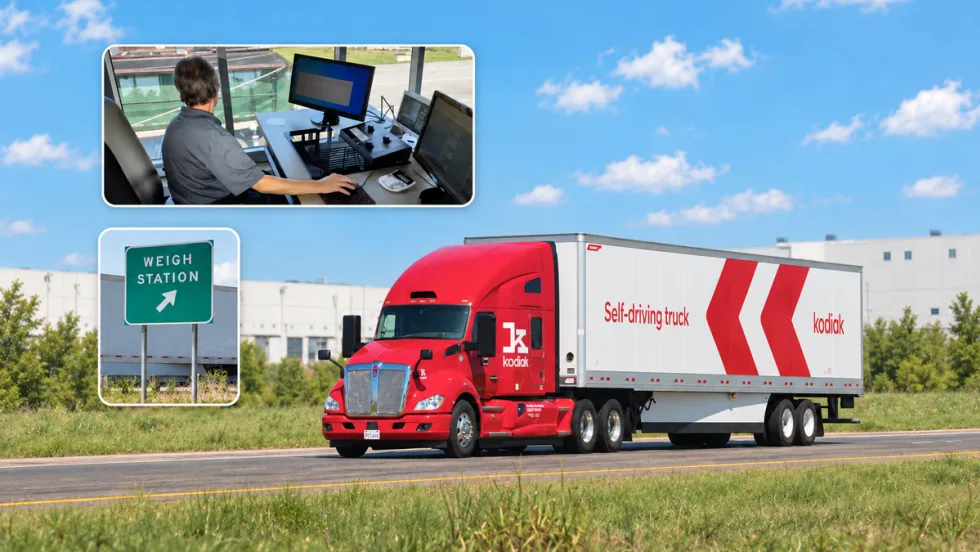
PrePass, Kodiak Connect Driverless Trucks to Roadside Enforcement
The system will allow enforcement agencies to verify Enhanced Inspection information and decide whether Kodiak’s autonomous trucks can bypass roadside screening sites.
Read More →
From One Generation to the Next: How Mentorship Builds Safer Truck Drivers
After three decades in trucking, Harold Perry shares what he's learned about driver safety, mentorship, and helping the next generation build confidence behind the wheel.
Read More →
FMCSA Pauses Biennial-Update Enforcement Amid Motus Transition
Carriers whose updates were due on or after June 1 have more time, while FMCSA works to stabilize its new registration system and warns of phishing sites impersonating its new carrier registration system, Motus.
Read More →
ZF Expands Commercial Vehicle Push in North America
ZF is expanding its North American commercial-vehicle presence with new transmission applications, electrification, trailer technology and autonomous-driving systems.
Read More →
Truck Drivers Need More Than Another Alert
Fleets have more visibility into truck health, safety events, and driver activity than ever. The next challenge is turning all that information into useful guidance for the person who has to decide what to do next.
Read More →
Tesla Wants a Self-Driving Semi. Are Cameras Enough?
Could Tesla’s camera-only autonomous driving technology work on an 80,000-pound Semi? In this commentary, HDT's Deborah Lockridge takes a look at Tesla, Cybercab, and how autonomous trucks see the road.
Read More →
What DOT’s Automated Vehicle Strategy Means for Trucking
The U.S. Department of Transportation issued a new automated-vehicle strategy that outlines plans for driverless-truck regulations, cross-state freight corridors, and federal safety standards.
Read More →
NYC Expands Speed, Pedestrian Safety Tech Across Fleet
New York City is expanding intelligent speed assistance and pedestrian-alert systems across its municipal fleet, moving the technologies from pilot programs into vehicle procurement and retrofit requirements.
Read More →
FMCSA Removes 110 Truck Driver Training Schools from Certified ELDT List
Federal regulators also are targeting more than 160 additional training providers and launching a nationwide audit of third-party CDL skills testers as part of a broader crackdown on trucking fraud.
Read More →
Beyond DOT Compliance: What Makes a Trucking Fleet Truly Safe?
A trucking fleet can follow every rule and still make unsafe decisions. The real test comes when safety conflicts with freight, productivity, or cost.
Read More →