




How to Avoid Weather-Related Pileups
Fleets need a company-wide protocol for dealing with severe weather, and watching forecasts can suggest areas to be avoided.

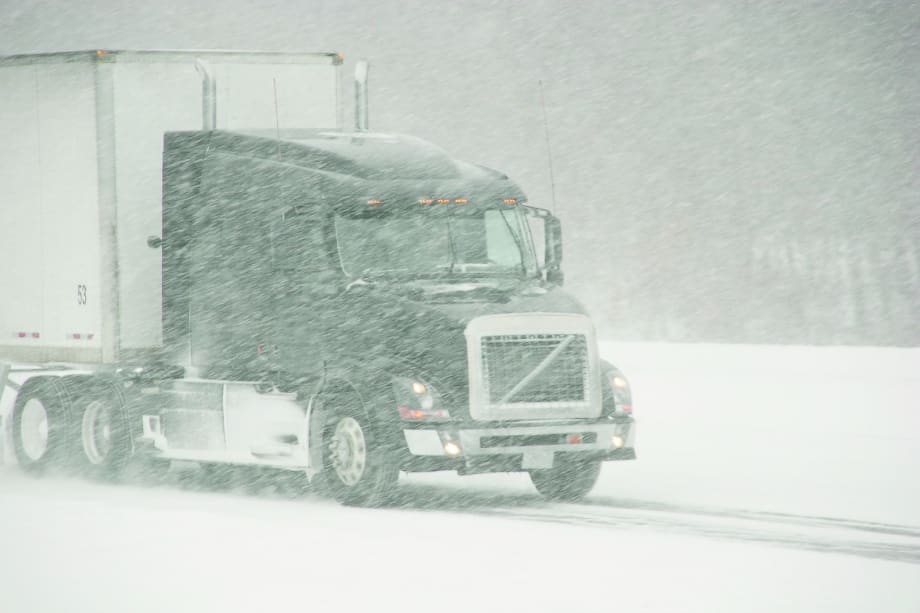
“At least 3 people dead in multi-vehicle pileup,” the headline declares. “One dead from I-70 multi-vehicle pile-up,” yells another. “Blustery snow squalls cause 96-car pileup,” blares a third. The incidents go on and on.
The common thread in all of these is bad weather that produced fog or whiteout conditions, or strong winds that blew dust onto a roadway, or even wildfires that made thick smoke. Motorists and truck and bus drivers suddenly enter a cloud and can no longer see anything. One collision quickly leads to another, and the chain reaction continues until drivers behind are able to stop before they hit the crash scene.
These pileups sometimes occur so quickly that there’s nothing much anyone can do to prevent the ensuing wreckage.
Or can they? Can drivers and trucking companies anticipate such conditions? Can operations be altered to avoid them?
Yes, in the opinion of John Woodroofe, director of vehicle research at the University of Michigan’s Transportation Research Center. In a recent presentation to an audience of private-fleet managers, he recounted some of the pileup incidents that made the news the previous winter and rhetorically asked, “Should my truck have been on the highway that day?”
“We need a driver protocol for fog and whiteout conditions,” he continued, “which covers what they should do when they suddenly encounter zero visibility.”
Setting the flashers and slowing down is very important because reduced speed lessens the results of a crash, and gradually moving over and stopping would be prudent. Sudden maneuvers and stops should be avoided or traffic behind could plow into a truck, starting the chain reaction.
Then again, not stopping as quickly as possible could send a rig into vehicles already stopped just ahead. Pulling onto the shoulder makes sense, except other drivers are likely to do that, too, and run into you.
There just aren’t a lot of good choices. A much better idea is to avoid the situation entirely.
Fog and whiteouts caused by blowing snow are particularly insidious, Woodroofe said, but can often be anticipated by considering the time of the year and what regularly happens along certain stretches of roadway. For instance, some highways in the Upper Midwest and Northeast are subject to lake-effect snow accompanied by high winds. Whiteouts should be no surprise, especially because state transportation departments issue advisories that conditions are ripe for them to happen. In the face of such facts, wouldn’t it be wiser to pause operations or reroute trucks away from the affected areas?
Watching weather forecasts, particularly those of a local and regional nature, can tip off drivers and, more importantly, their supervisors that conditions are risky and alterations should be made to the fleet’s normal operations. The pressure to deliver freight on time causes drivers and dispatchers to want to push through no matter what the weather. That pressure can be lessened by bad-weather protocol that involves the entire company, from dispatch and operations right up to top executives.
Shippers and receivers should be involved so they understand that delivery delays are far preferable to their consignments being scattered across the site of a bad wreck. If operations are altered soon enough, delays can be minimized or prevented altogether.
This is what major fleets regularly do, says Maureen O’Leary, public information specialist at the National Oceanic and Atmospheric Administration, which includes the National Weather Service. They constantly monitor weather, traffic backups, and other factors that could cause delays, and change their operations accordingly. One big company, she notes, has a meteorologist on staff, and changes involve its aircraft fleet as well as trucks. For any carrier, having a plan is the important thing.
A lot of information is available on the Internet, and it’s free. The National Weather Service offers forecasts, watches, and warnings through its website at www.weather.gov, and there are numerous other websites and mobile apps offering information.
“We recommend that individuals should have multiple ways of getting weather alerts,” O’Leary says. “The NWS offers its alerts on our website. We do not offer email push-outs as the market has dozens of options for that.”
The NWS offers a list of third party options for alerts: www.weather.gov/subscribe.
Also, she points out, if truckers have a new smartphone that is Wireless Emergency Alert capable, they will receive text-like messages on weather warning and emergencies automatically. (More info at www.nws.noaa.gov/com/weatherreadynation/wea.html.) Alerts begin with a distinctive audible wailing that tells drivers of a text message.
Keep in mind, however, that looking at a text while driving can be dangerous and illegal. Advise drivers to pull off the highway before looking at a message, or use technology that automatically reads text messages aloud.
More Safety & Compliance

FMCSA Pauses Biennial-Update Enforcement Amid Motus Transition
Carriers whose updates were due on or after June 1 have more time, while FMCSA works to stabilize its new registration system and warns of phishing sites impersonating its new carrier registration system, Motus.
Read More →
ZF Expands Commercial Vehicle Push in North America
ZF is expanding its North American commercial-vehicle presence with new transmission applications, electrification, trailer technology and autonomous-driving systems.
Read More →
Truck Drivers Need More Than Another Alert
Fleets have more visibility into truck health, safety events, and driver activity than ever. The next challenge is turning all that information into useful guidance for the person who has to decide what to do next.
Read More →
Tesla Wants a Self-Driving Semi. Are Cameras Enough?
Could Tesla’s camera-only autonomous driving technology work on an 80,000-pound Semi? In this commentary, HDT's Deborah Lockridge takes a look at Tesla, Cybercab, and how autonomous trucks see the road.
Read More →
What DOT’s Automated Vehicle Strategy Means for Trucking
The U.S. Department of Transportation issued a new automated-vehicle strategy that outlines plans for driverless-truck regulations, cross-state freight corridors, and federal safety standards.
Read More →
NYC Expands Speed, Pedestrian Safety Tech Across Fleet
New York City is expanding intelligent speed assistance and pedestrian-alert systems across its municipal fleet, moving the technologies from pilot programs into vehicle procurement and retrofit requirements.
Read More →
FMCSA Removes 110 Truck Driver Training Schools from Certified ELDT List
Federal regulators also are targeting more than 160 additional training providers and launching a nationwide audit of third-party CDL skills testers as part of a broader crackdown on trucking fraud.
Read More →
Beyond DOT Compliance: What Makes a Trucking Fleet Truly Safe?
A trucking fleet can follow every rule and still make unsafe decisions. The real test comes when safety conflicts with freight, productivity, or cost.
Read More →
Hours of Service Pilot Programs: FMCSA Readies for 2027 Rollout
Two pilot programs could eventually reshape hours-of-service rules, giving truck drivers options to pause their 14-hour clock or use longer split sleeper rest periods.
Read More →
New Guide Offers Pet Safety Tips for Truck Drivers
Hundreds of thousands of pets travel in truck cabs. A new safety guide from Volvo Trucks and the Center for Pet Safety offers practical advice for truck drivers who bring dogs and cats along for the ride.
Read More →