




To DataQ or Not to DataQ...That is the Question
HNI's Don Jerrell shares what he learned about DataQs (FMCSA's method of challenging erroneous CSA points) at a recent ATA Safety & Loss Prevention Management Council meeting.
I recently facilitated and sat in on a number of DataQs at the ATA Safety & Loss Prevention Management Council meetings in Kansas City. There were lots of valuable ideas and thoughts shared there, and I wanted to summarize the key points I took away from the meetings.
Be selective with DataQs
Many carriers are having success via the DataQ system, but to be successful one has to approach the challenges in a professional and thoughtful and selective manner.
The officers that respond to the DataQs can at times be flooded with challenges. They recognize the companies that challenge every inspection or throw a lot of challenges for an inspection hoping that one of them sticks. This can result in the officer not being as focused on those challenges as he/she would on a company that selectively challenges and challenges on specific issues.
Take pictures, take pictures, take pictures
Make sure your drivers are trained on how and when to take pictures. Any mechanical violation should be documented. Make sure they know how to take a picture with the time and date stamp.
A time and date stamp can help in one of two ways:
It can help identify when drivers take a picture after leaving the scale or having fixed the issue but tell you otherwise.
If you do DataQ, the review officer has less room to allege the photo was not taken at the time of the inspection.
Training on this might be something you would want to implement in your orientation process. Have the driver actually go out, use the camera, and take a picture of a piece of equipment.
Request the note section before a Data Q
Officers are encouraged to put information into a notes section of the inspection (some states actually require it). Sometimes they will take pictures of the violation, even of log books. It is up to the officers discretion whether or not to print a copy of the note section when he prints the violation report for the driver.
If on a violation report you happen to see page 1 of 2, and you dont have 10+ violations, then there is a high probability that your driver did not receive the note section. Only small percentages of officers giving those to the drivers; however, we have had success in obtaining this when speaking with the officer, the Data Q review person, and even the FMCSA.
This has been one of my pet peeves for the last year and a half. With a password-protected portal, it seems that this information should be made to the motor carrier, since currently we only access to the drivers side of the story. Might be something to mention to your congressman?
Be constructive and don't beat your officers up
Review your violations starting with the officer and going up, rather than with the supervisor and moving down. Watch your portal, get the information as soon as possible, and if anything is in question, speak directly with the officer.
Some carriers have had success visiting a specific scale where they are having issues. Showing that you care and want to do things right can be viewed very favorably by law enforcement.
Contacting the training officer with the intent of learning what officers are being taught as well as helping to make sure they are receiving retraining if there are issues (without them knowing it was your company) can be helpful for both the carrier involved and the entire industry.
The distinction between stacking and pyramiding
Stacking is when an officer sites the same violation (rule) multiple times. If this happens, we were informed that CSAs program will only take one of the violations into consideration.
Pyramiding is when an officer cites multiple different violations which were the result of one violation (i.e. light chord connection bad, officer writes up the chord and then each light). The CSA system will not pick this up, so you would want to challenge these.
A few other ideas:
Leverage state associations; they have contacts and counterparts.
Be a part of CVSA and use them if you're having issues
Get statements and documentation from maintenance
Get statements and documentation from the person who may have worked on your equipment at the scale who may be able to verify or confirm or deny the issue
It looks like CSA is going to be around for a while, and one of the best ways to protect your company is to make sure that violations are true and correct. Using the Data Q system can be an option in some cases.
Timeliness is one of your best tools. Make sure you are monitoring your portal and are being informed whenever there is an occurrence.
P.S. - Did you know that you can get an actual copy of the inspection report via Data Q?
This article originally appeared on the HNI blog. Used with permission. HNI is a non-traditional insurance and business advisory firm.
More Safety & Compliance
How Waste Connections is Using Data, Telematics, and AI
How do you manage and maintain more than 18,000 connected trucks? Data. Lots of it.
Read More →
Fleet Advantage: Top Logistics Fleets Outperform National Safety Benchmarks
Fleet Advantage's latest TRUST Safety Index found leading logistics fleets maintained significantly lower out-of-service rates and stronger safety scores than national averages, while highlighting persistent challenges related to tires, brakes, and unsafe driving behaviors.
Read More →
Why Fleet Data Matters More Than Ever at Waste Connections [Watch]
Waste Connections' Chuck Palmer explains how telematics, predictive maintenance, safety analytics, and AI help keep vehicles on the road and drivers safe in this episode of HDT Talks Trucking.
Read More →
Short Takes: How K&B is Using AI
Fleets need to "get on board the train" with AI, says Lance Evans of K&B Transportation in this HDT Talks Trucking Short Takes episode.
Read More →
Short Takes: Inside K&B’s Truck Safety Tech
Listen to learn how K&B Transportation uses cellphone-blocking technology, speed management systems, weather geofencing, bridge avoidance tools, and more to improve driver safety.
Read More →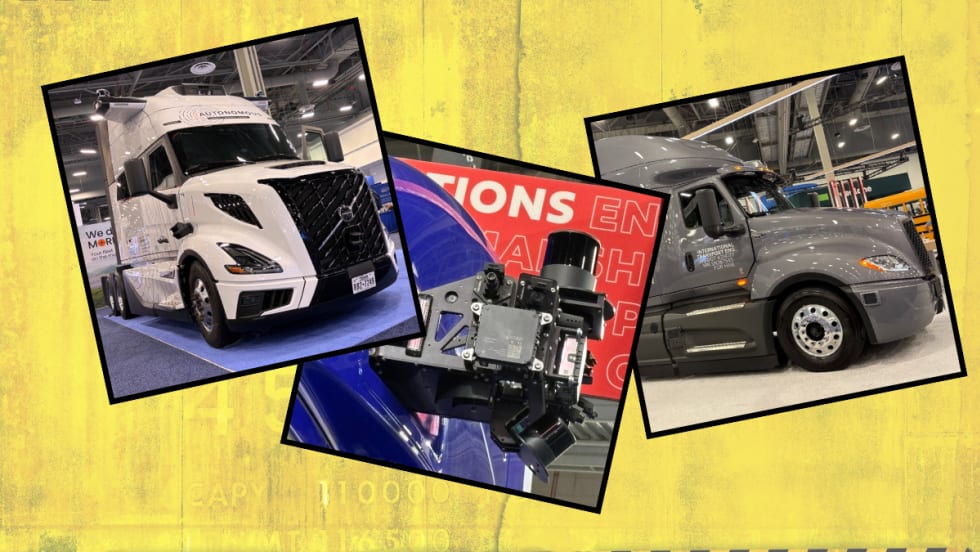
The Biggest Gap in Driverless Trucking Isn’t Tech. It’s Safety Validation
Nauto’s Stefan Heck says autonomous trucks are advancing quickly but proving they’re safe enough for large-scale deployment may be the industry’s hardest challenge.
Read More →
Truck Crash Rates Are Down. So Why Do Insurance Costs Keep Rising?
ATRI’s latest research points to litigation, social inflation, and soaring claims costs as key drivers behind record-high liability premiums for trucking fleets. But there are things motor carriers can do.
Read More →
FMCSA Removes More Than a Dozen ELDs from Registered List
The FMCSA continues its efforts to fight electronic logging devices that don't meet federal requirements, removing more than a dozen from the registered ELD list in May.
Read More →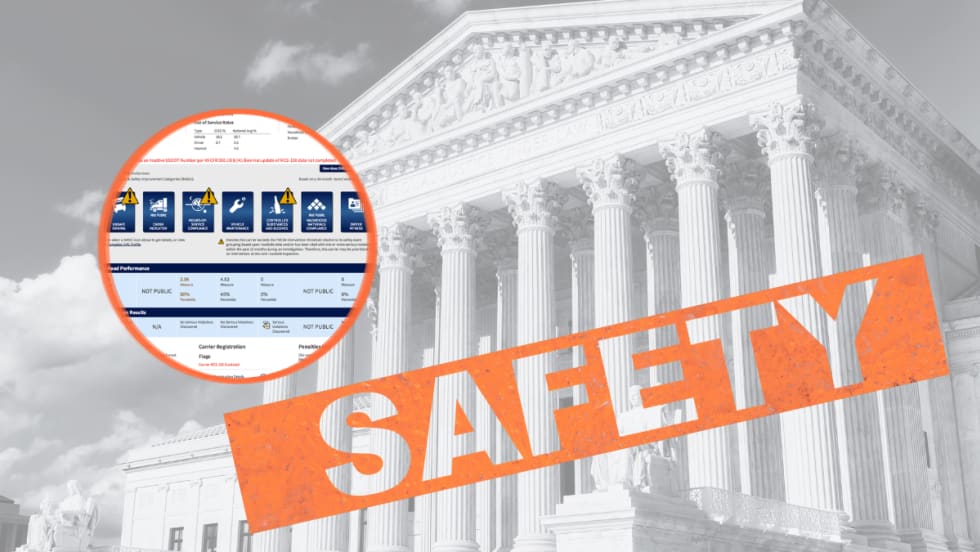
How the Supreme Court Broker Liability Ruling Could Reshape Trucking’s Safety Landscape
The Supreme Court’s May 11 broker-liability ruling may not radically rewrite transportation law overnight. But industry experts say it will intensify pressure on brokers, carriers, and shippers to prove they are prioritizing safety.
Read More →
Recall of Fontaine Fusion Flatbeds Warns Owners Not to Use the Trailers
Some Fontaine Fusion flatbed trailer manufactured between February 2025, and March 2026 could have mainbeams weakened by hydrogen embrittlement because of a problem in the galvanizing process.
Read More →