




Brake Safety Tips for Brake Safety Week
To prepare for the Commercial Vehicle Safety Alliance's Brake Safety Week Sept. 9-15, Bendix Commercial Vehicle Systems recommends making sure you're familiar with CVSA inspection requirements and procedures
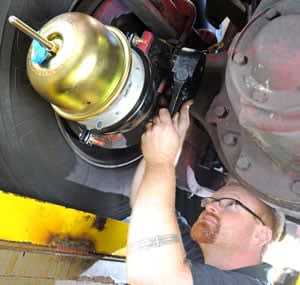
To prepare for the Commercial Vehicle Safety Alliance's Brake Safety Week Sept. 9-15, Bendix Commercial Vehicle Systems recommends making sure you're familiar with CVSA inspection requirements and procedures.
Brake Safety Week, also known as Operation Air Brake, targets six items for inspection:
1. driver's license
2. registration
3. low air warning device
4. pushrod travel (chamber stroke)
5. brake linings/drums, leaks/air loss rate, and tractor protection system.
"For Operation Air Brake, pre-trip brake inspections take on added importance," said Gary Ganaway, director of marketing and global customer solutions for Bendix Spicer Foundation Brake.
"We suggest that drivers test for leaks, examine brake shoes, and measure chamber stroke in accordance with Technology & Maintenance Council and industry standard practices."
To check for leaks, Bendix suggests a 90 to 100 psi brake application, followed by a walk-around inspection of the vehicle, while listening for audible leaks. The CVSA inspection will also test the vehicle's low air pressure warning device, and, if a leak is detected, measure the air loss rate.
Brake shoes should be examined for cracks and checked to ensure they meet the minimum lining thickness standards.
To measure the chamber stroke on each wheel-end, Bendix typically recommends checking the distance from the chamber to the pin with the brakes released, and again after a fully charged brake application. Drivers can incur fines if the difference between the two measurements - the chamber stroke - is outside allowable limits on 25% of a truck's wheel-ends.
For foundation drum brakes, fleets should follow the manufacturer's instructions regarding the adjustment of slack adjusters.
In conducting general wheel-end inspections, Bendix emphasizes close attention to the rubber boots on brakes, where cracks or tears could allow moisture to get inside.
As safety requirements evolve and commercial vehicles continue to advance technologically, regularly scheduled preventive maintenance, along with continued driver and technician training, will become even more vital to the industry.
"Proper brake adjustment and maintenance are more important than ever to commercial vehicle and roadway safety - especially with the first phase of new Reduced Stopping Distance requirements implemented in 2011, and the second phase set to take effect in 2013," Ganaway said.
More Safety & Compliance
How Waste Connections is Using Data, Telematics, and AI
How do you manage and maintain more than 18,000 connected trucks? Data. Lots of it.
Read More →
Fleet Advantage: Top Logistics Fleets Outperform National Safety Benchmarks
Fleet Advantage's latest TRUST Safety Index found leading logistics fleets maintained significantly lower out-of-service rates and stronger safety scores than national averages, while highlighting persistent challenges related to tires, brakes, and unsafe driving behaviors.
Read More →
Why Fleet Data Matters More Than Ever at Waste Connections [Watch]
Waste Connections' Chuck Palmer explains how telematics, predictive maintenance, safety analytics, and AI help keep vehicles on the road and drivers safe in this episode of HDT Talks Trucking.
Read More →
Short Takes: How K&B is Using AI
Fleets need to "get on board the train" with AI, says Lance Evans of K&B Transportation in this HDT Talks Trucking Short Takes episode.
Read More →
Short Takes: Inside K&B’s Truck Safety Tech
Listen to learn how K&B Transportation uses cellphone-blocking technology, speed management systems, weather geofencing, bridge avoidance tools, and more to improve driver safety.
Read More →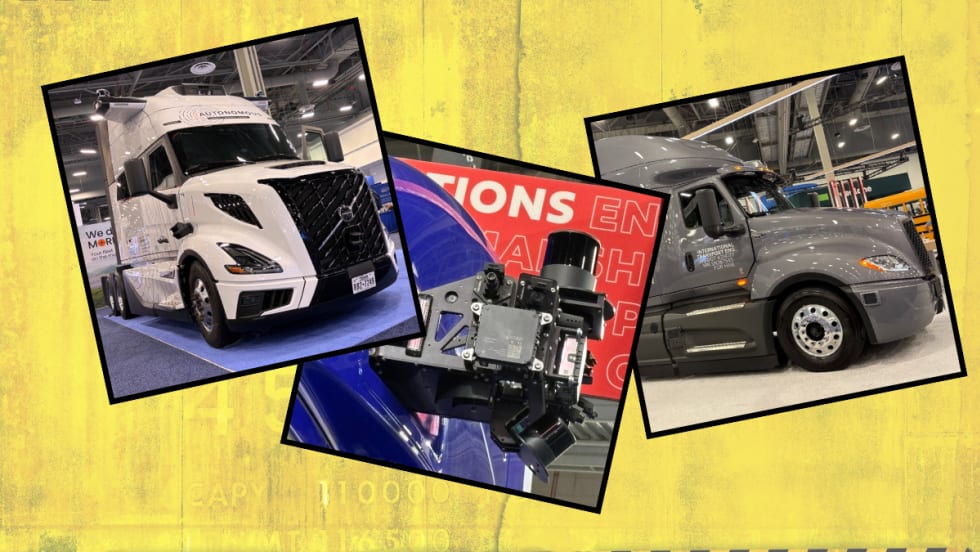
The Biggest Gap in Driverless Trucking Isn’t Tech. It’s Safety Validation
Nauto’s Stefan Heck says autonomous trucks are advancing quickly but proving they’re safe enough for large-scale deployment may be the industry’s hardest challenge.
Read More →
Truck Crash Rates Are Down. So Why Do Insurance Costs Keep Rising?
ATRI’s latest research points to litigation, social inflation, and soaring claims costs as key drivers behind record-high liability premiums for trucking fleets. But there are things motor carriers can do.
Read More →
FMCSA Removes More Than a Dozen ELDs from Registered List
The FMCSA continues its efforts to fight electronic logging devices that don't meet federal requirements, removing more than a dozen from the registered ELD list in May.
Read More →
How the Supreme Court Broker Liability Ruling Could Reshape Trucking’s Safety Landscape
The Supreme Court’s May 11 broker-liability ruling may not radically rewrite transportation law overnight. But industry experts say it will intensify pressure on brokers, carriers, and shippers to prove they are prioritizing safety.
Read More →
Recall of Fontaine Fusion Flatbeds Warns Owners Not to Use the Trailers
Some Fontaine Fusion flatbed trailer manufactured between February 2025, and March 2026 could have mainbeams weakened by hydrogen embrittlement because of a problem in the galvanizing process.
Read More →