




Technology, CSA, and a Culture of Safety
Technology is not only changing what the driver looks for in the job, but also what the job looks for in the driver
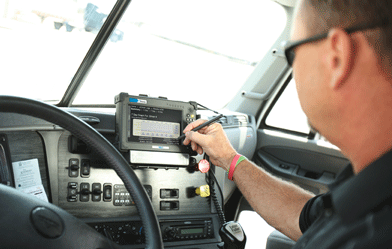
Research shows that making 'chores' socially competitive is a sure-fire way of provoking behavioral change.
Technology is not only changing what the driver looks for in the job, but also what the job looks for in the driver.
On the most basic level, with cabs loaded with EOBRs, interactive maps, scanners etc., carriers need drivers who are comfortable using all that equipment.
More importantly, though, many recent technological innovations revolve around safety. Speed limiters keep trucks from cruising dangerously fast. Collision avoidance systems, such as forward-looking radar and lane departure warning, have to the power to prevent accidents in real time. EOBRs help ensure that drivers don't cheat, or simply make a mistake, and become tired. Communications technology puts help at arm's length.
The effect of these developments is tangible: The industry is the safest it has ever been.
Most of these advances have one thing in common - they are restrictive. A speed limiter, or rollover prevention system, assume a (human) driver shortfall, and compensate accordingly. The Federal Motor Carrier Safety Administration's new CSA enforcement system, and the technological backbone that makes the system work, seems on the surface to be more of the same. In real terms, it forces drivers and carriers under threat of penalty to be safe.
But something more important, more fundamental, is emerging because of CSA: a socially competitive safety environment.
Area Transportation, a Chesterton, Ind.-based flatbed carrier and part of ADS Logistics, is one of the first carriers to leverage CSA scores to offer drivers bonus pay if they maintain good safety records. The recently adopted policy promises drivers up to a 2% pay boost above the standard 27% of load value pay rate. The size of the bonus fluctuates with a driver's score.
The program is still in the rollout phase, so the ultimate effect is still unknown. However, it holds promise on multiple fronts. In addition to its potential to attract more and better drivers, the program is also designed to boost compliance among drivers the company already employs.
"[It's a] reward to keep their CSA scores low, instead of it being a penalty," said Mark Andersen, fleet manager. "If the driver is on the borderline, we are trying to show it as an incentive."
At Area Transportation, a good score means more pay - positive reinforcement that is different from what the industry has seen so far. As the driver shortage heats up, those incentives might get even bigger if carriers begin to fight it out over the industry's best.
But that's not all. CSA, with its safety data on drivers and carriers alike, has created new opportunities for technology. Xata is seizing on that opportunity with its upcoming driver-centric product, Xata Passport.
Xata Passport is unique in two ways. First, it gives drivers the autonomy to control their own scores. This, said the company, will give drivers leverage in seeking employment. Second, and perhaps more importantly, it allows drivers to directly compare themselves and their safety scores to other drivers - a potentially game-changing development.
Research in a field called behavioral economics shows that making "chores," such as being more safety-conscious, socially competitive is a sure-fire way of provoking behavioral change. There are plenty of non-trucking examples of this working, and working very well.
Consider this: In the age of climate change and rising energy costs, everyone knows it's a good, responsible decision to save energy. Actually getting people to do it is a bit more difficult. However, one company seems to have figured it out. Oopower, a growing cleantech firm, partners with energy companies to provide billing with a twist. Instead of simply stating the amount of energy you use, it compares you with all of your neighbors, and rates you against them. It introduces a measure of competition. The effect is amazing. Launched in 2007, the company has so far helped customers save $30 million in energy costs, and eliminate 500 million pounds of CO2.
CSA sets the stage for the same type of social awareness and competition, with people's jobs at stake on top of it. Area Transportation and Xata are only among the first companies to capitalize the idea.
"CSA is really causing a culture change… without people knowing it," said Steve Rush, president of Carbon Express, a 50-truck tanker fleet on the East Coast.
As one trucking exec put it, "the cowboy guys are becoming dinosaurs quickly."
More Safety & Compliance
How Waste Connections is Using Data, Telematics, and AI
How do you manage and maintain more than 18,000 connected trucks? Data. Lots of it.
Read More →
Fleet Advantage: Top Logistics Fleets Outperform National Safety Benchmarks
Fleet Advantage's latest TRUST Safety Index found leading logistics fleets maintained significantly lower out-of-service rates and stronger safety scores than national averages, while highlighting persistent challenges related to tires, brakes, and unsafe driving behaviors.
Read More →
Why Fleet Data Matters More Than Ever at Waste Connections [Watch]
Waste Connections' Chuck Palmer explains how telematics, predictive maintenance, safety analytics, and AI help keep vehicles on the road and drivers safe in this episode of HDT Talks Trucking.
Read More →
Short Takes: How K&B is Using AI
Fleets need to "get on board the train" with AI, says Lance Evans of K&B Transportation in this HDT Talks Trucking Short Takes episode.
Read More →
Short Takes: Inside K&B’s Truck Safety Tech
Listen to learn how K&B Transportation uses cellphone-blocking technology, speed management systems, weather geofencing, bridge avoidance tools, and more to improve driver safety.
Read More →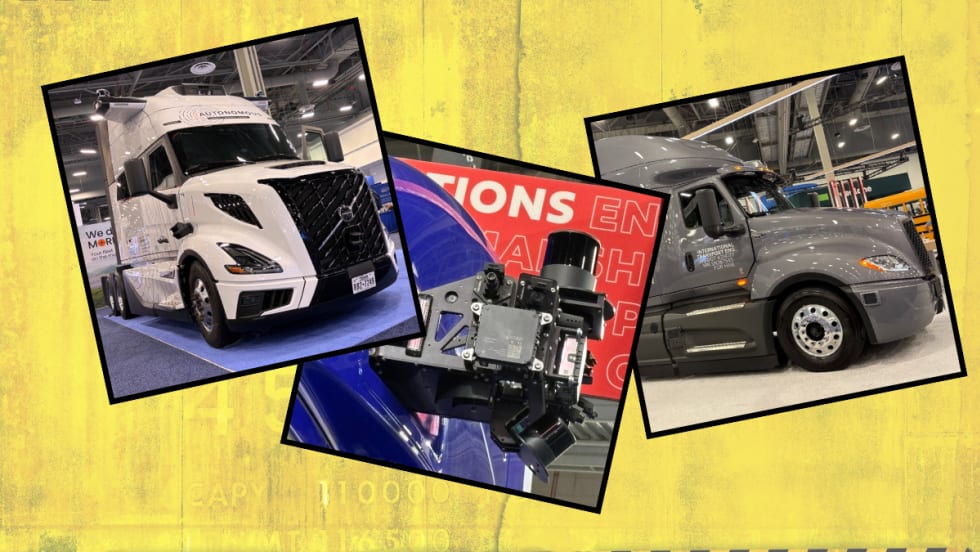
The Biggest Gap in Driverless Trucking Isn’t Tech. It’s Safety Validation
Nauto’s Stefan Heck says autonomous trucks are advancing quickly but proving they’re safe enough for large-scale deployment may be the industry’s hardest challenge.
Read More →
Truck Crash Rates Are Down. So Why Do Insurance Costs Keep Rising?
ATRI’s latest research points to litigation, social inflation, and soaring claims costs as key drivers behind record-high liability premiums for trucking fleets. But there are things motor carriers can do.
Read More →
FMCSA Removes More Than a Dozen ELDs from Registered List
The FMCSA continues its efforts to fight electronic logging devices that don't meet federal requirements, removing more than a dozen from the registered ELD list in May.
Read More →
How the Supreme Court Broker Liability Ruling Could Reshape Trucking’s Safety Landscape
The Supreme Court’s May 11 broker-liability ruling may not radically rewrite transportation law overnight. But industry experts say it will intensify pressure on brokers, carriers, and shippers to prove they are prioritizing safety.
Read More →
Recall of Fontaine Fusion Flatbeds Warns Owners Not to Use the Trailers
Some Fontaine Fusion flatbed trailer manufactured between February 2025, and March 2026 could have mainbeams weakened by hydrogen embrittlement because of a problem in the galvanizing process.
Read More →