




Paccar Adds Drive Axle, Updates Engines
LAS VEGAS — In a step toward more integrated drivetrains in Kenworth and Peterbilt trucks, Paccar announced a new 40,000-pound tandem axle that saves weight and improves fuel economy.

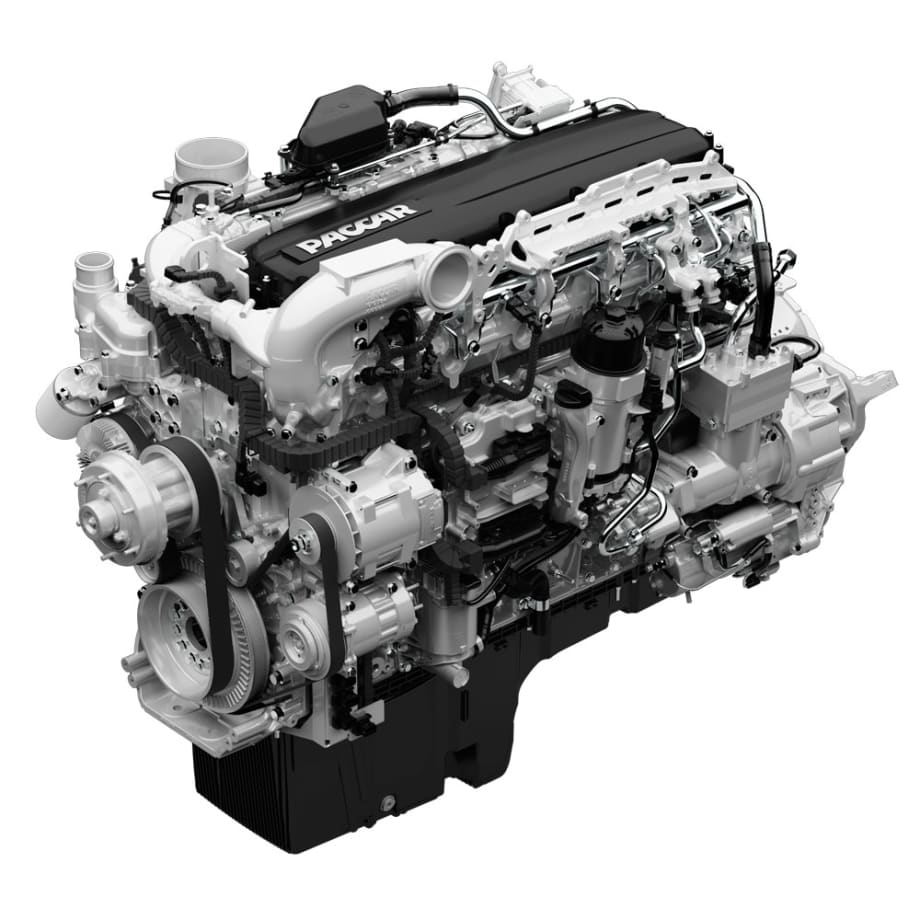
The MX-13 has dropped 50 pounds and now offers up to 510 hp and 1,850 lb-ft of torque.
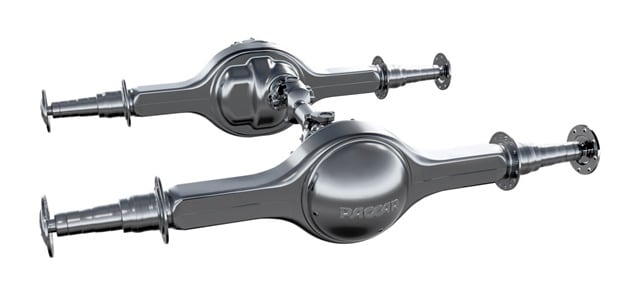
Paccar says its new drive axle is the lightest in its class.
LAS VEGAS — In a step toward more integrated drivetrains in Kenworth and Peterbilt trucks, Paccar announced a new 40,000-pound tandem axle that saves weight and improves fuel economy.
This axle is “really helping us make steps toward an integrated powertrain,” Landon Sproull, Paccar vice president, told reporters at the American Trucking Associations Management Conference & Exhibition.
The new axle is designed for line haul, regional haul and pick-up and delivery customers, rated at 40,000 pounds and supporting a gross combination weight of 80,000 pounds. It offers ratios from 2.47 to 3.70 with engine torque compatibility up to 1,650 lb-ft and multi-torque rating compatibility up to 1,750 lb-ft.
The Paccar axle features a pinion-through-shaft design that simplifies power flow in the axle for maximum efficiency. A laser-welded carrier design eliminates internal fasteners, and reduces oil churn and weight. Overall the axle offers up to 150 pounds of weight savings, according to the company. Sproull did not specify the fuel economy improvements, noting that it would vary by application.
Kenworth and Peterbilt will begin offering the axle to customers in January 2017. It carries a warranty of five years or 750,000 miles.
Also available in Kenworth and Peterbilt trucks in January will be new power, torque and fuel efficiency enhancements to Paccar MX-13 and MX-11 engines for North America. Nearly 50% of Peterbilt and Kenworth heavy-duty trucks currently are produced with Paccar MX engines, according to Sproull.
Paccar increased the MX-13 engine’s output to 510 hp and 1,850 lb-ft of torque and increased the MX-11 engine’s output to 430 hp and 1,650 lb-ft of torque. The enhanced Paccar MX-11 engine also adds a new 335 hp and 1,150 lb-ft torque rating in the lower end of the power range. Paccar’s MX engines now deliver peak torque at 900 rpm for the majority of engine ratings, supporting increased performance and driving flexibility and supporting downspeeding strategies for fuel economy.
The MX-11 adds a new 335 hp and 1,150 lb-ft torque rating in the lower end of the power range.
The 2017 MX-13 and MX-11 engines include a new single cylinder air compressor, variable displacement oil pump, and variable speed coolant pump for better fuel economy than the previous engine design.
The MX-13 is also 50 pounds lighter. The weight savings primarily came through changes in the accessories, Sproull explained, including a new high-performing turbocharger, with a different turbo for engines up to 485 hp and a different one for 485 hp and beyond.
The new MX-13 and MX-11 engines extend oil and fuel filter change intervals from 60,000 miles to 75,000 miles.Also new is a single canister aftertreatment system that reduces weight by 100 pounds, improves the performance of the aftertreatment system, improves serviceability and lengthens service intervals, according to the company.
More Products

More Trailer Data Through the Same Seven-Way [Video]
Can trucking’s standard seven-way connector handle more cameras and trailer data? Grote’s Adam Slade shows HDT how the company is using new technology with its 4See trailer system, not only to add a new backup camera but also to expand other capabilities — without adding another connection.
Read More →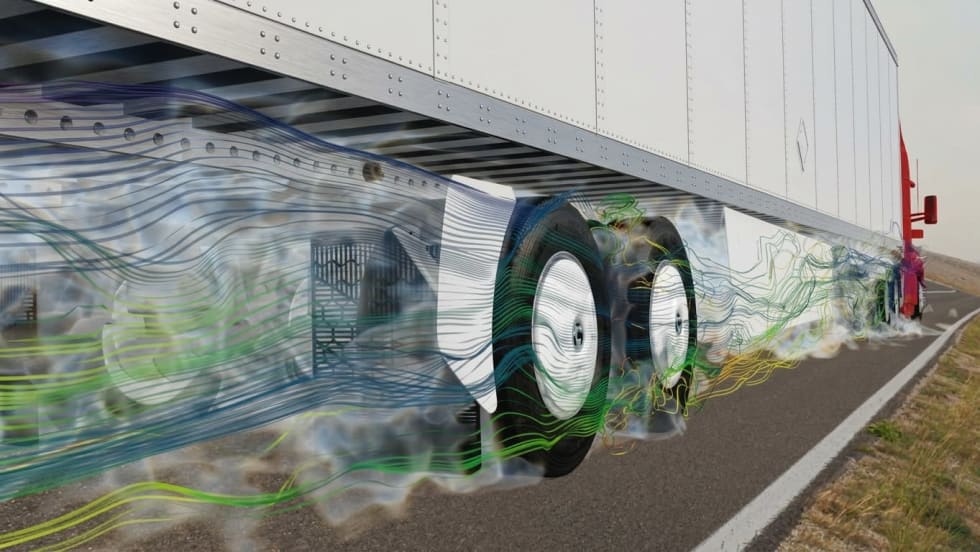
FlowBelow Redesigns Trailer AeroSlider to Cut Fuel Use
The lighter trailer aerodynamic system installs in less than 45 minutes, according to the company, with potential payback in under a year depending on fuel prices and trailer mileage.
Read More →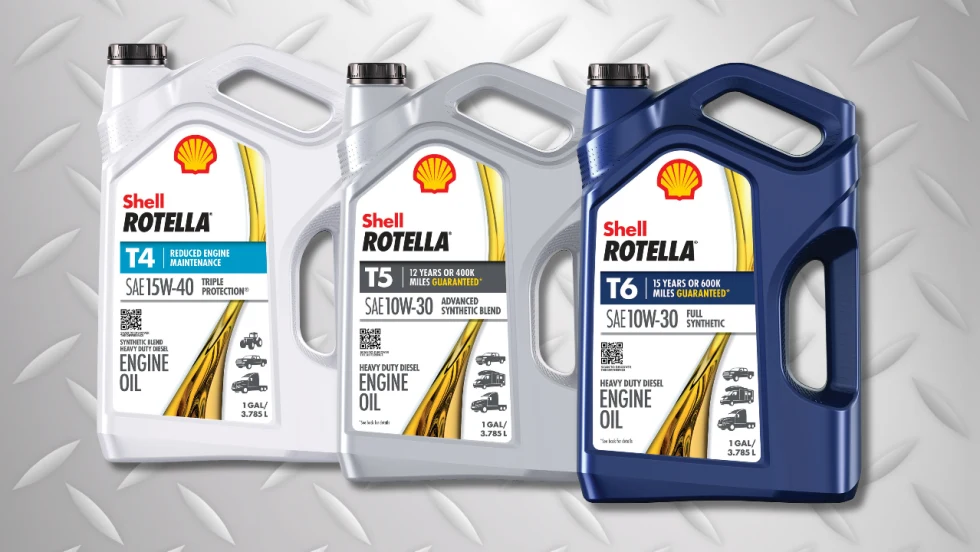
Shell Prepares Rotella Oils for 2027
New CL-4 and FB-4 formulations will begin arriving in early 2027, with improved protection against oil breakdown, wear and deposits, according to Shell.
Read More →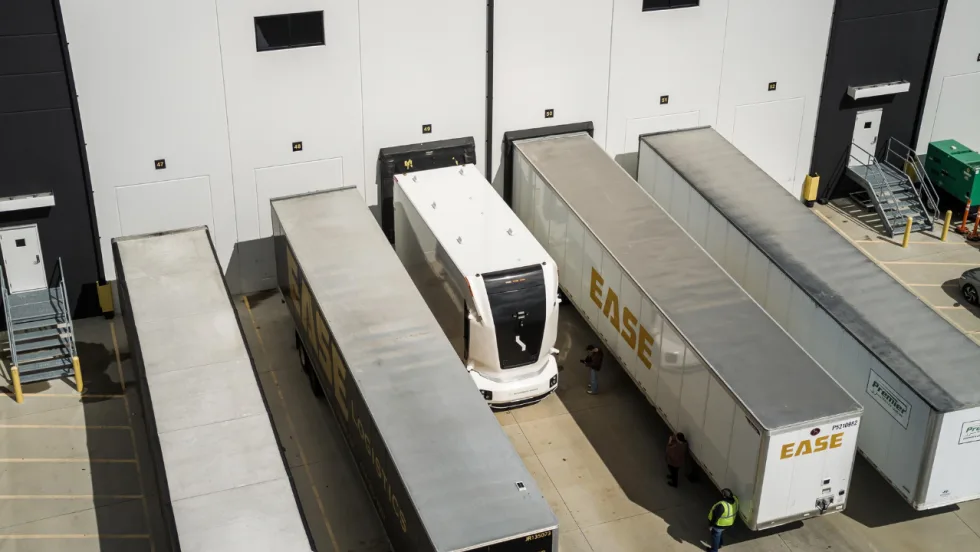
Einride Driverless Electric Trucks Begin Daily Freight Operations in Ohio
Two cabless electric trucks are hauling freight between EASE Logistics facilities in Marysville, Ohio, as part of a multi-state truck automation project.
Read More →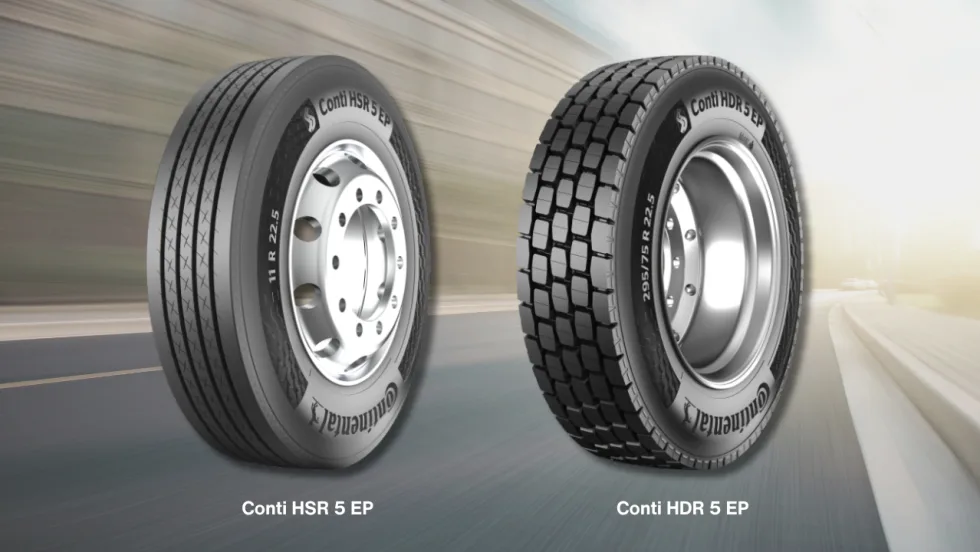
Continental Introduces New Regional Truck Tires
Continental says its new Generation 5 steer and drive tires for regional operations offer longer tread life, with estimated mileage gains of 22% and 19%, respectively.
Read More →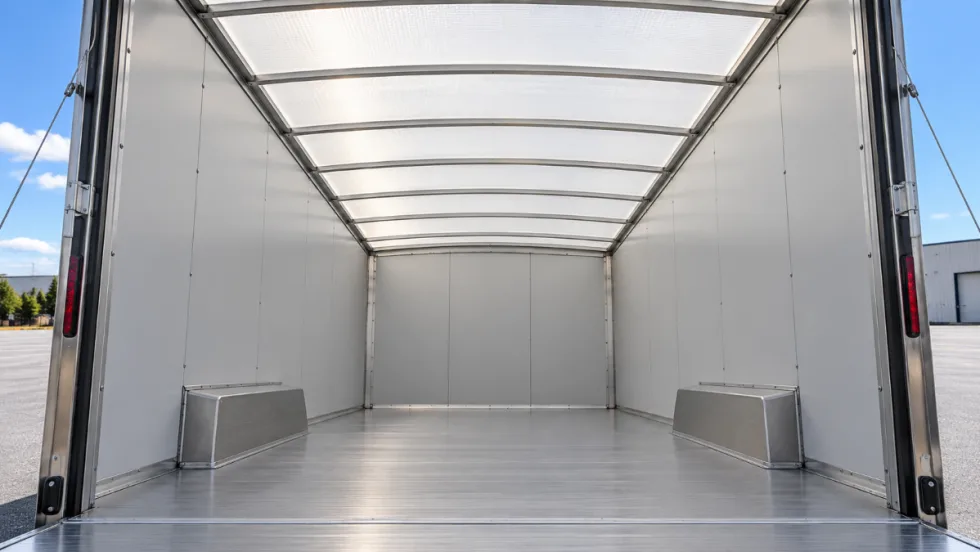
Tekmodo Introduces CargoBright Brand for Translucent Trailer Roofs
CargoBright is designed to diffuse daylight across the cargo area while performing as a working vehicle roof.
Read More →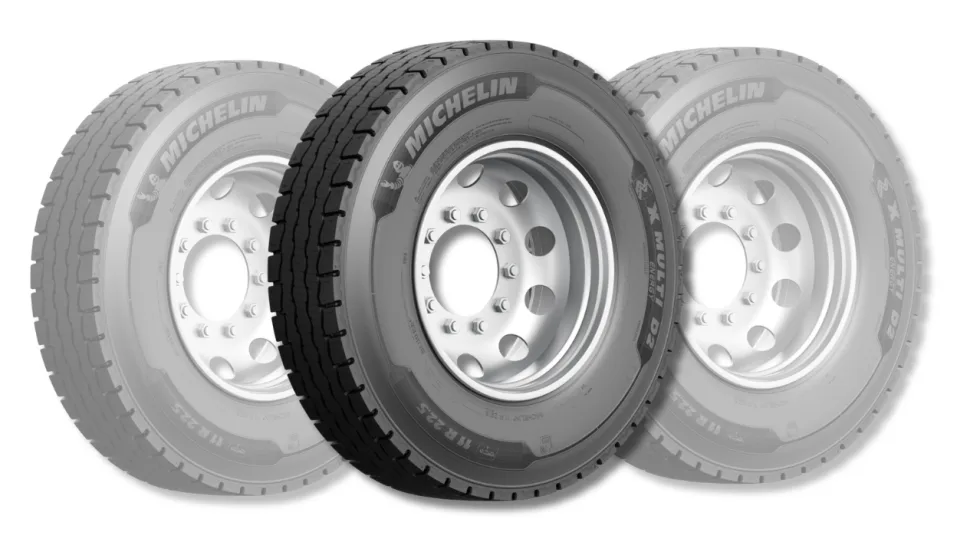
Michelin Tire Improves Efficiency and Durability for Regional Fleets
The Michelin X Multi Energy D2 is a regional haul drive tire engineered to help fleets improve fuel efficiency, durability and traction in demanding stop-and-go operations.
Read More →
What Geotab's New AI Connector Means for Fleets
Fleets can now ask their usual AI assistants questions about maintenance, safety, fuel use, and vehicle performance, using their live Geotab data, and take action on the answers without leaving their preferred AI tool.
Read More →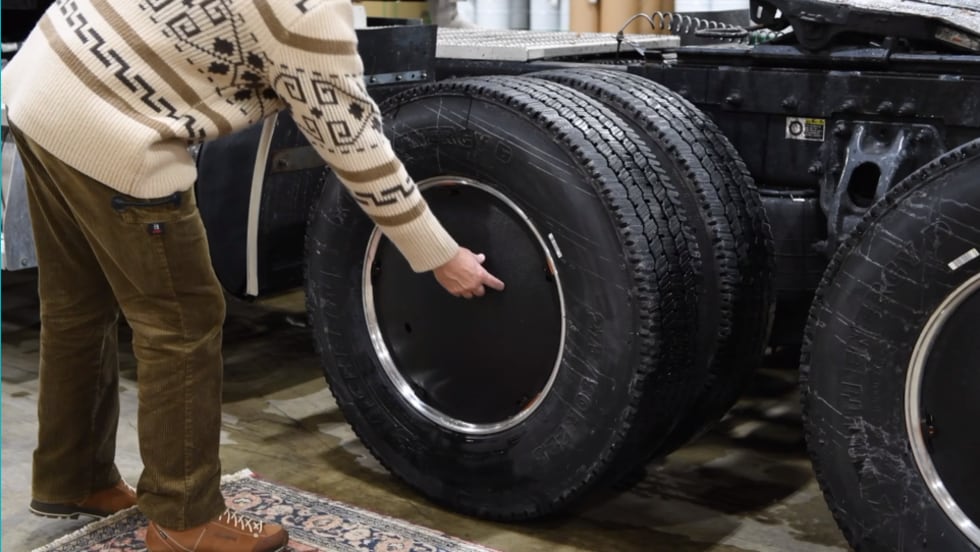
Deflecktor: Hubbub Aerodynamic Wheel Cover Cost-Effective Even for Trailers
Aerodynamic wheel covers can deliver small but meaningful fuel-economy gains for fleets, and Deflecktor says its latest design aims to make the technology easier and more affordable to deploy.
Read More →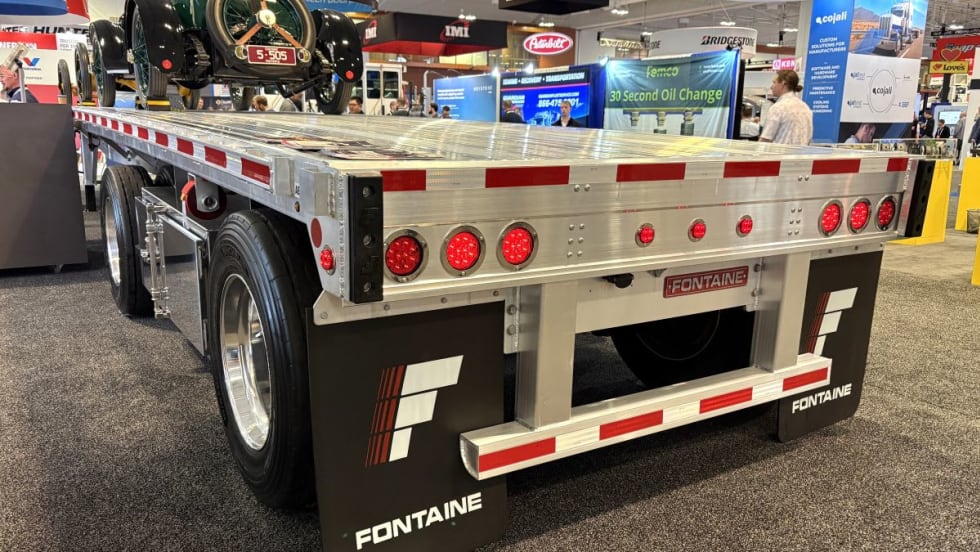
Fontaine Expands Flatbed Lineup with New Fleet-Focused Models, Eyes 2027 Launch
Fontaine is broadening its flatbed lineup with new models aimed at fleets, including a lightweight aluminum trailer expected in 2027 that emphasizes durability, repairability, and lower cost.
Read More →