




Creation of Freight Network Not an Easy Task
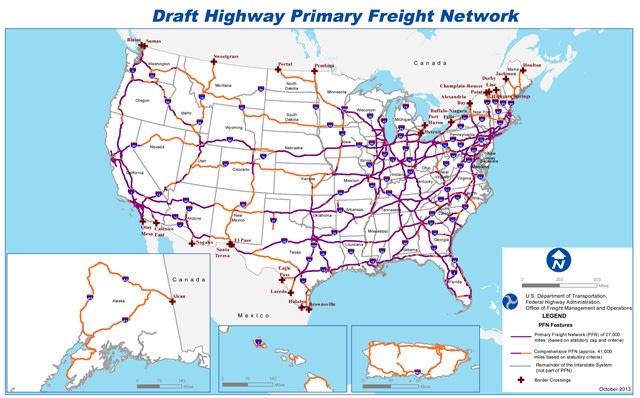
In last year’s highway bill, Congress said it wants the Department of Transportation to set a place for freight at the transportation policy table. The first step in that process, defining a highway-based Primary Freight Network, is under way now. It turns out, though, that tracing a Primary Freight Network is not a simple thing.

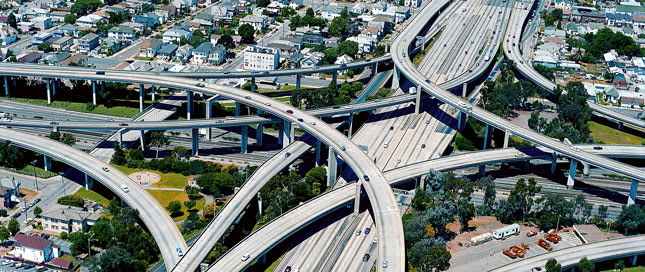
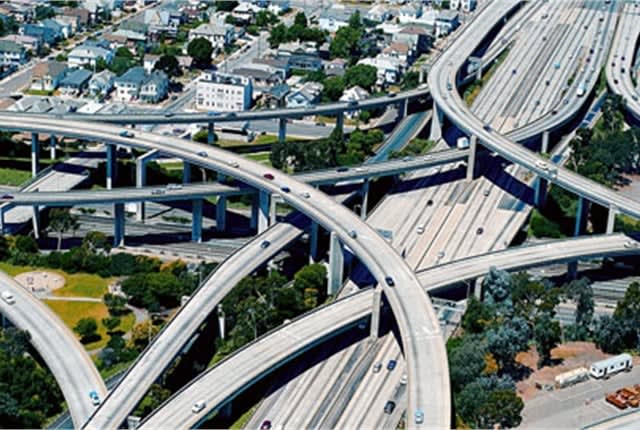
In last year’s highway bill, Congress said it wants the Department of Transportation to set a place for freight at the transportation policy table.
“It is the policy of the United States to improve the condition and performance of the national freight network to ensure that the national freight network provides the foundation for the United States to compete in the global economy,” the law says.
This first-ever recognition of freight’s central role in the national transportation system launched a multi-year effort by DOT to measure the scope and distance of goods movement, as a way to establish priorities and set goals.
The first step in that process, defining a highway-based Primary Freight Network, is under way now. The second step will be to determine Critical Rural Freight Corridors designated by the states, and to unite the primary network and the corridors into a National Freight Network. Ultimately this will lead to a National Freight Plan.
It turns out, though, that tracing a Primary Freight Network is not a simple thing.
What's required
Congress told DOT to build the network around eight pieces of information. They include the origin and destination of freight movements, tonnage and value of freight and the percentage of trucks in daily traffic on main roads. The network also should include land and water points of entry, access to energy exploration, population centers and connectivity.
The directions from Congress also said the network should be limited to 27,000 centerline miles, although that could be expanded to 30,000 miles if necessary.
This might look like a straightforward gathering of facts, but the Federal Highway Administration, the DOT agency in charge of the work, found that it’s actually pretty complicated.
The agency determined that it’s not possible to pack all of Congress’s requirements into a 27,000-mile, or even a 30,000-mile network.
For example, the agency said, thousands more miles are needed to come up with a network that links the primary segments with connections to Mexico and Canada. To stay within the limits, the agency would have to raise the thresholds on volume, value and tonnage used to designate network segments.
A more likely mileage number would be about 41,500, the agency said.
And that's not all
There are other challenges, as well, the agency said in a recent request for comments on its work.
Because Congress did not spell out its goals for the primary freight network, it’s hard for the agency to know where to draw the line.
“For example,” FHWA said, “a map that shows the top roads by percentage of truck traffic and a map that shows the top roads by average annual daily truck traffic yields very different results.”
Also, the requirement that the network be based on centerline roadway miles hinders the agency from including multimodal corridors, the agency said.
A complete network needs to include the entire freight transportation system, not just highways, the agency said.
The agency said it used the best data it has but the information is not good enough to trace all freight movements, particularly in the first and last miles between highways, rail yards, ports and major airports.
And the requirement that the network be based on centerline highway miles limits the agency’s ability to put urban freight into the mix. It would be helpful to let local, regional and state governments designate critical urban freight routes for the network, the agency said.
Heading the right direction?
Close followers of this issue in the freight community see FHWA’s proposed network as a reasonable beginning to what will be an extended process.
“What they have done at least for now appears to be headed in the right direction,” said Darrin Roth, director of highway operations for American Trucking Associations. He, like FHWA, is concerned about the lack of clarity from Congress regarding the purpose of the network.
“Without knowing what it’s supposed to be used for, it’s kind of hard to say whether it has to be connected,” he said. “Maybe it doesn’t.”
ATA has for a long time expressed concern about freight bottlenecks, and Roth lauded the agency’s effort to identify them on the network. What’s needed now is for Congress to provide dedicated funding to clear those choke points, he said.
He agrees with the agency that it would be helpful to take a multimodal approach to the network, but is cautious about one possible outcome.
If the point of the network is to target freight projects for money, it is important to make sure that the tax revenues collected from the various modes go the needs of those modes, he said.
“We would be very concerned if we were forced to subsidize non-highway modes,” he said.
He explained that the corridor approach to the network could identify the primary highway and then add on rail or water lines that parallel that service.
“If that were to happen you’d have a single network with all those modes and make money available to states out of the Highway Trust Fund for that entire multimodal network,” he said. “That’s something we would be concerned about.”
More than money distribution
Another stakeholder, Leslie Blakey of the Coalition for America’s Gateways and Trade Corridors, stressed that the network is not just about designating where federal dollars should go.
Blakey, whose group represents state transportation departments, Metropolitan Planning Organizations, ports and freight corridors, said the network also is about raising freight’s profile in national transportation policy. The freight distribution system supports manufacturing and retail in many different industries and is integral to national competitiveness, she said.
Too often in the past transportation policy has focused more on moving people. “I think that the point of this exercise is to take the blinders off (and) look at what the system looks like for goods movement,” she said.
Having that information will help inform decisions about public-private partnerships and other types of transportation investments.
“It would be a mistake to think of it only as a mechanism for distributing money. Really, it’s a process of trying to get the full spectrum of our freight system and orient our thinking around how our transportation network has to support this activity.”
It is clear, she noted, that Congress intends the network to be multi-modal. That was one of the key themes of a congressional panel’s recent report on freight, which recommended a comprehensive, multimodal approach to freight transportation.
Work on the network will continue through most of next year, with state recommendations for Critical Rural Freight Corridors due in the spring.
Ed Strocko of the Office of Freight Management and Operations at FHWA said he expects Congress will update its instructions on the network as the agency completes its work.
“When we put out our final notice we will talk about the issues,” he said. “We have kept (Congress) informed.”
More Drivers
EEOC Sues Texas Trucking Company Over Driver Age Limits
The agency says Trancasa USA rejected applicants over 65 and applied tougher driving-record standards to those over 60.
Read More →
Nussbaum, Roehl Announce Second Driver Pay Increase This Year
This year has seen a swath of major truck driver pay increases as freight capacity has tightened.
Read More →
From One Generation to the Next: How Mentorship Builds Safer Truck Drivers
After three decades in trucking, Harold Perry shares what he's learned about driver safety, mentorship, and helping the next generation build confidence behind the wheel.
Read More →
Truck Drivers Need More Than Another Alert
Fleets have more visibility into truck health, safety events, and driver activity than ever. The next challenge is turning all that information into useful guidance for the person who has to decide what to do next.
Read More →
FMCSA Removes 110 Truck Driver Training Schools from Certified ELDT List
Federal regulators also are targeting more than 160 additional training providers and launching a nationwide audit of third-party CDL skills testers as part of a broader crackdown on trucking fraud.
Read More →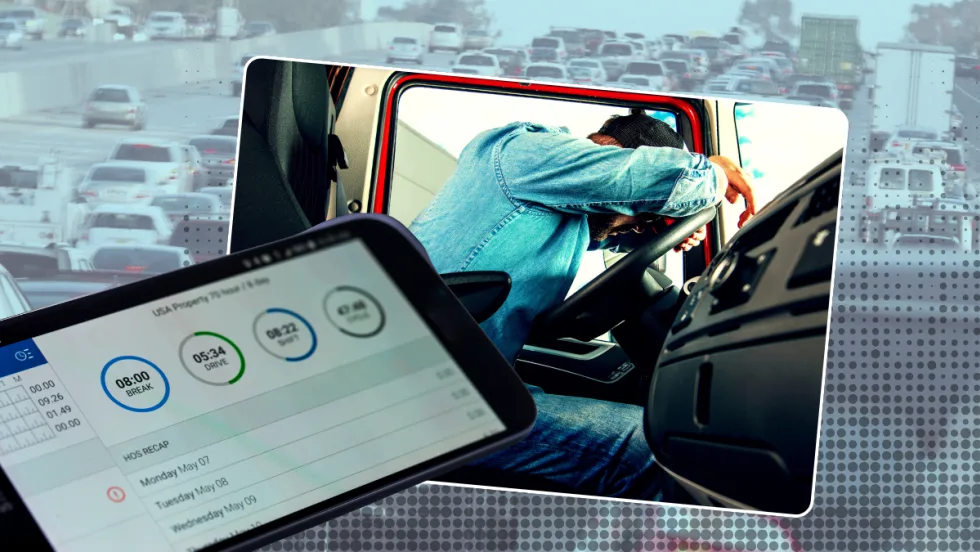
Hours of Service Pilot Programs: FMCSA Readies for 2027 Rollout
Two pilot programs could eventually reshape hours-of-service rules, giving truck drivers options to pause their 14-hour clock or use longer split sleeper rest periods.
Read More →
Medical Cards, English Proficiency Reshape Roadcheck Violations
Medical-card violations jumped to the top of the driver out-of-service list during CVSA’s 2026 International Roadcheck, while English-language proficiency violations appeared among the leading violations for the first time.
Read More →
Driver Trust Can Make or Break the Success of Fleet Safety Technology
New Teletrac Navman research suggests that onboarding, transparency about driver data, and positive feedback can play a significant role in how commercial drivers respond to safety and coaching technology.
Read More →
EEOC Sues KLLM Over Alleged Sex Discrimination in Driver Training
KLLM is facing a federal sex-discrimination lawsuit over policies the EEOC alleges put female truck driver trainees at a disadvantage.
Read More →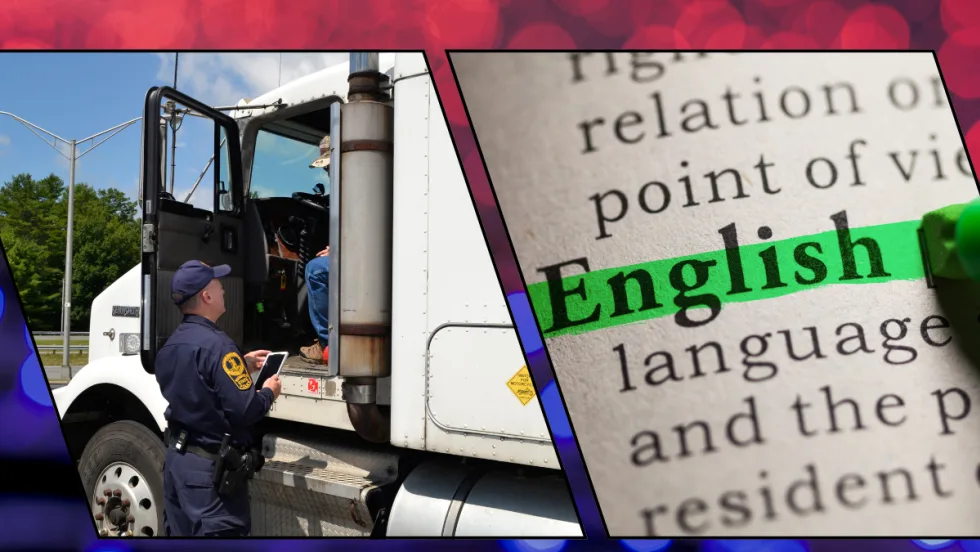
FMCSA Moves to Codify English Language Requirements for Commercial Drivers
By changing regulations on English-language proficiency requirements for commercial drivers, rather than relying on a guidance memo, the FMCSA said future administrations won't be able to walk back the Trump administration's stricter enforcement with just a memo.
Read More →