




How Do Your Drivers Measure Up?
The face of your company that customers (and often, their customers) see most is not that of the CEO, CFO, or even the fleet manager. It’s that of your driver. Who has a major impact on your company’s bottom line when it comes to fuel consumption efficiency, non-scheduled maintenance, and accident avoidance? Again, it’s your driver. So having the right metrics to evaluate driver performance is absolutely essential to the success of your business. But what are those “right metrics?”
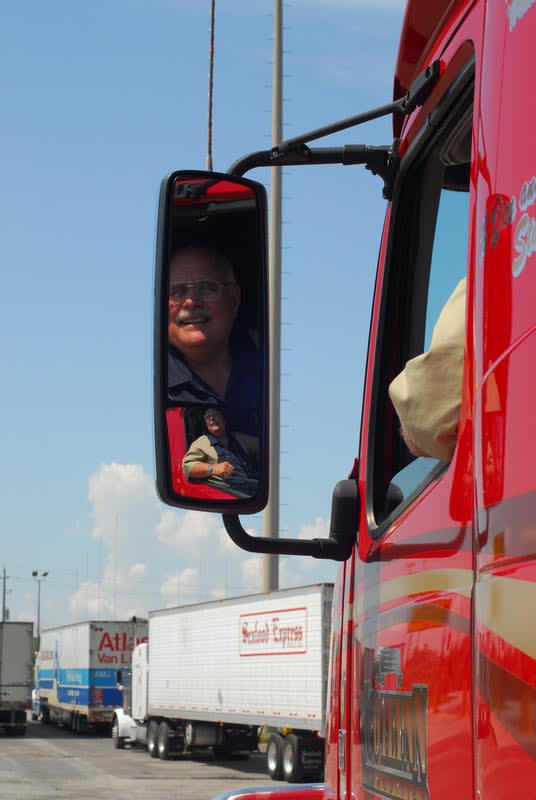
Photo by Jim Park
Photo by Jim Park
The face of your company that customers (and often, their customers) see most is not that of the CEO, CFO, or even the fleet manager. It’s that of your driver. Who has a major impact on your company’s bottom line when it comes to fuel consumption efficiency, non-scheduled maintenance, and accident avoidance? Again, it’s your driver. So having the right metrics to evaluate driver performance is absolutely essential to the success of your business. But what are those “right metrics?”
Transportation companies are well aware of the BASIC standards set up through CSA that measure the following: unsafe driving, HOS compliance, driver fitness, controlled substance use, vehicle maintenance, hazardous materials compliance, and crash indicators. These specific standards and the way to measure them were established in response to safety concerns, and violating any of them can be incredibly costly for a company.
Fortunately, advancements in technology allow these metrics to be more accurately and easily measured. On-board computers can provide far more information than just measuring HOS, including engine idle time, hard-braking events, and over-speeding instances. By looking at these metrics, driver-by-driver, a company can provide valuable feedback to help each driver improve their operating and safety performance. And that, ultimately, benefits the driver, the company, and the public.
But measure these areas alone and you’re short-changing your drivers, your customers, and your company.
Remember, CSA isn’t really concerned with other facets of your business not connected to safety concerns. However, these other facets can be very meaningful to your customers. Obviously, it is vital that deliveries be made accurately, on-time, and damage-free. But it’s also important that your drivers display professional, courteous behavior and a good appearance. You may want to set your own standards in-house to be able to establish what is acceptable and what is not in these areas. In addition to your own assessments, you can also measure driver behavior by conducting customer surveys.
Through EOBR measurements, in-house performance standards, and customer surveys, you should be able to discern which drivers are doing well and which ones need greater attention from management. Most drivers, like most employees, want to do a good job, so constructive and objective feedback is generally well-received when provided in a positive manner.
Some companies have even incentivized their drivers with recognition and monetary rewards for good performance results. There’s a good reason to go through this rather than just saying good-bye to drivers who may have made some fixable errors. That’s because finding and keeping good drivers, especially over-the-road drivers is a real challenge for transportation companies. Drivers are aging out; the average age for over –the-road drivers is 50+. The U.S. DOT estimates a driver shortage approaching 250,000 by the end of this year. With this in mind, it may be more effective to work at making your existing drivers the best they can be rather then spend time training new drivers.
So when you’re evaluating and measuring your drivers, don’t just measure them against federal standards; measure them against your own company standards as well as those of your customers. And if you find drivers that don’t quite measure up, do what you can to help move them in a positive direction.
Joe Gallick is Vice President of Dedicated Services for NationaLease. He is an experienced supply chain executive who previously held several positions at Penske Logistics, where he served for more than 25 years. This article originally appeared on the AmeriQuest blog and is used with permission.
More Drivers

From One Generation to the Next: How Mentorship Builds Safer Truck Drivers
After three decades in trucking, Harold Perry shares what he's learned about driver safety, mentorship, and helping the next generation build confidence behind the wheel.
Read More →
Truck Drivers Need More Than Another Alert
Fleets have more visibility into truck health, safety events, and driver activity than ever. The next challenge is turning all that information into useful guidance for the person who has to decide what to do next.
Read More →
FMCSA Removes 110 Truck Driver Training Schools from Certified ELDT List
Federal regulators also are targeting more than 160 additional training providers and launching a nationwide audit of third-party CDL skills testers as part of a broader crackdown on trucking fraud.
Read More →
Hours of Service Pilot Programs: FMCSA Readies for 2027 Rollout
Two pilot programs could eventually reshape hours-of-service rules, giving truck drivers options to pause their 14-hour clock or use longer split sleeper rest periods.
Read More →
Medical Cards, English Proficiency Reshape Roadcheck Violations
Medical-card violations jumped to the top of the driver out-of-service list during CVSA’s 2026 International Roadcheck, while English-language proficiency violations appeared among the leading violations for the first time.
Read More →
Driver Trust Can Make or Break the Success of Fleet Safety Technology
New Teletrac Navman research suggests that onboarding, transparency about driver data, and positive feedback can play a significant role in how commercial drivers respond to safety and coaching technology.
Read More →
EEOC Sues KLLM Over Alleged Sex Discrimination in Driver Training
KLLM is facing a federal sex-discrimination lawsuit over policies the EEOC alleges put female truck driver trainees at a disadvantage.
Read More →
FMCSA Moves to Codify English Language Requirements for Commercial Drivers
By changing regulations on English-language proficiency requirements for commercial drivers, rather than relying on a guidance memo, the FMCSA said future administrations won't be able to walk back the Trump administration's stricter enforcement with just a memo.
Read More →
Drivers Put Western Star Trucks to the Test at Star Nation Experience
Watch to get an inside look at the Western Star trucks, technology, and community behind the Star Nation Experience 2026!
Read More →
Trump Administration Looks to Put More Veterans Behind the Wheel
The Freedom Haulers program pulls together existing and expanded programs at several federal agencies to recruit veterans to drive commercial heavy-duty trucks and cut the red tape for them to get a CDL, training, and employment.
Read More →