





Related: Rush Dealer Technicians to Compete in Growing Annual Rodeo
Cautiously Optimistic, Rusty Rush Looks Ahead
The Rush Truck Centers CEO says he sees an industry today with a lot of new technology and not nearly enough technicians.
December 13, 2017

Rusty Rush predicts “headwinds” with electric trucks, but thinks they will start to become commonplace in a couple years’ time. Photo: Jack Roberts
3 min to read

Rusty Rush predicts “headwinds” with electric trucks, but thinks they will start to become commonplace in a couple years’ time.Photo: Jack Roberts
Looking back on 2017, Rusty Rush sees a year of broad-based, consistent growth. And the chairman and CEO of Rush Truck Sales, says he’s mildly surprised by that result.
Speaking to a group of journalists ahead of the 2017 Rush Technician Rodeo in San Antonio, on Dec. 12, Rush noted that overall Class 8 sales are projected to wrap up at around 197,000 units for the year, which he says is an uptick of 25-30% from initial projections. “We’ve seen excellent numbers from our perspective,” Rush said. “That includes International, Peterbilt, Isuzu, and Hino. So I feel good about where we’ve been, and as good as it’s possible for me to feel in December. All in all, I’m cautiously optimistic looking ahead into next year.”
Looking at overall industry trends today, Rush said he firmly believes electric trucks are coming, and that electronic logging devices will be a technology enabler for the industry as well.
“I think we will see electric trucks, but they’re going to be more on the medium-duty and P&D side of the business,” Rush said. “I think we’re still 2 or 3 years away from seeing them in substantial numbers. And we’re probably 10 to 15 years away from seeing any significant presence in the long-haul, Class 8 markets. There will be some headwinds with electric trucks. But I think they will eventually just be a part of an OEM’s product offerings alongside diesel and natural gas units. But I think we’ll learn how to sell and service them as dealers.”
Rush is also pragmatic about ELDs noting that they will be technology and maintenance enablers when tied in with telematics and diagnostic systems. “They’re going to work their way into the system,” he said. “And it’s going to be hard for people who are used to running a little bit outside of the lines. They say they can’t survive. And we’ll see. But I don’t think we’ll see a large drop-off in carriers because they can’t compete with ELDs. We might lose 4% or so. But we’ll see.”
Mike McRoberts, Rush’s senior vice president and chief operating officer, said he thinks the widespread, forced ELD adoption will be a good thing on the maintenance front since it will give the entire U.S. truck population a common platform to enable telematics capabilities. “ELDs make diagnosing problems easier for technicians,” McRoberts noted. “They can really cut diagnostic times considerably — particularly when it comes to tracking down electronic issues on a truck.”
But the big event in San Antonio, the Rush Technician Rodeo, was never far from Rush’s thoughts during the discussion. “This is one of my favorite events of the year,” he said. “I just love it. We’ve gotten so big, that’s it’s impossible for me to reach out and touch 6,500 people. This gives me a chance to spend some time around our techs and set a culture. Because if you can start a fire, it spreads. People are attracted to success. And that’s what this event is all about.”
Still, Rush and McRoberts both said the national shortage of technicians remains a troubling issue and that Rush Truck Centers continues to work on new ways to attract and retain new young technicians. “We could hire 500 technicians right now,” McRoberts said. “We could put 50 to work in Ohio alone today. So it’s a problem. And we’re working on finding new ways to invest in our younger technicians with new programs, more training, and new ways of working — including doing more preventive maintenance work. But we find that if we can keep them for that first year, we tend to keep them for a long time. So that’s an additional focus as well.”
Subscribe to Our Newsletter
More Maintenance
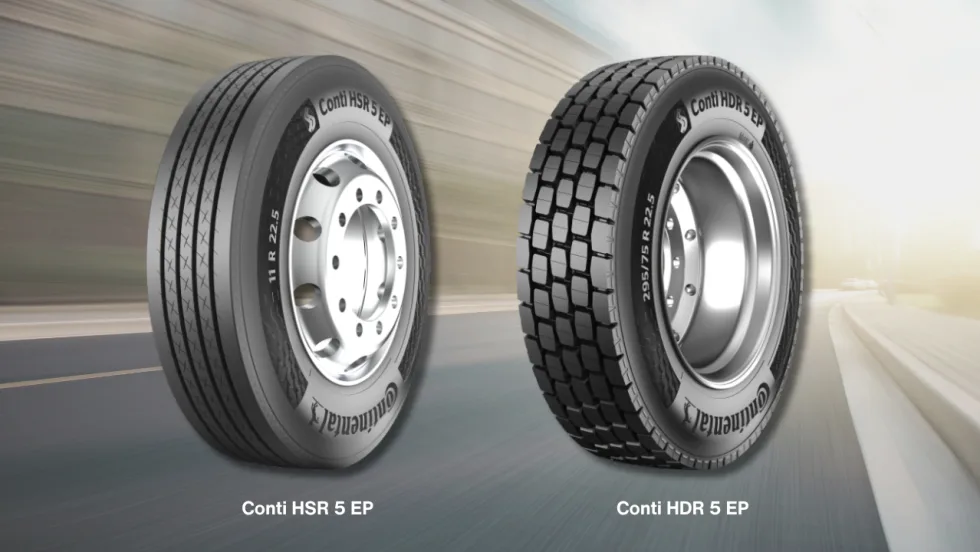
Continental Introduces New Regional Truck Tires
Continental says its new Generation 5 steer and drive tires for regional operations offer longer tread life, with estimated mileage gains of 22% and 19%, respectively.
Read More →
Sponsored•October 1, 2026
How AI Can Help Your Techs’ Efficiency
The technician shortage isn't going away, and no single fix can close the gap on its own. Trent Broberg makes the case that AI's real job in the shop is protecting the billable hours and job satisfaction of the techs you already have, not asking them to work faster.
Read More →
Sponsored•September 16, 2026
Color Match Smarter: Tools That Restore & Perform
For fleet managers and collision repair professionals keeping heavy-duty trucks on the road, getting the color right the first time isn't just about appearance — it's about efficiency, turnaround time, and bottom-line results. Discover how today's digital color tools are transforming the repair process from guesswork to precision.
Read More →


Wrong Repair Prompts Recall of Freightliner, Western Star 4x2 Trucks
DTNA is recalling more than 2,400 trucks that received an incompatible software fix instead of the hardware repair required to address brake valve corrosion.
Read More →
Truck Drivers Need More Than Another Alert
Fleets have more visibility into truck health, safety events, and driver activity than ever. The next challenge is turning all that information into useful guidance for the person who has to decide what to do next.
Read More →
The Maintenance Checks Trucking Fleets Should Prioritize Before Fall Freight Picks Up
Making it through August isn’t the same as being ready for the next several months of operation. Find out what systems may have suffered from summer heat and need to be checked out before fall.
Read More →
What Three Fleets Are Doing Differently When Buying Truck Parts in 2026
With freight improving but costs still climbing, fleet maintenance executives explain how they're balancing price, quality, and supplier relationships.
Read More →
Paccar Recalls 2027 Trucks Built This Summer for Possible Electrical Problem
The nearly 6,000 Kenworth and Peterbilt trucks in the recall could potentially lose engine power, among other things.
Read More →
Could New Engine Oils Mean Longer Drain Intervals?
New CL-4 and FB-4 engine oils are coming in 2027. Foodliner wants to know whether they could support longer oil drains, but it won’t change its maintenance schedule without data from its own trucks.
Read More →
Brake Safety Week to Focus on Drums and Rotors
Commercial vehicle inspectors are focusing on truck brakes during CVSA's Brake Safety Week, August 23-29.
Read More →