




Bringing Maintenance to the Truck
Fleets are always looking for ways to increase roll time of trucks and trailers and cut down on CSA violations. Properly equipped mobile maintenance trucks are one way that fleets are achieving it.

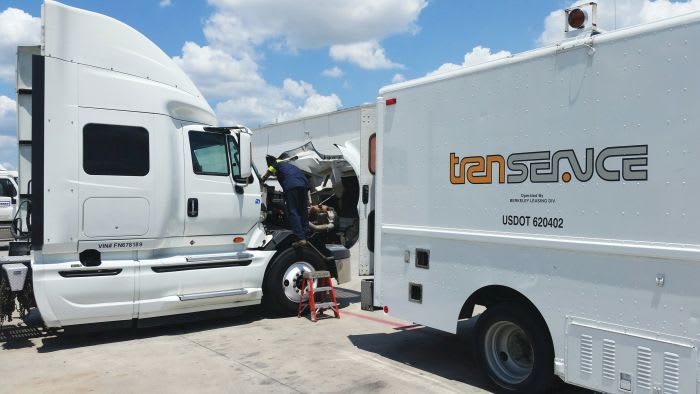
Lights, tires and the air system can all be inspected from a mobile maintenance truck at a customer’s location. Photo: Transervice Lease Corp.
Lights, tires and the air system can all be inspected from a mobile maintenance truck at a customer’s location.Photo: Transervice Lease Corp.
Fleets are constantly looking for ways to increase roll time of their trucks and trailers and cut down on CSA violations, says Jerry Bodkins, program manager at TA Truck Service OnSite. Mobile maintenance allows them to do that “without having to go through the logistical nightmare of going back to the shop and staffing technicians, which is not easy for anybody in this industry today,” he says.
There are economic advantages to fleets that have their own mobile maintenance trucks, because they do not have to invest in brick and mortar. Even if a fleet chooses to outsource mobile maintenance, it still can have economic advantages.
“With mobile service, we can reduce customer downtime for normal maintenance and repairs and get their trucks back up and running quickly,” explains Mike Besson, managing vice president, service and customer solutions for mega-dealer Rush Enterprises.
Taki Darakos, assistant vice president – Berkeley Division of Transervice Lease Corp., says transportation is a just-in-time business, and mobile maintenance allows fleets to operate with minimal disruptions or delays in their operations.
Mobile maintenance providers offer a range of services. Rush, for example, has two levels of preventive maintenance inspections: a 57-point one and a more comprehensive 105-point inspection, which includes changing oil and filters.
Transervice offers trailer PM service as well as working on lights, tires, air leaks, small repairs and providing mobile diagnostics. “We walk a fine line between customer service, safety and landlord requirements about what we can do on site. Safety becomes very important when operating in active, busy yards,” Darakos explains.
Jim Reed, vice president of new business and personnel development, TA Truck Service, says they do not currently offer oil changes as part of their mobile service but will be testing that option soon. “There are environmental issues around hauling and making sure you are recouping all the waste oil properly.”
The truck
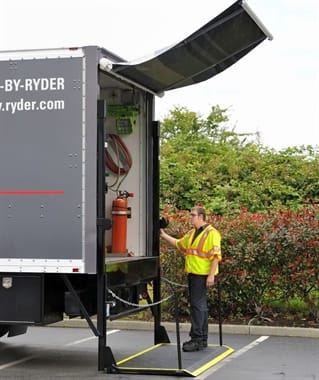
Mobile maintenance vehicles can be equipped with lifts to make the technician’s job easier and safer.Photo: Ryder
“Mobile service trucks range from somebody who is operating out of a pickup truck offering a very low rate to those with a higher rate that have a 24-foot straight truck fully equipped with a liftgate and lights,” says Darry Stuart, president and CEO of DWS Fleet Management, who works with fleets on improving their maintenance programs, “It ranges from A to Z and rates can go from $40 per hour to $95 an hour.”
Ryder uses a variety of mobile maintenance vehicles, “with specifications tailored to the surrounding businesses,” says Jason Leon, Ryder’s senior director of product management and mobile maintenance. “Our vehicles are equipped with state-of-the-art diagnostic tools to perform all routine maintenance services.” The mobile units contain compressors, lifts, reels and storage tanks. “However, they can be customized depending on the vehicles and customers that are being maintained.”
Besson describes Rush’s mobile maintenance vehicles as shops on wheels. “They are fully equipped with on-board computer diagnostics, air and lube delivery, welding capabilities and even cranes — all to support nearly every type of repair needed.” The company’s certified technicians perform all warranty work, including servicing recalls, electronic control module upgrades, check engine lights and items such as turbochargers, valves, sensors, etc.
He adds, “We take extra care to protect the environment. Our techs and vehicles are equipped with the proper knowledge and tools to prevent spills.”
TA Truck Service uses Ford 550s with 16-foot box vans on the back. “We are able to carry some inventory on it and they are well equipped,” Reed says. The company is testing smaller trucks in areas where a lot of inventory is not needed.
Brett Petersen, COO of Cure Leasing, says the company’s trucks are equipped with a work bench, battery jump starter, air compressor, air tools, oil tanks, a welder, electrical testing equipment, ECM diagnostic readers, heavy-duty hand tools, pneumatic jacks, hose fabricator, miscellaneous fasteners, light bulbs and fuses.
If you’re looking to set up your own, Stuart says, a mobile maintenance truck costs about $100,000. “That is the cost for a properly set up truck with fresh oil, steps to get in and out of it, outside lights, tools, minor parts, etc. A good efficient mobile truck will also have an awning so in inclement weather or on really sunny, hot days the mobile mechanic has the ability to get some form of shade or protection from the weather.”
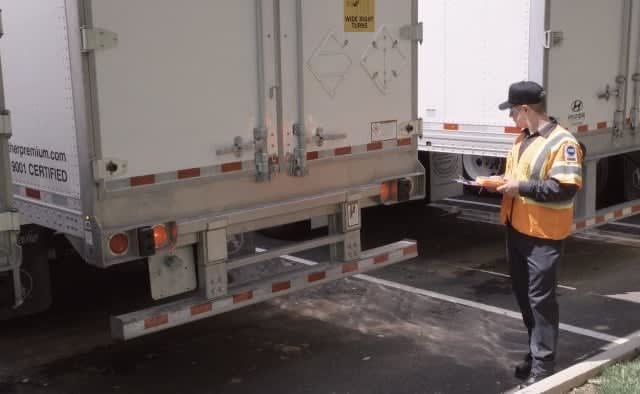
A mobile service tech must be a self-starter who is comfortable working on his own.Photo: TA Truck Servic
Staffing the truck
A properly equipped truck is only part of the equation for success with mobile maintenance. Another key element is the technician who is staffing the truck. The person on the mobile maintenance truck “has to have skills that are qualified to do DOT inspections, because that is one of the primary foundations of the business,” says Bodkins. “But just as important are some of the soft skills.” This includes things like good communications skills and the ability to interact with others.
They also need computer skills for inputting work orders, sending photos and handling invoicing.
Stewart says a mobile maintenance technician “must be able to work by himself and be self starting. He has to understand the importance of all the environmental impacts. He needs to be able to clean up after himself and to continually think about all the safety aspects of the job.”
Other considerations
Beyond a well-equipped truck with a qualified technician, Michael Riemer, vice president product and channel marketing, Decisiv Inc., offers some suggestions on other features you should look for from mobile maintenance providers:
Electronic inspections with pictures
Electronic work orders (with estimates when necessary for work that was not previously approved. “This is important because [the fleet] wants the data on what was done ASAP,” he says.
VMRS codes
“This is not just the component codes (31,32 and 33), but full VMRS coding for the case — reason for the repair, complaint, cause and correction,” he says.
Real-time communication and status updates
This includes things like appointment time tracking (did they show up when they said they would, how long did it take vs. what you were told, were you given updates as needed throughout the process?)
Reed says all TA Truck Service mobile maintenance trucks are equipped with laptops to ensure efficient communication. “[Technicians] are able to write up work orders as if the customer were in our bay. From there we are able to transmit back and forth to our customers depending on what format they want. We also send pictures back and forth.”
Fleets also need to make sure the outside provider has a certification of insurance.
Mobile maintenance can be handled in several ways. Bodkins says one option is to have a mobile maintenance truck show up at a fleet on certain days of the week. “We try to set up an appointment-based schedule with fleets so Monday, Wednesday and Friday a truck visits one company’s trucks and trailers at two or three different lots and on Tuesday and Thursday it will go someplace else.”
For some fleets, TA Service has a truck devoted solely to that fleet and is on its lots five days a week.
Choosing a provider
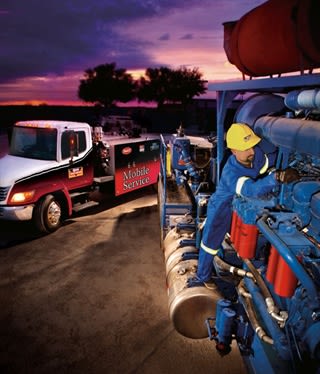
Mobile repairs can be completed day or night at a location of the customer’s choice.Photo: Rush Enterprises
Stewart cautions fleets to not let price be the sole criteria for choosing a mobile maintenance provider. “Most people look for the cheapest rate per hour, but it is not about what you pay per hour. It is about how many hours you get charged.”
In addition, he says, “You need to remember that quality is important. And if you’re expecting to get quality work without managing it, you will totally miss out. If you are not going to visit the people you are outsourcing to and if you are never going to show up at the site where the work is being performed, you are not going to get the quality work you expect.”
One clue about the type of service you are going to get is the condition of the mobile maintenance vehicle itself, Stewart says. “Look in the back of the truck. If the truck is cluttered, messy and greasy, then that is the type of work you are going to get.”
Make sure the provider of mobile maintenance has a paperwork system and a time clock on the truck. “If they do not have an efficient paperwork flow and a time clock to be able to manage the amount of time the technician spends on a vehicle, that is a telltale sign that they may not be efficient,” Stewart says.
Mike McDonald of Iowa-based Don Hummer Trucking says, “It’s important to find a provider you can trust and build a partnership with.”
Leon echoes that sentiment. “You need someone who becomes a partner in [your] business in the truest sense of the word.”
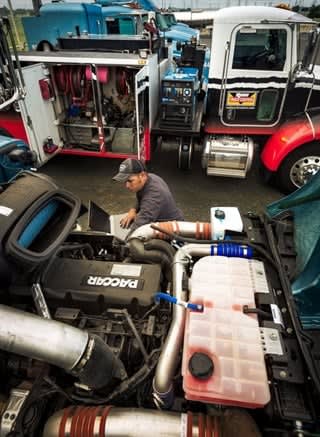
Technicians equipped with laptops and the right tools and equipment on the truck are necessary to ensure mobile maintenance tasks can be completed in a timely manner.Photo: Rush Enterprises
Bruce Stockton, less-than-truckload vice president, fleet and maintenance, XPO Logistics, tells fleets that are considering using an outside provider for their mobile maintenance needs to “utilize a reputable provider, an insured provider with adequate equipment to work safely and meet all environmental and OSHA regulations.”
Darakos sums up the benefits of mobile maintenance. “Bringing equipment to a shop adds complexity and time, which does not work in today’s already tight delivery schedules.
“At the end of the day [a fleet’s] primary need is a safely operating vehicle to get their products to their customers. Mobile maintenance service helps them do that in a safe and timely fashion.”
More Maintenance
Shell Prepares Rotella Oils for 2027
New CL-4 and FB-4 formulations will begin arriving in early 2027, with improved protection against oil breakdown, wear and deposits, according to Shell.
Read More →
Mack Expands Extended Coverage With Four Chassis System Plans
Mack Trucks' new system-specific coverage options allow heavy-duty fleets to select protection for driveline, cab, HVAC, electronics, and advanced safety components.
Read More →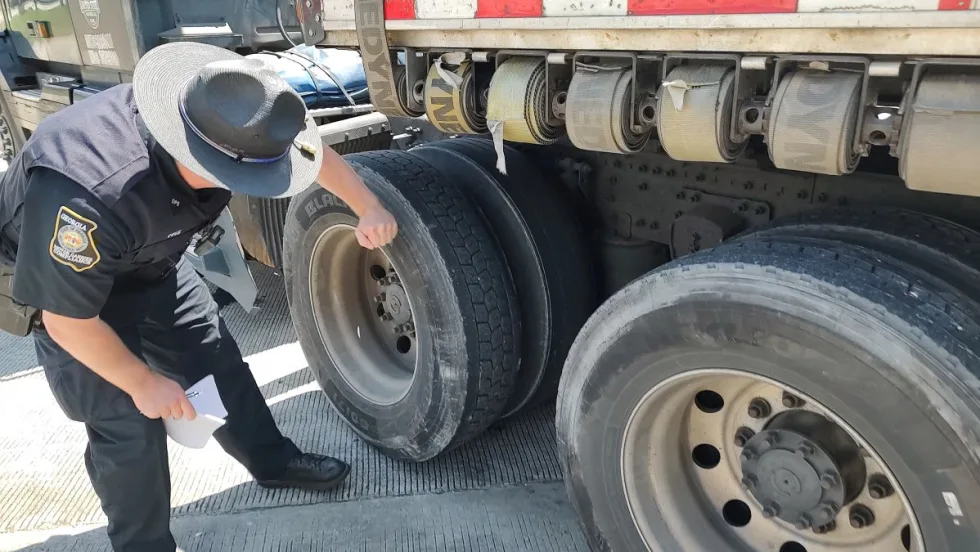
What an Out-of-Service Order Really Costs, and How to Plan for One
The repair invoice is the first number you see — and often one of the smallest. Here’s what else an out-of-service order can cost a fleet, and how planning can reduce the damage.
Read More →

International Launches Online Truck Parts Store
Fleetrite.com lets fleets and repair shops find OEM and all-makes parts, check prices and availability, and order without calling a parts counter.
Read More →
Continental Introduces New Regional Truck Tires
Continental says its new Generation 5 steer and drive tires for regional operations offer longer tread life, with estimated mileage gains of 22% and 19%, respectively.
Read More →
How AI Can Help Your Techs’ Efficiency
The technician shortage isn't going away, and no single fix can close the gap on its own. Trent Broberg makes the case that AI's real job in the shop is protecting the billable hours and job satisfaction of the techs you already have, not asking them to work faster.
Read More →
Color Match Smarter: Tools That Restore & Perform
For fleet managers and collision repair professionals keeping heavy-duty trucks on the road, getting the color right the first time isn't just about appearance — it's about efficiency, turnaround time, and bottom-line results. Discover how today's digital color tools are transforming the repair process from guesswork to precision.
Read More →
Wrong Repair Prompts Recall of Freightliner, Western Star 4x2 Trucks
DTNA is recalling more than 2,400 trucks that received an incompatible software fix instead of the hardware repair required to address brake valve corrosion.
Read More →
Truck Drivers Need More Than Another Alert
Fleets have more visibility into truck health, safety events, and driver activity than ever. The next challenge is turning all that information into useful guidance for the person who has to decide what to do next.
Read More →
The Maintenance Checks Trucking Fleets Should Prioritize Before Fall Freight Picks Up
Making it through August isn’t the same as being ready for the next several months of operation. Find out what systems may have suffered from summer heat and need to be checked out before fall.
Read More →