




Managing Maintenance With Software, Part One
The need for first-rate maintenance of our trucks and trailers is obvious, so let's not start this article blathering about the necessity of cost control and the ever-increasing challenge of safety compliance. All that's a given
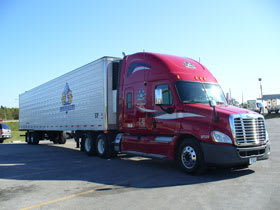
O&S Trucking in Springfield, Mo., uses software to track each individual piece of equipment from cradle to grave and understand all the costs.
The need for first-rate maintenance of our trucks and trailers is obvious, so let's not start this article blathering about the necessity of cost control and the ever-increasing challenge of safety compliance. All that's a given.
What we're looking at here is the software that can help you manage the maintenance function. More particularly, we're looking at how you choose such software. That's not an easy task, mostly because there's a very broad variety of options available. We couldn't possibly look closely at all the software out there, so we'll be talking principles and possibilities.
Can you get away with simple and cheap? Or do you need to mortgage the farm and go big?
Do you simply want to schedule PMs and log vehicle histories? Or do you want to manage parts inventory in real time and drill down so deep you can chart the ongoing cost of wheel fasteners?
Do you want to tie the shop to operations and accounting in some direct way? How important, for instance, is it that your dispatch desk automatically knows when trailer #133 is out of commission, and for how long?
"Before you do anything else, you really need to sit down and lay out what you want," says industry consultant Carl Tapp, who retired last year from his longtime role as vice president of maintenance at Arkansas-based P.A.M. Transportation Services. "Just because it's available doesn't mean you need it," Tapp says. "To buy software the right way, you need to define a few things: this is what we'd like to have, this is what we have to have, and this is what we can afford."
Back in the 1990s, Tapp got to know what is now the granddaddy of maintenance software, TMT Fleet Maintenance. Originally designed by Pat Patterson, formerly of Ryder, it was later bought by TMW Systems. Back then, the choices weren't many. Tapp says there simply wasn't anything else as robust as TMT at the time, but many other products that were launched in those days, often as simple spreadsheet or database programs on a single CD, have since grown up to become very serious players.
In that category is Dossier maintenance-management software, launched by Charles Arsenault of Arsenault Associates, who began by offering one of those simple CDs a couple of decades ago. Much more substantial now, the company conducts an interesting survey that offers a few useful insights. Among other things, it indicates that "robust" isn't what every fleet wants.
According to the ongoing Arsenault survey, most fleets think they have simple needs. The survey says 56% of fleets that use maintenance software at all use it first and foremost to automate PM scheduling.
The survey also shows that 42% are mostly concerned with administrative control of fleet assets, 36% with expense management, and 35% with maintenance/repair histories for DOT purposes and to control re-work.
However, CEO Charles Arsenault notes that slightly less than 44% of all fleets use software specifically designed for fleet maintenance, and he'll make the case that it's the only kind of software able to fully automate complicated PM service scheduling. According to the survey, 16% use off-the-shelf software such as Word, Excel or Access, while 6% use their company's accounting or ERP software.
A full 33% still use paper maintenance records if they keep records at all, according to this survey, and we can add lots of anecdotal evidence to support that idea.
We're not talking about a full-blown piece of big-dollar scientific research here. The survey is conducted by Arsenault on its website. More than 200 fleet executives, managers and line staff took part. The company has conducted similar studies for more than 20 years.
It's not a massive study, but it's a useful glimpse inside trucking at the middle-America level. The majority of Dossier customers have between 50 and 500 vehicles, and the majority of the fleets in the country are 500 units or less. Among survey respondents, 20% operate over the road while 58% are domiciled fleets that return to home base each day. More than 22% operate in on/off-road environments like construction, landfills and other venues.
Some maintenance chiefs know exactly what they want, and they don't want basic stuff. Jim Frieze at O&S Trucking in Springfield, Mo., is vice president of maintenance, and he's very much in charge of 220 power units pulling refrigerated loads across the continent. Clearly detail-oriented, he has served as chairman of the Technology & Maintenance Council's cost-per-mile task force.
Since 2003 he's been using Cetaris Fleet Assistant software, and he says it meshed well with the Show Me fleet-management system that was and still is used for dispatch and all else. He had previously used that system's maintenance module but wanted something that would help him go very deep into his costs.
Cetaris seems to be a company on the move, and its clients include some of the very biggest fleets in the land, as well as smaller ones like O&S. The software is clearly scalable, an important feature.
"My goal was to track each individual piece of equipment from cradle to grave and understand all the costs," Frieze says. "I can drill down all the way to an individual component.
"I can track a starter, for example. I can see that this truck has had five different starters in two years. Why? Was it a bad supplier? A driver issue? You just drill down and find out why."
Frieze also uses the software to compare the performance of different trucks and specs and components, arranging them in groups to make the comparisons clear. He might be looking, for example, at the reliability and performance differences between ThermoKing and Carrier reefer units in certain applications. The results can help him make better buying decisions and might help him to decide on when and where to buy extended warranties.
"You can make educated decisions not based on opinion," Frieze says emphatically. "It's black and white."
Among other uses of the system, he also can pinpoint issues at the unloading dock and be alerted to shippers that routinely damage doors and other trailer components. It might well cause him to have the trailer-maker build things differently as a result.
"You have to manage things to within a fraction of a cent these days to maintain a margin and remain competitive," Frieze says. "We know exactly what our cost per mile is, and that means accurate bidding and rate-setting."
(In part two, we'll look at issues related to fleet size, implementation and management of a software-based maintenance program.)
Zonar and TMW Systems recently released a new integration that gives maintenance facilities real-time pre- and post-trip inspection results and remote vehicle diagnostics within TMT Fleet Maintenance software. TMT accesses the Zonar data to identify and prioritize repairs, pre-order parts, schedule service and automate work orders.
This new integration provides what TMW calls "a seamless process" from data collection to service repair. The data fueling the integration stems from two of Zonar's features.
The first is its Electronic Vehicle Inspection Report system that verifies pre- and post-trip inspections. It complies with all DOT-mandated pre-and post-
More Maintenance
Why Fleet Data Matters More Than Ever at Waste Connections [Watch]
Waste Connections' Chuck Palmer explains how telematics, predictive maintenance, safety analytics, and AI help keep vehicles on the road and drivers safe in this episode of HDT Talks Trucking.
Read More →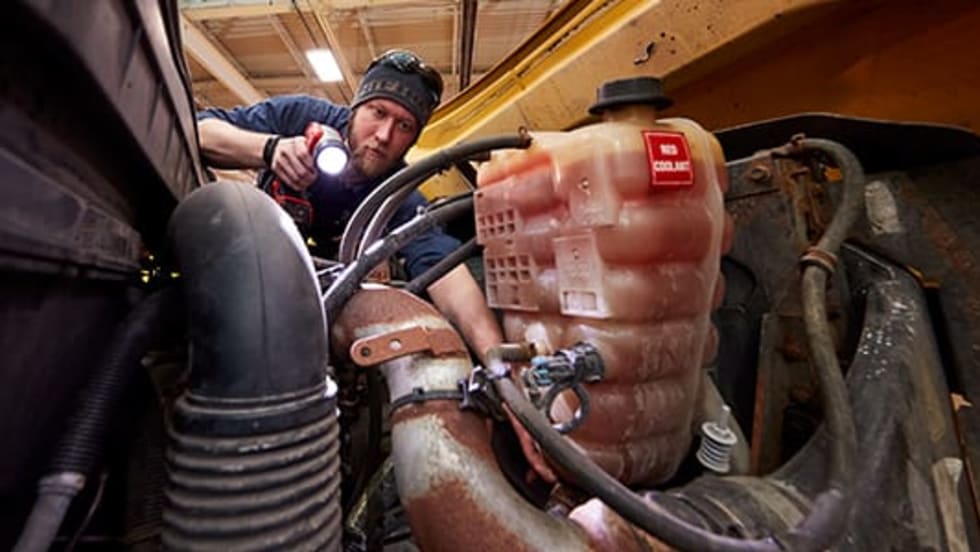
How to Prevent Summer Truck Cooling System Failures
Summer heat puts heavy-duty truck cooling systems under intense strain. Learn how preventive maintenance and accurate repair information can help reduce downtime.
Read More →
Deadline Extended for HDT Truck Fleet Innovators Nominations
Heavy Duty Trucking has extended the deadline for nominations for its Truck Fleet Innovators awards. The deadline has been extended to May 22.
Read More →
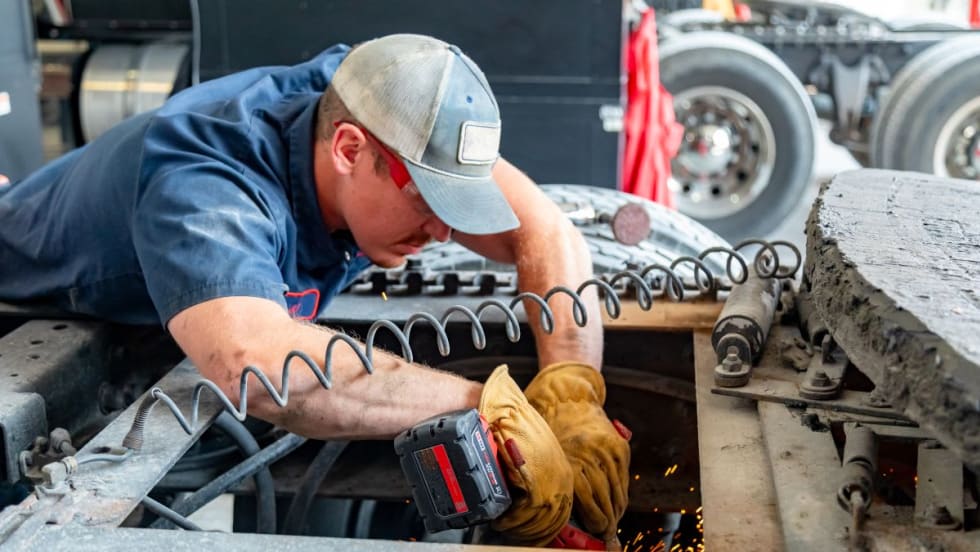
Why VMRS Is the Natural Link Between AI, Predictive Analytics, and Vehicle Repairs [Commentary]
Jon White was a leading figure in the development of VMRS. Now, after five decades of service, White says VMRS is becoming essential to the AI-driven future of truck maintenance.
Read More →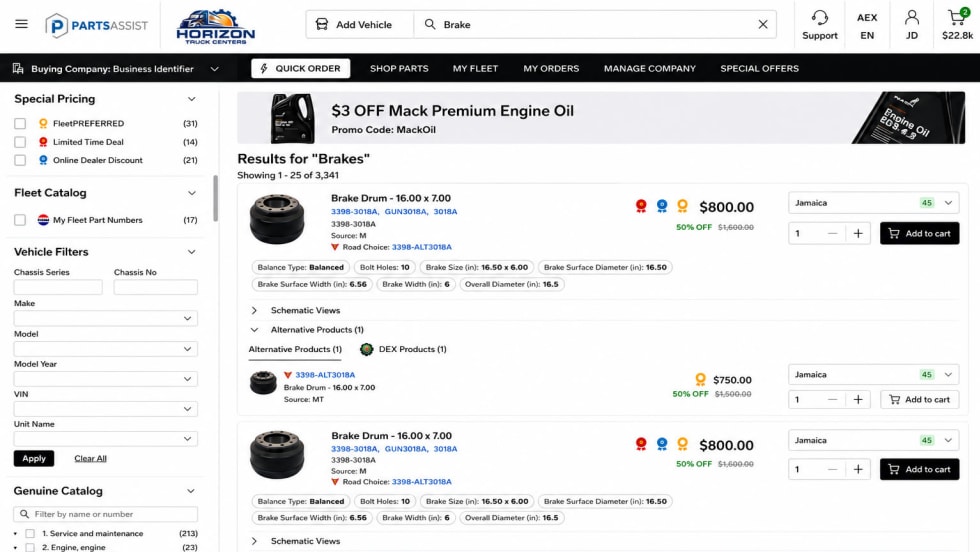
Mack Trucks Revamps PartsASIST Platform with Faster Performance, Improved Navigation
Mack Trucks has launched a redesigned version of its PartsASIST online ordering platform, adding faster search, real-time inventory visibility and enhanced order tracking.
Read More →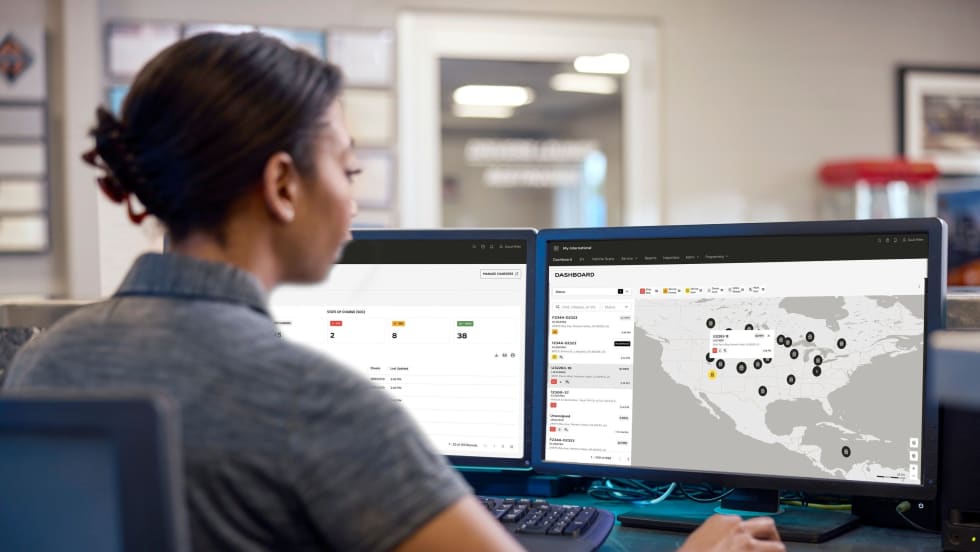
International Debuts ‘My International’ Connected Platform to Centralize Fleet Data, Service, and Dealer Communication
International’s New digital ecosystem unifies telematics, maintenance, and dealer interaction into a single interface, aiming to reduce downtime and deliver predictive fleet insights.
Read More →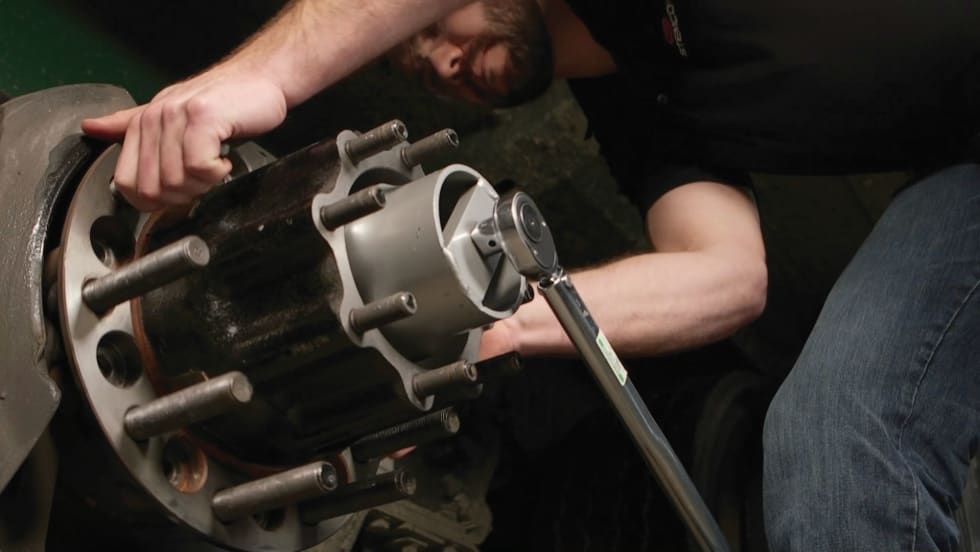
Saving Fuel at the Wheel End
Wheel ends are often overlooked in the quest for better fuel economy. But Joshua Kucera, product manager, Stemco, warns that neglecting wheel ends can reduce fuel economy and increase maintenance headaches.
Read More →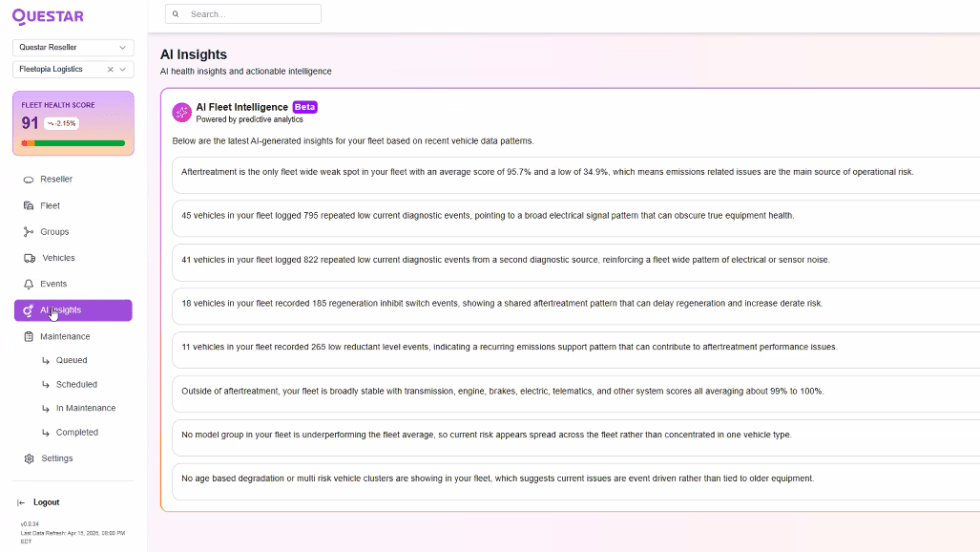
Beyond Predictive: Questar Adds AI-Driven Repair Recommendations to Fleet Maintenance
Questar’s latest maintenance platform uses AI to flag potential failures, recommend repairs, and estimate the cost of waiting, helping fleets prioritize maintenance and save money and downtime.
Read More →
API Formally Approves Next-Gen Engine Oil Category for 2027 Engines
Heavy-duty engine oil marketers can begin finalizing formulations and preparing product packaging to meet the new oil specifications ahead of the January 1 licensing date.
Read More →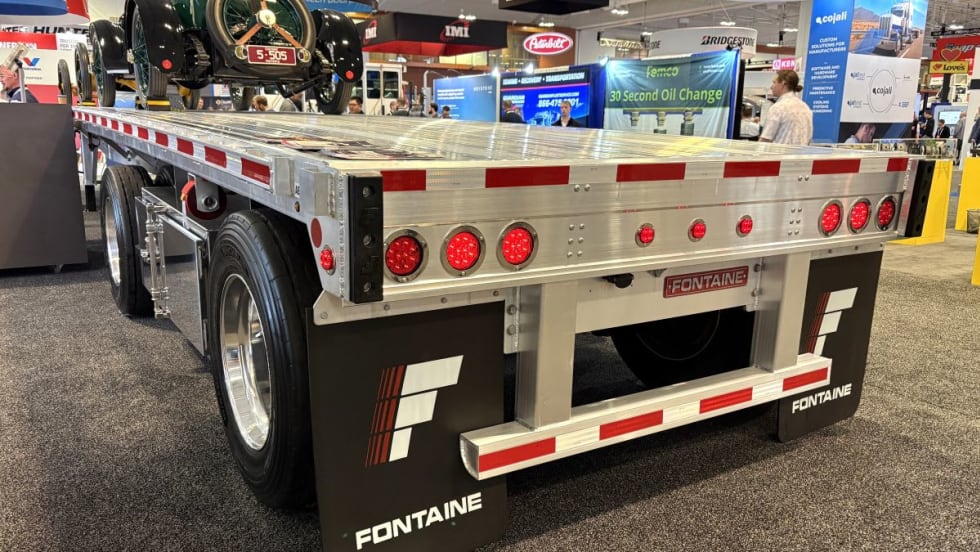
Fontaine Expands Flatbed Lineup with New Fleet-Focused Models, Eyes 2027 Launch
Fontaine is broadening its flatbed lineup with new models aimed at fleets, including a lightweight aluminum trailer expected in 2027 that emphasizes durability, repairability, and lower cost.
Read More →