




Workhorse to Unveil N-Gen Drone Delivery Platform at CES
Workhorse Group has announced that it will unveil the N-Gen low delivery-platform electric van with an integrated HorseFly drone at the Consumer Electronics Show in Las Vegas in January.

The SureFly Octocopter and W-15 pickup will be shown at the 2018 CES in Las Vegas. Photo: Workhorse Group
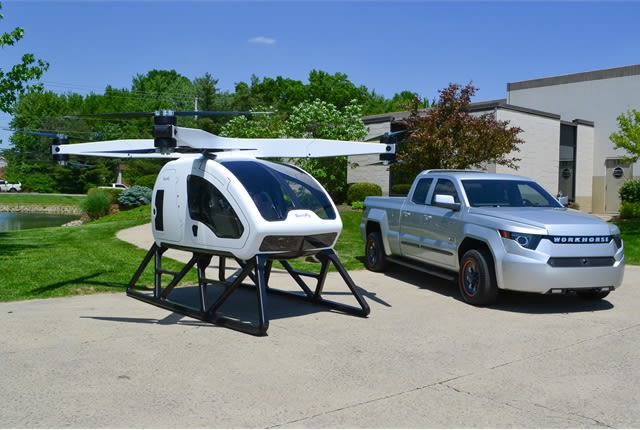
The SureFly Octocopter and W-15 pickup will be shown at the 2018 CES in Las Vegas. Photo: Workhorse Group
Workhorse Group has announced that it will unveil its N-Gen low delivery platform electric van with an integrated HorseFly drone at the Consumer Electronics Show in Las Vegas in January.
The company will also introduce its W-15 electric pickup truck and its SureFly Octocopter, which Workhorse is calling the first personal electric octocopter.
The N-Gen low delivery platform electric van features a 19-inch floor for increased cargo space and ease of operation. It is expected to deliver a range of 100 miles with an optional gasoline range extender adding 75 more miles. The N-Gen is scheduled to begin package deliveries for a large e-commerce company within the next two months, according to Workhorse.
Optionally available with the N-Gen is an integrated HorseFly drone delivery system that's designed to launch an octocopter drone from the roof of an N-Gen delivery van and deliver a package to its destination within the driver’s line of sight. The HorseFly system is compliant with all current FAA regulations and can carry a package weighing up to 10 pounds, according to Workhorse.
Additionally, Workhorse will be showcasing the W-15 at CES. This electric plug-in pickup has been designed to offerfeatures and benefits fleets look for in a work truck. Panasonic 18650 Li-on batteries deliver an 80-mile all-electric range. If needed, an on-board gasoline generator will then extend the range. Workhorse said it currently has over 5,000 W-15 vehicles under Letter of Intent from fleets.
Lastly, the company will show off the SureFly, which was first unveiled at the Paris Air Show in June. Workhorse said the SureFly aircraft is designed to be safer and more stable than a typical helicopter. Its redundant design includes four propeller arms, two fixed contra-rotating propellers on each arm, a backup battery pack to drive the electric motors in the event of engine failure, and a ballistic parachute that safely brings down the craft if needed. The SureFly is currently securing flight approval from the FAA.
The SureFly is expected to be capable of carrying pilot and passenger or cargo up to 70 miles. Early models will be pilot-operated. The goal is to introduce future models featuring autonomous flight capable of carrying payloads of up to 400 pounds. Anticipated markets for the SureFly are precision agriculture, emergency responders, city commuters, and the military. The price of the SureFly is expected to be approximately $200,000, and Workhorse is currently accepting pre-orders for the aircraft.
"CES is the perfect technology venue for us to showcase our three new technology firsts," said Steve Burns, Workhorse CEO. "We know technology-informed people come to CES from all over the world, and we are very excited to show them our SureFly, our low delivery-platform electric N-Gen van, and our W-15 electric pickup."
More Fuel Smarts

How Volvo Updated Its D13 for EPA 2027 [Watch]
Volvo’s updated D13 promises lower emissions without sacrificing performance or fuel economy. Take a closer look at what changed inside the engine in this HDT Spotlight video.
Read More →
Diesel Price Spike Shortens Payback for Natural Gas Trucks, Report Says
Energy Vision estimates fleets could recover the higher purchase price of an RNG-fueled Class 8 tractor in 1.3 to 2.8 years under current fuel-price scenarios.
Read More →
Calstart Becomes Catalyst Mobility, Reflecting Broader Focus
Calstart is now Catalyst Mobility, reflecting the nonprofit’s growing national role in clean transportation, including zero-emission trucks, infrastructure and incentive programs.
Read More →

Record Diesel Prices Squeeze Trucking Fleets
Average U.S. diesel prices have climbed to nearly $6 a gallon, surpassing the 2022 record as tight refinery capacity and Middle East disruptions keep fuel costs elevated.
Read More →
How Fuel Delivery Shapes Engine Performance
Fuel delivery depends on more than what happens at the injector. For fleet, maintenance and technical professionals, looking at the full path from pump to injector can provide useful context for understanding engine performance.
Read More →
East Coast Port Launches $45M Electric Truck Push
The Port Authority of New York and New Jersey announced millions in incentives for zero-emission drayage trucks, yard tractors, and new charging hubs near the port.
Read More →
California Bill Could Shed Light on Electric Truck Prices
Why do battery-electric Class 8 trucks remain so expensive? A California bill headed to Gov. Gavin Newsom would give fleets and state agencies more visibility into what manufacturers charge.
Read More →
Detroit Opens Orders for EPA 2027 Engines
Detroit isn’t starting from scratch to meet EPA 2027 diesel emissions standards. Its Gen 6 DD13 and DD15 engines keep much of today’s platform while updating the fuel and aftertreatment systems.
Read More →
Zero-Emission Truck Corridor Planned for West Coast
California, Oregon, Washington, British Columbia and Baja California are coordinating plans for truck charging and hydrogen fueling from Canada to Mexico.
Read More →
A Closer Look at Kenworth’s Electric T880E Vocational Truck [Video]
Learn more about Kenworth's T880E battery-electric vocational truck at the Paccar Technical Center, including its range, applications, upfitting considerations, and PTO options, in this HDT Spotlight video.
Read More →