




Related: The Case for Fuel Filtration
Cummins Endorses Two Fuel Additives
For the first time in company history, Cummins has officially endorsed a fuel additive, recommending two Power Service products, Diesel Kleen + Cetane Boost and Diesel Fuel Supplement + Cetane Boost.
by Staff
May 10, 2017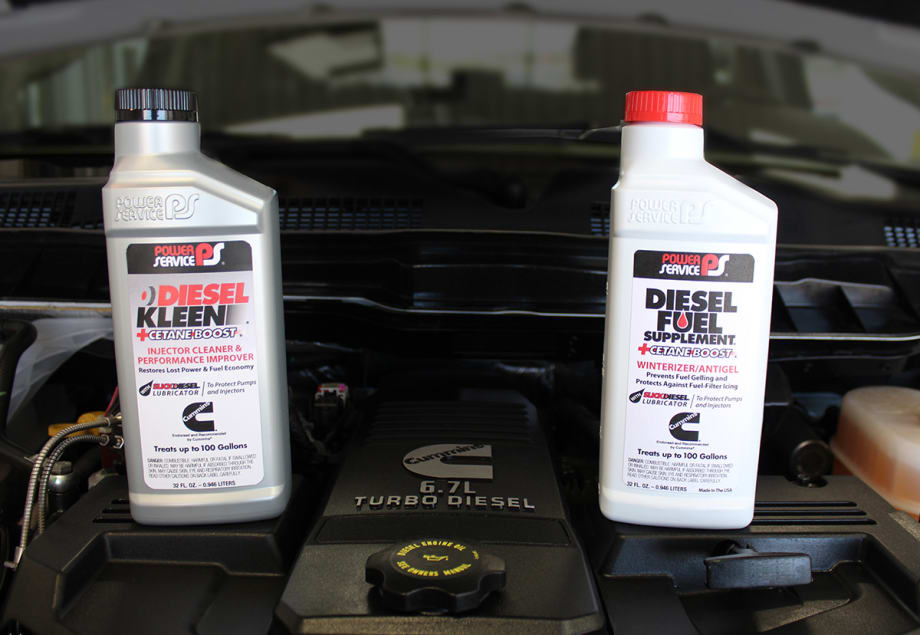
Photo: Cummins
2 min to read
Photo: Cummins
For the first time in company history, Cummins has officially endorsed diesel fuel additives, recommending two Power Service products, Diesel Kleen + Cetane Boost and Diesel Fuel Supplement + Cetane Boost.
The announcement came after Cummins conducted internal testing and concluded that both products meet Cummins requirements. These are the first fuel additive products that Cummins has ever officially recommendeded in the marketplace, according to the company.
“In recent years, diesel fuel quality has become increasingly important as diesel engines evolve and the diesel fuel manufacturing processes change,” said Roger England, director of technical quality and materials engineering for Cummins. “The Power Service Diesel Kleen and Diesel Fuel Supplement additives provide easily accessible solutions with proven technology to customers in the field when they encounter challenges with their fuel such as poor lubricity, low cetane numbers, low-temperature operability issues, injector deposits, etc.”
Power Service Diesel Kleen +Cetane Boost is designed to be used as a year-round performance enhancer. The company said it can clean dirty injectors, prevent injector sticking, smooth rough-running diesel engines, and improve fuel economy.
Diesel Fuel Supplement +Cetane Boost is recommended for use in winter months when temperatures drop below 30 degrees Fahrenheit. It is a winterizer/anti-gel used to prevent fuel gelling and keep fuel filters from plugging with ice and wax.
“Cummins is in a unique position in that we design not only the engine, but also the turbochargers, fuel system, and aftertreatment systems, which enables us to fully leverage the Power Service diesel fuel additive technologies,” said England.
More Fuel Smarts

How GP Transco Builds Fuel Savings a Fraction at a Time
Aerodynamic specs, solar panels, and driver incentives help GP Transco turn small efficiency gains into savings it can reinvest in its people.
Read More →
Trucking’s Diesel Squeeze Isn’t Letting Up
With diesel topping $6 a gallon nationally, ATA's Bob Costello explains why fleets should prepare for continued pressure at the pump.
Read More →
FlowBelow Redesigns Trailer AeroSlider to Cut Fuel Use
The lighter trailer aerodynamic system installs in less than 45 minutes, according to the company, with potential payback in under a year depending on fuel prices and trailer mileage.
Read More →
Why Diesel Price Relief Efforts May Fall Short
Diesel prices have eased from September’s record high, but doubts about additional Russian supply and limits on dyed-diesel tax relief mean trucking fleets still face expensive fuel. And prices could go higher.
Read More →
Why Small Fuel Savings Matter in Trucking
Can better fuel economy help pay for driver raises? In this podcast, GP Transco explains how small efficiency gains create room to reinvest in its people.
Read More →
How GP Transco Cuts Trucking Fuel Costs, a Tenth of a Gallon at a Time
What’s another tenth of a mile per gallon worth? GP Transco shares how equipment upgrades and driver coaching turn small gains into meaningful fuel savings.
Read More →
Electric Yard Tractors Move Beyond Pilots
Operating-cost savings have overtaken sustainability goals as the leading reason surveyed fleets are adopting battery-electric terminal tractors, according to new NACFE research.
Read More →
Geotab Links Fleet Card to Vehicle Data
The new card combines fuel discounts with telematics-based purchase controls. Geotab’s analysis also points to potential savings from choosing lower-priced fuel stops.
Read More →
Fleet Economics Shape Electric Truck Outlook
ACT Research expects costs, charging infrastructure, and technology improvements to drive zero-emission commercial vehicle adoption as federal regulations and incentives retreat.
Read More →
Wex Adds Cardless Fuel Payments for Over-the-Road Customers
A new fuel card feature for Wex customers offers convenience and security.
Read More →