





Related: Self-Driving Trucks and the Platooning Stepping Stone: How Soon?
Truck Platooning to Become Reality This Year
Peloton CEO Josh Switkes says early-adopter platooning fleets are "chomping at the bit" and ready to go. An infusion of funding led by Omnitracs will help make that happen.
April 13, 2017
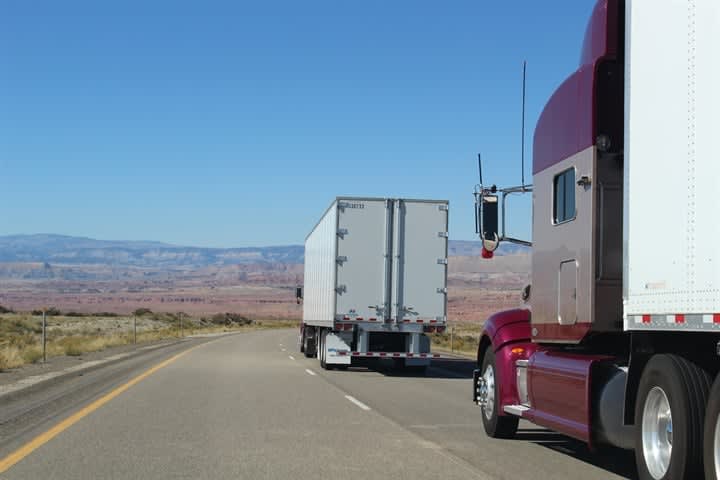
Peloton CEO Josh Switkes says attitudes in the trucking industry toward the viability of truck platooning have shifted dramatically in the past couple of years. Photo: Peloton Technology
3 min to read
Peloton CEO Josh Switkes says attitudes in the trucking industry toward the viability of truck platooning have shifted dramatically in the past couple of years. Photo: Peloton Technology
Early-adoptor platooning fleets are "chomping at the bit" and ready to start truck platooning in real-world operations later this year, Peloton Technology CEO Josh Switkes said this week. He gave HDT an update on the pending launch of Peloton's platooning system while speaking on the news that Omnitracs is the lead investor in a $60 million round of funding for the connected and automated vehicle systems company.
The investment furthers Omnitracs’ partnership with Peloton Technology and builds on previously announced plans to bring Peloton’s truck platooning technology to Omnitracs’ customers.
Peloton's two-truck driver-assisted platooning system uses a forward collision avoidance system and vehicle-to-vehicle communication to allow two trucks to travel closer together than would normally be safe, allowing for fuel economy savings for both vehicles.
Switkes, co-founder and CEO of Peloton, said Omnitracs joins a diverse group of investors from both inside and outside the trucking industry. “Companies such as UPS, Volvo, Intel, Nokia and so on are giving us great participation as we work to bring truck platooning to market. And we’re bringing in new players all the time – companies involved in transportation either as users of trucks, fleets, tech providers or OEMs.”
Switkes said these partnerships are crucial for Peloton as it breaks ground on multiple fronts with a totally new technology for the trucking industry. “What we’re doing is building our own ecosystem for Peloton,” he added. “And it’s all about partnering: Whether that’s with our fleet customers and the fact that we both benefit if they platoon more, or our OEM and supplier partners who are helping to design trucks with platooning in mind, or regulators around the country so there won’t be problems when platooning does become a reality.”
Switkes said the outlook on platooning in the trucking industry – particularly among fleets – has been evolving rapidly over the past couple of years. “We’re going to have our platooning system ready for customer use soon – before the end of the year,” Switkes confirmed. “We’re currently taking pre-orders for the system, although we’re not talking publicly about who or how many at the moment. But the mood on this among fleets has been very pragmatic and practical. They understand the value this technology can bring to their businesses by leveraging the skills of their drivers and then augmenting those skills with advanced computing and safety systems.”
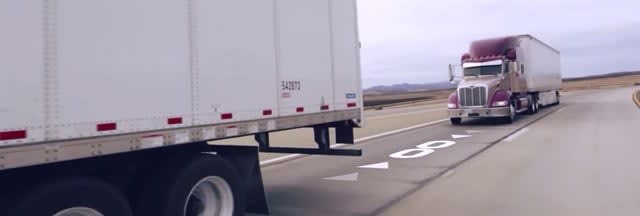
Peloton's two-truck driver-assisted platooning system uses a forward collision avoidance system and vehicle-to-vehicle communication to allow two trucks to travel closer together than would normally be safe, allowing for fuel economy savings for both vehicles. Photo: Peloton Technology
Initially, Switkes said, many fleets were skeptical, even though they understood the technology path Peloton was exploring. “We’re seeing more and more reach out to us now that they know platooning is coming soon. And our early-adopter fleets are chomping at the bit ready to go.”
The Series B investment from Omnitracs will help fuel Peloton’s growth plans, including the rollout of the world’s first commercial two-truck driver-assistive platooning system later in 2017, and the acceleration of vehicle integration projects with truck OEMs, Tier 1 brake system and connected-vehicle suppliers.
Omnitracs said in the funding announcement that it has a history of identifying and investing in technologies that enable fleets to operate with more transparency, speed, safety and efficiency. It has recognized that the impact of Big Data, an ever-changing regulatory landscape, and the need for efficiencies in fuel management and routing can only be addressed through new technologies that create competitive advantages for fleets.
“The transportation industry is going through a massive change,” said Omnitracs CEO John Graham. “Macro-level trends like the Internet of Things, cognitive applications, faster delivery of goods, and new levels of customer service are at the core of our new partnership with Peloton. We want to expand the possibilities of truck automation on the nation’s highways and set new standards in integrated dispatch, tracking and routing as well as driver-facing applications to maximize and optimize the orchestration of both same-fleet and cross-fleet platooning.”
More Fuel Smarts

Why Diesel Price Relief Efforts May Fall Short
Diesel prices have eased from September’s record high, but doubts about additional Russian supply and limits on dyed-diesel tax relief mean trucking fleets still face expensive fuel. And prices could go higher.
Read More →
Why Small Fuel Savings Matter in Trucking
Can better fuel economy help pay for driver raises? In this podcast, GP Transco explains how small efficiency gains create room to reinvest in its people.
Read More →
How GP Transco Cuts Trucking Fuel Costs, a Tenth of a Gallon at a Time
What’s another tenth of a mile per gallon worth? GP Transco shares how equipment upgrades and driver coaching turn small gains into meaningful fuel savings.
Read More →
Electric Yard Tractors Move Beyond Pilots
Operating-cost savings have overtaken sustainability goals as the leading reason surveyed fleets are adopting battery-electric terminal tractors, according to new NACFE research.
Read More →
Geotab Links Fleet Card to Vehicle Data
The new card combines fuel discounts with telematics-based purchase controls. Geotab’s analysis also points to potential savings from choosing lower-priced fuel stops.
Read More →
Fleet Economics Shape Electric Truck Outlook
ACT Research expects costs, charging infrastructure, and technology improvements to drive zero-emission commercial vehicle adoption as federal regulations and incentives retreat.
Read More →
Wex Adds Cardless Fuel Payments for Over-the-Road Customers
A new fuel card feature for Wex customers offers convenience and security.
Read More →
New California Law Could Shed Light on Electric Truck Prices
Why do battery-electric Class 8 trucks remain so expensive? A California bill signed by Gov. Gavin Newsom would give fleets and state agencies more visibility into what manufacturers charge.
Read More →
How Volvo Updated Its D13 for EPA 2027 [Watch]
Volvo’s updated D13 promises lower emissions without sacrificing performance or fuel economy. Take a closer look at what changed inside the engine in this HDT Spotlight video.
Read More →
Diesel Price Spike Shortens Payback for Natural Gas Trucks, Report Says
Energy Vision estimates fleets could recover the higher purchase price of an RNG-fueled Class 8 tractor in 1.3 to 2.8 years under current fuel-price scenarios.
Read More →