




Could New Administration, Congress Scuttle GHG Phase 2 Rule?
Could the incoming administration or Congress deep-six the Phase 2 Greenhouse Gas rule? ATA's Glen Kedzie says it's entirely possible, but he cautions to "be careful what you ask for."

Photo: Jim Park
Photo: Jim Park
As the final days of the Obama administration tick away, those opposed to some of the president’s environmental initiatives are looking at ways to undermine the intent of the rules, or even to strike them from the books.
With Republicans in charge of the House, the Senate and the White House, you could say the stars are uniquely aligned for just this sort of action.
President-elect Trump has already made it clear that he opposes and intends to undo some of those rules. Could Phase 2 of the Greenhouse Gas rules be on that list?
"This has big potential for those who would like to strike any carbon regulation or fuel efficiency standards from the trucking industry," said American Trucking Associations Vice President, Energy and Environmental Counsel Glen Kedzie, in remarks he made during a GHG Phase 2 webinar hosted by ATA's Technology and Maintenance Council on Jan. 5.
Kedzie suggested there are three options open to the new administration: a legal challenge, an executive order from the president, or working through the Congressional Review Act to roll back the rule.
"Legal challenges would have had to have been filed by December 25, and we are unaware if anyone has filed a formal legal challenge on the Phase 2 rule," he said. "And with the new administration coming, we're not quite certain whether Mr. Trump will exercise any of his executive order authority to get rid of some of these greenhouse gas regulations, whether they're from power plants or automobiles."
The Congressional Review Act is the other and possibly more likely approach.
"In simple terms, it's the nuclear option," Kedzie said, adding, "If they are struck down, they will be struck down forever because a regulation cannot be promulgated in the future that resembles in any way, shape or form the regulation that was done away with” via the CRA process."
CRA allows lawmakers to overturn a regulation through a simple majority vote of the House and the Senate. Such a “joint resolution of disapproval” then goes to the president's desk and he can sign it or not.
The law was enacted in 1996 and has been used only once-- to overturn an Occupational Safety and Health Administration that dealt with workplace ergonomic standards.
The specifics of CRA allow for a 60-legislative-day window in which to pass resolutions of disapproval from the time a rule is finalized. According to Roll Call columnist Rema Rahman, House members could act until May 17 at the latest, according to the current calendar.
The GHG Phase 2 rule was finalized in August and published in the Federal Register with an effective date of December 27, 2016, making it a candidate for review.
Kedzie noted there is a lot of activity that suggests the GHG Phase 2 rule could be on the list of Obama-era regulations targeted by the incoming administration.
The California Card
Keep in mind that California has its own greenhouse gas regulations for trucks, which not only address new equipment, but legacy equipment as well, Kedzie pointed out.
"If the authority to regulate GHG and fuel efficiency were to be taken away at the federal level, one would expect California to go forward and enforce [its] specific regulations," he said. "Other states would likely follow California's lead on that."
GHG Phase 2 brings some harmony to the various emissions standards proposed by the federal government and the State of California, which means a clearer compliance regime for truck and engine makers and, ultimately, for fleets.
A California-only rule would likely be more stringent than the GHG Phase 2 standards, and could have a much different timeframe.
California wants to cut more NOx emissions from diesel exhaust, something truck and engine makers say will be difficult to do while improving fuel economy.
Citing recent developments, Kedzie said California seems to be digging in for a fight over its authority to regulate greenhouse gas emissions.
"The state just hired Eric Holder, the former attorney general," he said. "And they have also retained the prior general consul from EPA. They appear willing to put up a big fight if there's any attempt to take away the state's authority."
Sounding a cautionary note, Kedzie urged the industry to be careful about what it asks for when it comes to scuttling GHG Phase 2. Cost and benefit estimates for GHG Phase 2 are known.
The Phase 2 rule covers standards for Class 7 and 8 combination tractors and engines starting in model year 2021.
The required CO2 reductions increase incrementally through model year 2024, and phase in completely by model year 2027. EPA estimates suggest that GHG Phases 1 and 2 will lower CO2 emissions by approximately 1.1 billion metric tons, save vehicle owners about $170 billion in fuel costs, and reduce oil consumption by up to 2 billion barrels over the lifetime of the vehicles affected.
The agencies contend the rules will provide $230 billion in net benefits to society, including benefits to our climate and the public health of Americans, and that these benefits outweigh costs by about an 8-to-1 ratio.
EPA cost estimates show that the Phase 2 rule would add close to $14,000 to the cost of a Class 8 highway tractor by 2027 while improving fuel efficiency by between 23 and 25%, and more than $10,000 to a Class 8 day cab, with corresponding increases in fuel efficiency of between 19 and 22%.
The costs of a possible California proposal are not known.
"Because of the enormity of the California economy, a California-only regulation would become what we call a de facto national standard," said Kedzie. "Engine makers are not likely to develop two types of engines or even two production lines, one for California and the other for the rest of the country."
Watch for more coverage of this issue in the January issue of HDT.
More Fuel Smarts
Trucking’s Diesel Squeeze Isn’t Letting Up
With diesel topping $6 a gallon nationally, ATA's Bob Costello explains why fleets should prepare for continued pressure at the pump.
Read More →
FlowBelow Redesigns Trailer AeroSlider to Cut Fuel Use
The lighter trailer aerodynamic system installs in less than 45 minutes, according to the company, with potential payback in under a year depending on fuel prices and trailer mileage.
Read More →
Why Diesel Price Relief Efforts May Fall Short
Diesel prices have eased from September’s record high, but doubts about additional Russian supply and limits on dyed-diesel tax relief mean trucking fleets still face expensive fuel. And prices could go higher.
Read More →
Why Small Fuel Savings Matter in Trucking
Can better fuel economy help pay for driver raises? In this podcast, GP Transco explains how small efficiency gains create room to reinvest in its people.
Read More →
How GP Transco Cuts Trucking Fuel Costs, a Tenth of a Gallon at a Time
What’s another tenth of a mile per gallon worth? GP Transco shares how equipment upgrades and driver coaching turn small gains into meaningful fuel savings.
Read More →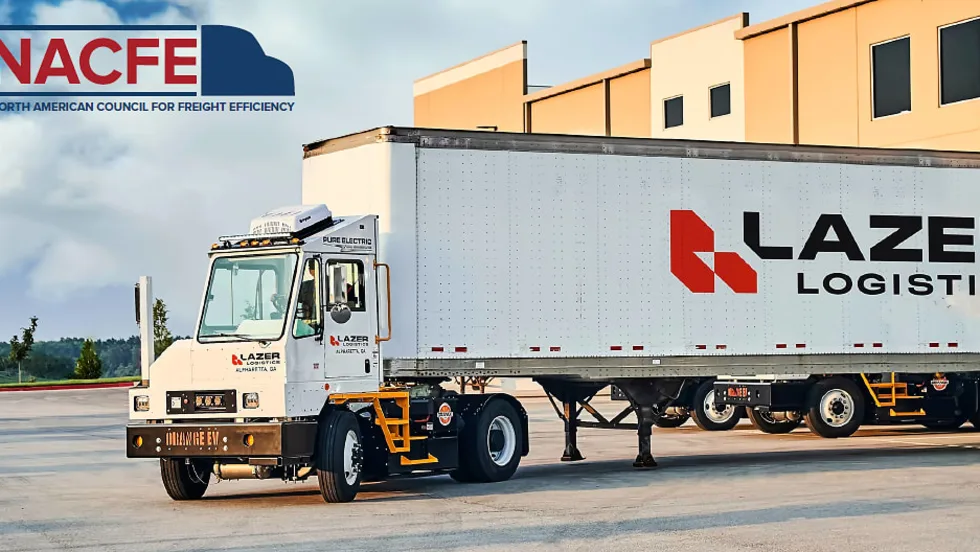
Electric Yard Tractors Move Beyond Pilots
Operating-cost savings have overtaken sustainability goals as the leading reason surveyed fleets are adopting battery-electric terminal tractors, according to new NACFE research.
Read More →
Geotab Links Fleet Card to Vehicle Data
The new card combines fuel discounts with telematics-based purchase controls. Geotab’s analysis also points to potential savings from choosing lower-priced fuel stops.
Read More →
Fleet Economics Shape Electric Truck Outlook
ACT Research expects costs, charging infrastructure, and technology improvements to drive zero-emission commercial vehicle adoption as federal regulations and incentives retreat.
Read More →
Wex Adds Cardless Fuel Payments for Over-the-Road Customers
A new fuel card feature for Wex customers offers convenience and security.
Read More →
New California Law Could Shed Light on Electric Truck Prices
Why do battery-electric Class 8 trucks remain so expensive? A California bill signed by Gov. Gavin Newsom would give fleets and state agencies more visibility into what manufacturers charge.
Read More →