




Related: Nearly a Third of Major Urban Roads in Poor Condition
DOT to Set Up Alternative-Fuel Corridors
The U.S. Department of Transportation is establishing a network of 55 alternative fueling and charging corridors for electric, natural gas, hydrogen, and propane fuel vehicles.
by Staff
November 7, 2016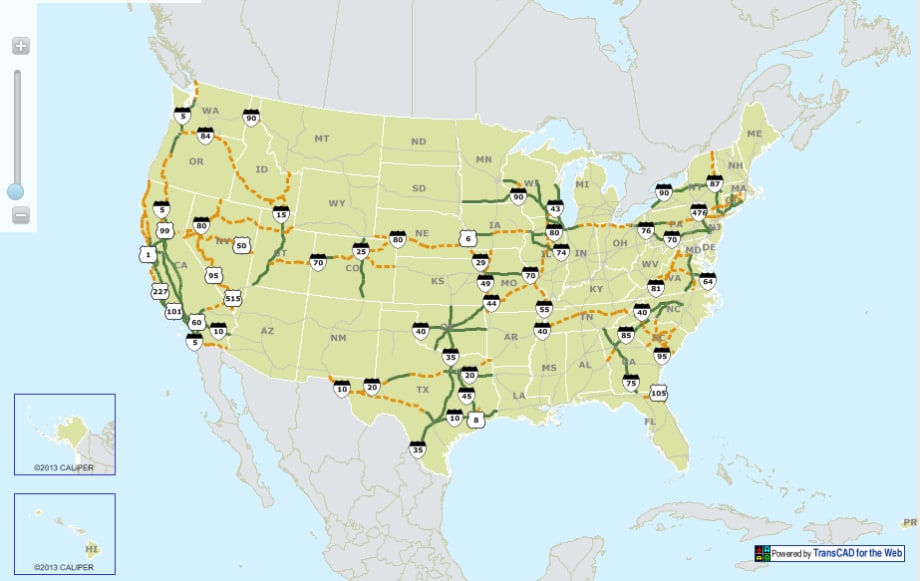
Source: Federal Highway Administration
2 min to read
Source: Federal Highway Administration
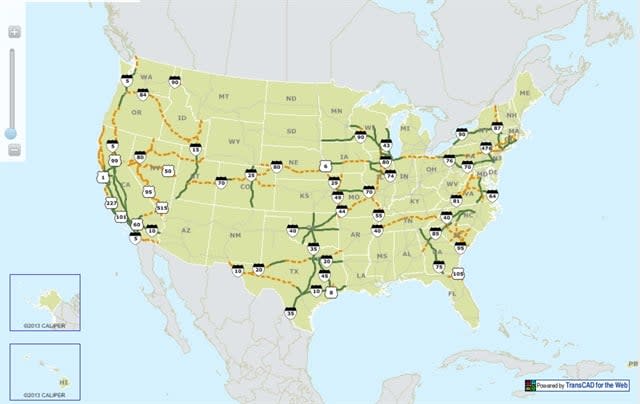
The U.S. Department of Transportation is establishing a network of 55 alternative fueling and charging corridors for electric, natural gas, hydrogen, and propane fuel vehicles.
The corridors will help drivers find routes with places to recharge or refuel an alternative-fueled vehicle and make it easier for drivers to move to alt-fuel vehicles, especially electric ones.
It spans 35 states and Washington, D.C., and 48 out of 55 routes will be designated as electric-vehicle charging corridors.The corridors will include signage developed by the Federal Highway Administration indicating a charging station or alterative-fueling location. Along the corridors, drivers can expect either existing or planned charging stations within every 50 miles.
The corridor designations were divided into two categories: signage-ready and signage pending. Signage-ready corridors currently have enough alternative fueling facilities to warrant signage along the corridor. Signage-pending corridors have demonstrated plans for future operational infrastructure.
A spokesperson for the FHWA told HDT that there are not currently plans for specific signage indicating fueling stations that could accommodate commercial vehicles, but the plan is in the early stages and is still being developed in participating states and organizations.
“Alternative fuels and electric vehicles will play an integral part in the future of America’s transportation system,” said U.S. Transportation Secretary Anthony Foxx. “We have a duty to help drivers identify routes that will help them refuel and recharge those vehicles and designating these corridors on our highways is a first step.”
More Fuel Smarts
Fleet Costs Shape ACT Expo 2027 Agenda
With diesel prices high and operating expenses under pressure, ACT Expo's 2027 agenda emphasizes fuel efficiency, AI, safety and the return on fleet technology investments.
Read More →
How GP Transco Builds Fuel Savings a Fraction at a Time
Aerodynamic specs, solar panels, and driver incentives help GP Transco turn small efficiency gains into savings it can reinvest in its people.
Read More →
Trucking’s Diesel Squeeze Isn’t Letting Up
With diesel topping $6 a gallon nationally, ATA's Bob Costello explains why fleets should prepare for continued pressure at the pump.
Read More →
FlowBelow Redesigns Trailer AeroSlider to Cut Fuel Use
The lighter trailer aerodynamic system installs in less than 45 minutes, according to the company, with potential payback in under a year depending on fuel prices and trailer mileage.
Read More →
Why Diesel Price Relief Efforts May Fall Short
Diesel prices have eased from September’s record high, but doubts about additional Russian supply and limits on dyed-diesel tax relief mean trucking fleets still face expensive fuel. And prices could go higher.
Read More →
Why Small Fuel Savings Matter in Trucking [Podcast]
Can better fuel economy help pay for driver raises? In this episode of the HDT Talks Trucking podcast, GP Transco explains how small efficiency gains create room to reinvest in its people.
Read More →
How GP Transco Cuts Trucking Fuel Costs, a Tenth of a Gallon at a Time
What’s another tenth of a mile per gallon worth? GP Transco shares how equipment upgrades and driver coaching turn small gains into meaningful fuel savings.
Read More →
Electric Yard Tractors Move Beyond Pilots
Operating-cost savings have overtaken sustainability goals as the leading reason surveyed fleets are adopting battery-electric terminal tractors, according to new NACFE research.
Read More →
Geotab Links Fleet Card to Vehicle Data
The new card combines fuel discounts with telematics-based purchase controls. Geotab’s analysis also points to potential savings from choosing lower-priced fuel stops.
Read More →
Fleet Economics Shape Electric Truck Outlook
ACT Research expects costs, charging infrastructure, and technology improvements to drive zero-emission commercial vehicle adoption as federal regulations and incentives retreat.
Read More →