




PIT Compares North American and European Volvo Truck Models
FPInnovations’ Performance Innovation Transport group, a not-for-profit engineering and research group for the North American trucking industry, announced it is conducting fuel consumption tests comparing European and North American Volvo Trucks models.
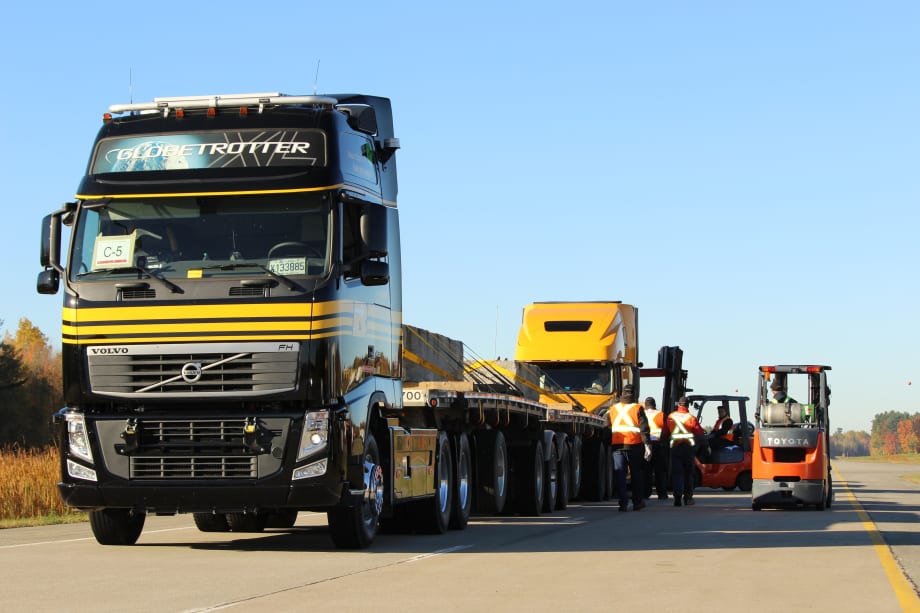
FPInnovations’ Performance Innovation Transport group, a not-for-profit engineering and research group for the North American trucking industry, announced it is conducting fuel consumption tests comparing European and North American Volvo Trucks models.
The equipment, leased by Transport Robert, a Boucherville, Québec-based truckload, LTL, intermodal and specialized carrier that serves customers across the U.S. and Canada, is being evaluated by PIT at the Transport Canada Motor Vehicle Test Centre in Blainville, Québec.
“The goal of these trials, like all evaluations by PIT, is to use our controlled test-track fuel efficiency studies to provide the commercial vehicle industry with the information it needs to make sound equipment choices,” said Yves Provencher, director of PIT.
For the trials, PIT was provided with the following vehicles:
2014 Volvo  Globetrotter European tractor: Euro 5 Emissions, 460 horsepower, 1696 pounds-feet, I-Shift transmission, 2.57 rear axle ratio
2014 Volvo VNL 630: EPA 2010 Emissions, 425 horsepower, 1650–2050 pounds-feet (Eco Torque), I-Shift Direct Drive transmission, 2.64 rear axle ratio
Test vehicle modifications include installing an adapter on the 2014 Volvo  Globetrotter European tractor to accommodate its 24-volt and the trailer’s 12-volt electrical systems. Also added to that unit was a photovoltaic solar panel on the tractor roof to charge batteries, and its fifth wheel height was modified to 47 inches.
PIT is evaluating fuel efficiency on the Volvo tractors using the SAE J1526 Type III fuel consumption procedure, which compares vehicles using the gravimetric method of weighing portable tanks before and after each trip. The tractors for comparison are switched between trailers at mid-test. Values for fuel savings will be released later this year.
“PIT will continue to monitor these trucks closely because operational issues may play a role in their real world performance,” Provencher stated. “For example, North American loads are generally heavier than those hauled in Europe. Also, our speeds are faster so aerodynamics, which has more of an impact at higher speeds, may not be optimized.”
Following the PIT test track evaluations the vehicles will be used in various applications in Canada by the Transport Robert fleet to gauge ride, handling, comfort and driver acceptance. The European tractor is not permitted for U.S. operation.
More Fleet Management

Color Match Smarter: Tools That Restore & Perform
For fleet managers and collision repair professionals keeping heavy-duty trucks on the road, getting the color right the first time isn't just about appearance — it's about efficiency, turnaround time, and bottom-line results. Discover how today's digital color tools are transforming the repair process from guesswork to precision.
Read More →
FMCSA Pauses Biennial-Update Enforcement Amid Motus Transition
Carriers whose updates were due on or after June 1 have more time, while FMCSA works to stabilize its new registration system and warns of phishing sites impersonating its new carrier registration system, Motus.
Read More →
2026 Blueprint for Countering Smarter Supply Chain Theft
Cargo theft is no longer just the cost of doing business. It's a multi-billion-dollar criminal enterprise exploiting vulnerabilities across your fleet, drivers, and supply chain.
Read More →


How Telematics Improves Visibility, Control, and Performance in Refrigerated Fleets
Explore how telematics help refrigerated fleets improve visibility, uptime, efficiency, compliance, and cargo protection across connected cold chain operations.
Read More →
What the U.S.-Canada Trade War Means for Trucking
Escalating U.S.-Canada tariffs could disrupt cross-border freight, reduce truck volumes, raise costs, and create new uncertainty for carriers on both sides of the border.
Read More →
What Are Trucking’s Top Concerns for 2026?
The American Transportation Research Institute wants to know what's worrying trucking fleet managers, drivers, and other stakeholders in its annual Industry Issues survey.
Read More →
American Trucking Associations Looks for a New Leader
ATA President and CEO Chris Spear abruptly left his job at the association on August 21, at a pivotal time for the trucking industry.
Read More →
Public Wi-Fi Cybersecurity Risks: How Truck Drivers and Fleets Can Protect Their Data
Public Wi-Fi can expose truck drivers and fleets to credential theft, malware, and other cyber threats. Here’s how to reduce the risk on the road.
Read More →
For Nicky Cupp, Fleet Innovation Starts With Frustration
HDT Truck Fleet Innovator Nicky Cupp turns everyday pain points at Fraley & Schilling into opportunities for better technology and smarter processes.
Read More →
Adam Buttgenbach’s Approach to Electric Trucks: Start With Where They Fit
HDT Truck Fleet Innovator Adam Buttgenbach helped PepsiCo build one of North America’s largest EV fleets by focusing on where electric trucks make operational sense.
Read More →