




As EU Contemplates CO2 Reduction, is More Power the Answer?
The European Union is following the U.S. lead in cutting greenhouse gas emissions in the transportation industry, but one approach may differ from that of North America: Larger engines and bigger rigs.

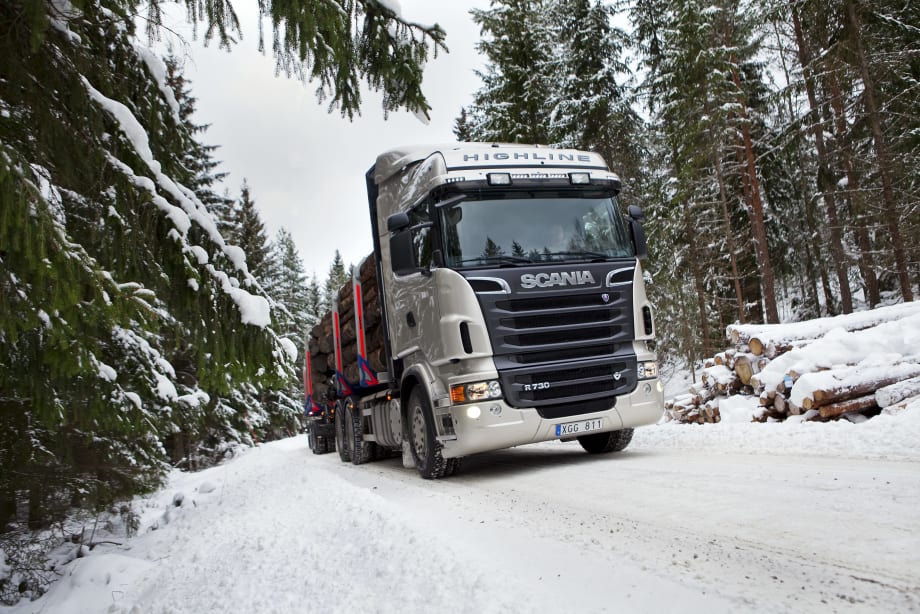
Scania log transporter, 72 ton GCW, powered by a 730-horsepower V-8 diesel.

The European Union has decided to reduce emissions of greenhouse gases from the transport sector by 20% between 2008 and 2030, and by even more in the longer term. At the same time, transport needs continue to increase and, it is the heavy freight sector that is increasing most. In other words, European haulers face a complex challenge.
How is Europe to meet its tough climate targets as transport needs increase? Although it may initially seem strange, larger and more powerful trucks may be one of the answers.
"In order to succeed, a number of different measures will be needed such as better logistics, more efficient engines, more fuel-efficient driving techniques and new fuels. But one of the solutions may also be larger and more powerful trucks." This is the opinion of Anders Ahlbäck, project manager in the Area of Advance for Transport, Chalmers University of Technology in Gothenburg, Sweden.

There are already some high-horsepower engines in the European market to meet that challenge.
Europe is also still phasing in its exhaust emissions standards. The Euro 6 standard, which means about one fifth of the emissions of nitric oxide and particulates compared to Euro 5, goes into effect within the EU and certain neighboring countries on at the end of the year for all new heavy vehicles.
As early as March 2011, Scania launched its first Euro 6 engines in order to give far-sighted truckers the opportunity to be one step ahead before the new emission standard go into effect. The flagship engine is the Scania V8 with 730 horsepower, succeeded by Volvo FH16 and its 750 in-line 16-liter six-cylinder.
MAN's 680-horsepower engine will not go pass Euro 6 and Mercedes has no engine in the 700-horsepower range yet.
Getting more done with less fuel

The basic principle is simple: With larger and more powerful trucks, more freight can be carried by fewer vehicles, which in turn reduces fuel consumption and climate impact in relation to the transport work being undertaken.
The fact is that demands on more efficient transport have for many decades driven development in the direction of increasingly powerful trucks. In the mid-1970s a power output of 350 horsepower was regarded as high. Today you would need to add another 100 horsepower to reach the average for a truck on European 40-ton long-haul assignments.
For operations in very hilly terrain and in high-altitude conditions, really high performance is needed to be able to quickly transport food and other fresh goods or to haul heavy loads such as wind-power stations, timber, ore or machinery. For this sort of demanding operation, there are trucks with power outputs of 730 - 750 horsepower.
Lower climate impact
"What is remarkable is that during the same period, fuel consumption and climate impact have dropped by an average of about 40%, while emissions of nitrogen oxides and particles have been cut by more than 90%," says Claes Nilsson, President of Volvo Trucks Europe.
But more still remains to be done. A company like Volvo Trucks works actively and continuously to reduce fuel consumption and carbon dioxide emissions from its trucks. And if more countries in Europe decided to follow Sweden's and Finland's example and allow truck rigs of up to 25.25 metres in length (83 feet) and 60 tons (133,000 pounds), one in every three semi-trailers on Europe's roads would no longer be needed – at least in theory. In actual fact, what is probably more likely is that it will be easier to meet expanding transport needs without adding more carbon dioxide to the atmosphere.
"Longer and more powerful trucks are of course not the only solution to the transport sector's climate problems, but they are one of many answers," Nilsson says. "At Volvo Trucks we see it as our mission to pursue development and to make truck transport's environmental footprint as small as possible. Trends thus far show that a smaller climate impact and more efficient transport really do go hand in hand."
Here's how much more powerful European long-haul trucks have become:
1970-1975 330 hp
1975-1980 375 hp
1980-1985 400 hp
1985-1990 450-475 hp
1990-1995 500-525 hp
1996-2006 550-660 hp
2009-2013 700-750 hp
More Fuel Smarts
Lessons Learned About Alternative Fuels: Start Small, Stay Flexible
Practical advice on adopting alternative fuels and ZEVs from HDT's 2026 Top Green Fleets, from renewable diesel and natural gas to electric trucks.
Read More →
Kempower Adds Flex EV Charger to Help Support Transition to Megawatt Charging
The Kempower Mega Satellite Flex has both a CCS and MCS connector, allowing operators to serve both types of heavy-duty vehicles.
Read More →
Hino Adds Electric Class 6/7 Truck
Hino says the Le Series is an important step in the company's efforts to reduce environmental impact and support its customers’ sustainability goals.
Read More →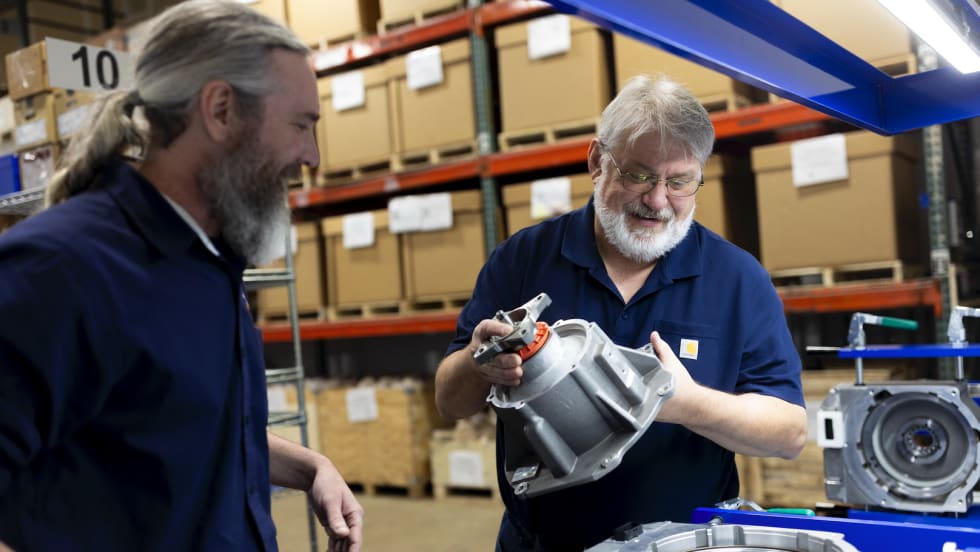
Can Multi-Speed EV Transmissions Solve Heavy Trucking’s Biggest Electric-Vehicle Problems?
A startup called Sigma Powertrain believes purpose-built multi-speed gearboxes can boost efficiency, reduce battery size and improve gradeability for heavy-duty battery-electric trucks.
Read More →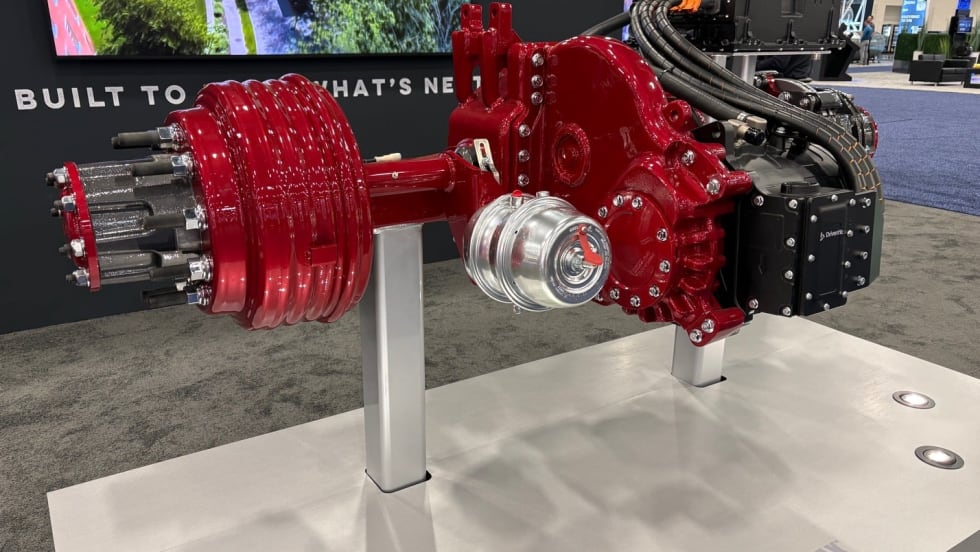
Hendrickson Debuts Electraax E-Axle for Medium-Duty Trucks
Developed with Driventic, Hendrickson's new integrated e-axle is designed to improve efficiency, reduce weight, and extend range in Class 6-7 EV applications.
Read More →
50 Ways Fleets Can Cut Fuel Costs Now — Without Buying New Trucks
Fuel savings don’t come from one big change. They come from dozens of small ones. Here’s how leading fleets are stacking gains across drivers, routing, maintenance, and more.
Read More →
Top Green Fleets 2026: How Fleets Are Reducing Emissions in the Real World
What works in sustainable trucking today? Heavy Duty Trucking's Top Green Fleets are finding practical ways to cut fuel use, reduce emissions, and keep freight moving.
Read More →
California Launching $1 Billion Electric Truck Rebate Program
CARB says the California Clean Fuel Reward program will begin offering point-of-sale rebates of up to $120,000 for electric commercial trucks starting June 26.
Read More →
Mack Unveils EPA 2027-Compliant MP13 Engine With More Power, Better Fuel Economy
Along with unveiling its EPA 2027-compliant MP13 engine, Mack outlined powertrain changes across its Class 6-8 lineup, including new Cummins-based X10 engines.
Read More →
How Volvo’s New D13 Engine Meets EPA 2027 Emissions Without Sacrificing Power or Fuel Efficiency
Volvo says advances in combustion and aftertreatment helped its new EPA 2027 D13 engine avoid the fuel-economy penalties many once expected from tighter NOx emissions limits.
Read More →