




Monarch Beverage Commits To CNG Kenworth T440s
As Fred Dufour looks out at Monarch Beverage’s diesel fueling station, he knows that in only a couple of years, it will nearly be all gone. “The need for diesel, that is,” Dufour said. “Every year, our fleet of trucks consumes nearly 1 million gallons of diesel, but in 2015, we’ll be using less than 100,000 gallons. We’ll be doing our part in reducing our dependence on foreign oil, while reducing greenhouse gases by 1,500 tons per year.”
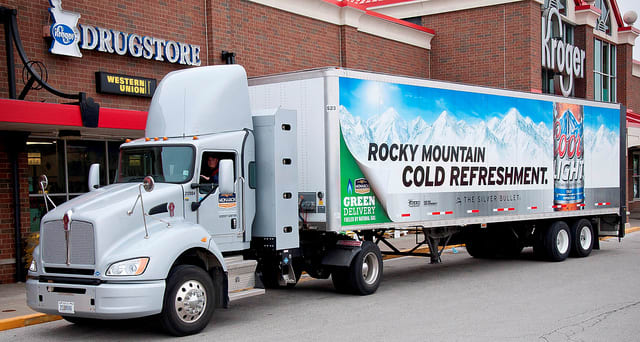
Monarch Beverage runs Kenworth T440s powered by CNG.

As Fred Dufour looks out at Monarch Beverage’s diesel fueling station, he knows that in only a couple of years, it will nearly be all gone.
“The need for diesel, that is,” Dufour said. “Every year, our fleet of trucks consumes nearly 1 million gallons of diesel, but in 2015, we’ll be using less than 100,000 gallons. We’ll be doing our part in reducing our dependence on foreign oil, while reducing greenhouse gases by 1,500 tons per year.”
With Monarch Beverage’s decision to convert its fuel source to compressed natural gas for 85% of its fleet, the company expects to save 60% in its overall fuel costs each year.
“And, that translates to a two to three million dollar savings in fuel per year,” said Dufour, who serves as senior vice president for Monarch Beverage – Indiana’s largest beer and wine distributor.
Monarch delivers 15.5 million cases of beer each year and another 1 million cases of wine. The company employs 650 people.
According to Dufour, the numbers work out for CNG.
“Two years ago we purchased two Kenworth T440s with the Cummins Westport ISL G engine, and a pre-production Kenworth T660 with the new 12-liter Cummins ISX12 G engine,” he said. “No grant money was used, we paid the straight premium. We ran the trucks hard, on long-haul and regional routes, amassing more than 100,000 miles on each. Our fuel economy was 5.7 mpg (diesel gallon equivalent) compared to 6.2 with our diesel fleet. Since the CNG cost was just 30% that of diesel, the money we saved on fuel was substantial. We figured the payback for the up-cost on CNG equipment to be 2.3 years.”
With that data, Dufour moved forward with additional Kenworth T440s with CNG.
“We have been running 27 of the T440s since June of 2012 and they’re doing great,” he said. “And, other than having spark ignition and spark plugs to deal with, and a different kind of engine oil, there really is no difference in maintenance practices. From a fuel tank standpoint, they just need to be monitored and maintained, but our technicians have been trained and certified for that duty.”
As for a maintenance advantage, Dufour said there is also less to worry about with CNG. “There are positive trade-offs. With CNG we don’t have to worry about DEF and particulate filters.”
When it comes to on-road performance, Dufour said he and his drivers have been very pleased.
“The 325-horsepower, 8.9-liter ISL G engines handle our loads very well, which are under 65,000 pounds GVW. Our drivers have been very excited about the Kenworth T440s – they’re great trucks to drive. The new 400-horsepower, 12-liter ISX12 G engines on order for new Kenworth T800s will power our over-the-road fleet where we load out at 79,000 GVW.”
And Monarch Beverage is not done yet. “We have placed additional orders for Kenworth T440s, and by 2015, 90 of our 105 trucks will be CNG-powered," said Dufour.
"The diesel-powered trucks we don’t replace with CNG run too few miles to warrant a CNG engine.”
To support the CNG transformation, the company is building its own CNG fueling station with two islands in the Indianapolis area. Scheduled to open March 15, the fast fill station will deliver more than 11 gallons a minute, as compared to 12 to 15 gallons a minute for diesel.
“Some people think fueling with CNG is an issue, but it’s really not,” said Dufour.
“There is some training involved since CNG is a different fuel, but we really have no concern. We’ve had no problem fueling with the temporary station we have set up on our grounds. With the price of fuel and the cost of our $2.3 million fuel station amortized over three years, our net cost per gallon is $1.50. After that period, we’re just paying for the cost of fuel.
Dufour said the company began considering all fuel savings measures three years ago. “We were reading reports that indicated that fuel prices could go up to the $5 to $7 mark by 2015 to 2018. So, we wanted to be ahead of the curve to see how we could curb fuel consumption, so we attended trade shows and green events. Originally, we were looking at aerodynamic devices and tires, but soon began looking at fuel.”
The company then contacted Kenworth of Indianapolis and started looking at CNG trucks.
With diesel prices always in constant motion, Dufour said the certainty of CNG allows Monarch Beverage to plan accordingly.
“With our fuel stations we’re able to lock in diesel prices for a one-year period. But, with CNG, we can lock in for three years,” he said. “That gives us great budget certainty. What’s more, the vast quantity of domestic natural gas is incredible. I have much more confidence in the price of natural gas staying low than I do diesel.”
More Fuel Smarts
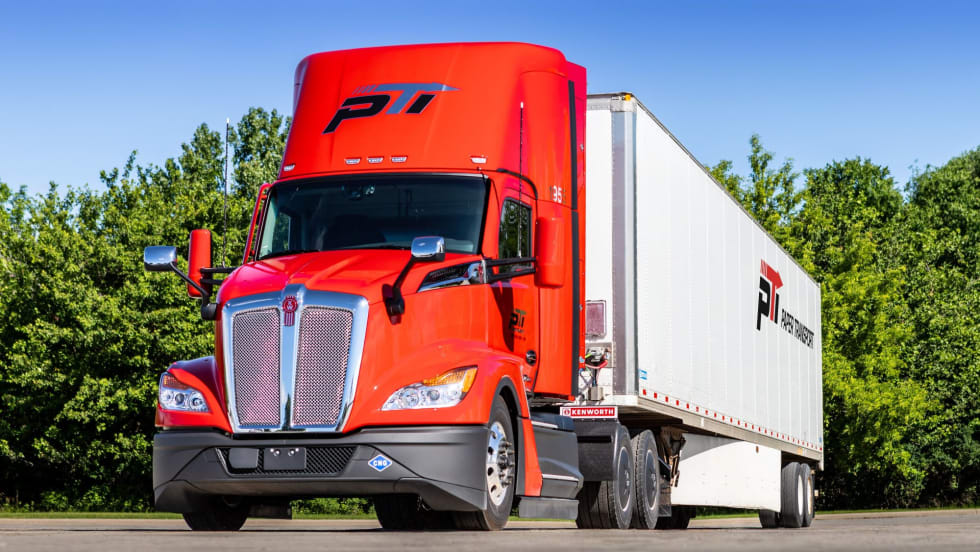
Lessons Learned About Alternative Fuels: Start Small, Stay Flexible
Practical advice on adopting alternative fuels and ZEVs from HDT's 2026 Top Green Fleets, from renewable diesel and natural gas to electric trucks.
Read More →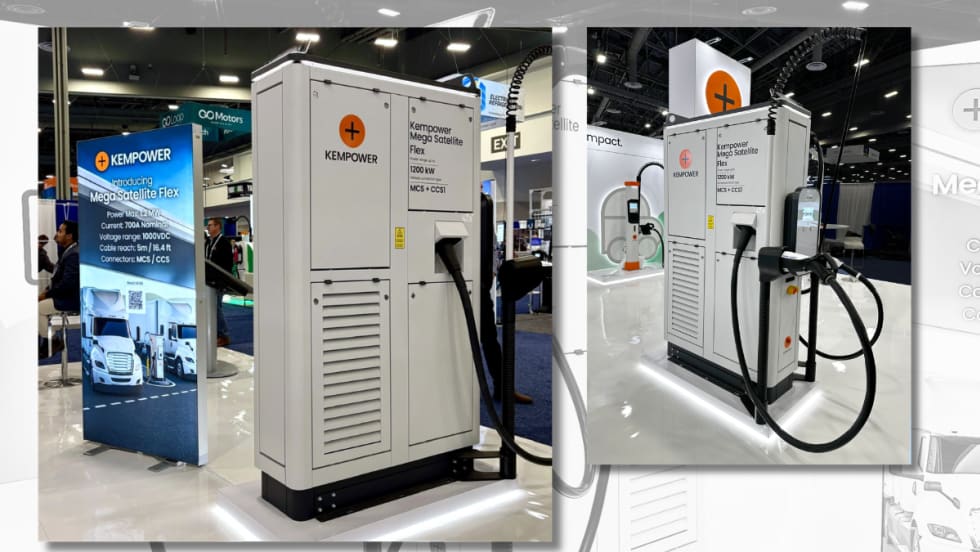
Kempower Adds Flex EV Charger to Help Support Transition to Megawatt Charging
The Kempower Mega Satellite Flex has both a CCS and MCS connector, allowing operators to serve both types of heavy-duty vehicles.
Read More →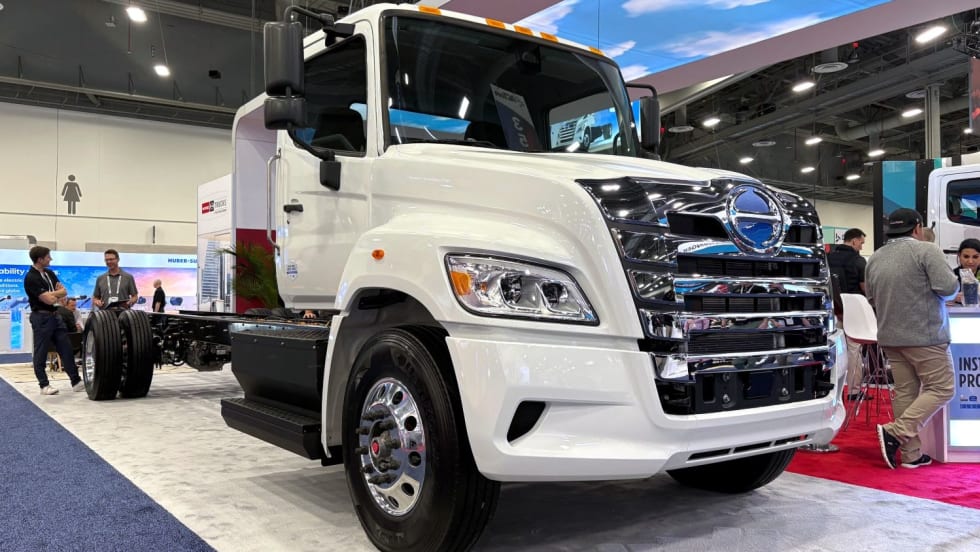
Hino Adds Electric Class 6/7 Truck
Hino says the Le Series is an important step in the company's efforts to reduce environmental impact and support its customers’ sustainability goals.
Read More →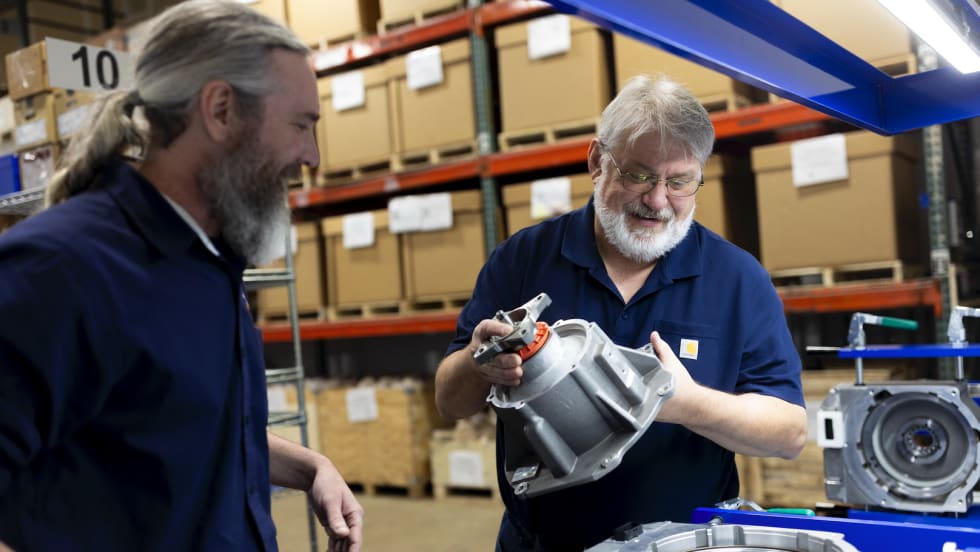
Can Multi-Speed EV Transmissions Solve Heavy Trucking’s Biggest Electric-Vehicle Problems?
A startup called Sigma Powertrain believes purpose-built multi-speed gearboxes can boost efficiency, reduce battery size and improve gradeability for heavy-duty battery-electric trucks.
Read More →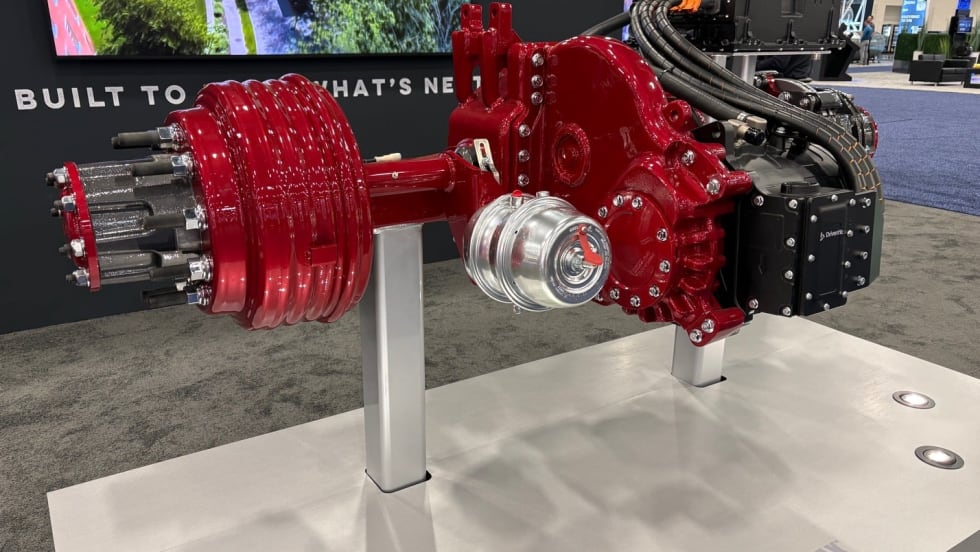
Hendrickson Debuts Electraax E-Axle for Medium-Duty Trucks
Developed with Driventic, Hendrickson's new integrated e-axle is designed to improve efficiency, reduce weight, and extend range in Class 6-7 EV applications.
Read More →
50 Ways Fleets Can Cut Fuel Costs Now — Without Buying New Trucks
Fuel savings don’t come from one big change. They come from dozens of small ones. Here’s how leading fleets are stacking gains across drivers, routing, maintenance, and more.
Read More →
Top Green Fleets 2026: How Fleets Are Reducing Emissions in the Real World
What works in sustainable trucking today? Heavy Duty Trucking's Top Green Fleets are finding practical ways to cut fuel use, reduce emissions, and keep freight moving.
Read More →
California Launching $1 Billion Electric Truck Rebate Program
CARB says the California Clean Fuel Reward program will begin offering point-of-sale rebates of up to $120,000 for electric commercial trucks starting June 26.
Read More →
Mack Unveils EPA 2027-Compliant MP13 Engine With More Power, Better Fuel Economy
Along with unveiling its EPA 2027-compliant MP13 engine, Mack outlined powertrain changes across its Class 6-8 lineup, including new Cummins-based X10 engines.
Read More →
How Volvo’s New D13 Engine Meets EPA 2027 Emissions Without Sacrificing Power or Fuel Efficiency
Volvo says advances in combustion and aftertreatment helped its new EPA 2027 D13 engine avoid the fuel-economy penalties many once expected from tighter NOx emissions limits.
Read More →