




New Jersey Legislation Targets Independent Contractors
The New Jersey Assembly is going after trucking companies it says are improperly listing truck drivers as independent contractors, with a bill that the New Jersey Motor Truck Association warned would cause many trucking companies and owner-operators to leave the state -- along with many of their customers
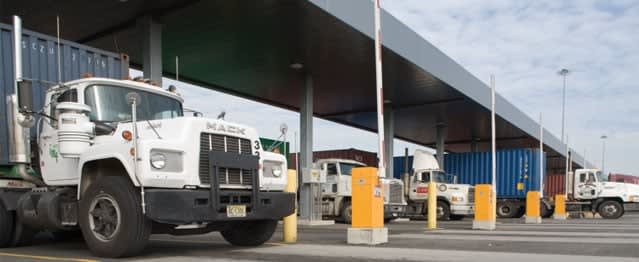
The New Jersey Assembly is going after trucking companies it says are improperly listing truck drivers as independent contractors, with a bill that the New Jersey Motor Truck Association warned would cause many trucking companies and owner-operators to leave the state -- along with many of their customers.
The bill (A-1578) would create a presumption that a work arrangement in the drayage trucking or parcel delivery trucking industries is an employer-employee relationship unless the party receiving the services can overcome the legal presumption of employment.
The Assembly Labor Committee released the bill by a 6-3 vote, but it faces Republican opposition as it heads to the full Assembly. There is a Senate version, but no committee hearings have been scheduled.
"By misclassifying workers, an employer can avoid paying certain taxes like Social Security, Medicare and unemployment. This is not the way to do business," said Assembly Deputy Speaker Wisniewski (D-Middlesex), the lead sponsor of the bill. "This bill spells out what constitutes an employee versus an independent contractor to prevent unscrupulous companies from denying employees the benefits and protections they are entitled to."
Testifying before the Labor Committee, New Jersey Motor Truck Executive Director Gail Toth said the legislation would completely change a 50-year-old business model.
The Port Authority of New York New Jersey is already the most expensive port on the East Coast, NJMTA contends, and has many competing ports.
"The high costs to operate at the ports and the recent extreme toll increases have already caused freight diversions to other ports," she said. "If this bill is passed, even more will flee the state."
Toth also said supporters of the bill are perpetrating a myth that owner-operators want to be employees. It points to a January 2012 University of Arkansas study that concluded that owner-operators chose the profession primarily for the "freedom and control and being one's own boss."
Under the bill, trucking services performed by an individual in these industries for pay would be considered employment, unless a company can prove to the satisfaction of the Department of Labor and Workforce Development that:
- the individual has been and will continue to be free from control or direction over the performance of that service, both under his contract of service and in fact;
- the service is either outside the usual course of the business for which the service is performed, or the service is performed outside of all the places of business of the employer for which the service is performed; and
- the individual is customarily engaged in an independently established trade, occupation, profession or business.
Under the bill, an employer who purposely misclassifies an employee as an independent contractor would be subject to criminal penalties of $2,500 for a first offense. If they mislabel workers in error, they could still face up to $1,000 per violation.
Toth noted that past legislators recognized the importance of independent truckers when they provided the exemption from being "employees" if:
Services performed by operators of motor vehicles weighing 18,000 pounds or more, licensed for commercial use and used for the highway movement of motor freight, who own their equipment or who lease or finance the purchase of their equipment through an entity which is not owned or controlled directly or indirectly by the entity for which the services were performed and who were compensated by receiving a percentage of the gross revenue generated by the transportation move or by a schedule of payment based on the distance and weight of the transportation move.
More Drivers

Nussbaum, Roehl Announce Second Driver Pay Increase This Year
This year has seen a swath of major truck driver pay increases as freight capacity has tightened.
Read More →
From One Generation to the Next: How Mentorship Builds Safer Truck Drivers
After three decades in trucking, Harold Perry shares what he's learned about driver safety, mentorship, and helping the next generation build confidence behind the wheel.
Read More →
Truck Drivers Need More Than Another Alert
Fleets have more visibility into truck health, safety events, and driver activity than ever. The next challenge is turning all that information into useful guidance for the person who has to decide what to do next.
Read More →
FMCSA Removes 110 Truck Driver Training Schools from Certified ELDT List
Federal regulators also are targeting more than 160 additional training providers and launching a nationwide audit of third-party CDL skills testers as part of a broader crackdown on trucking fraud.
Read More →
Hours of Service Pilot Programs: FMCSA Readies for 2027 Rollout
Two pilot programs could eventually reshape hours-of-service rules, giving truck drivers options to pause their 14-hour clock or use longer split sleeper rest periods.
Read More →
Medical Cards, English Proficiency Reshape Roadcheck Violations
Medical-card violations jumped to the top of the driver out-of-service list during CVSA’s 2026 International Roadcheck, while English-language proficiency violations appeared among the leading violations for the first time.
Read More →
Driver Trust Can Make or Break the Success of Fleet Safety Technology
New Teletrac Navman research suggests that onboarding, transparency about driver data, and positive feedback can play a significant role in how commercial drivers respond to safety and coaching technology.
Read More →
EEOC Sues KLLM Over Alleged Sex Discrimination in Driver Training
KLLM is facing a federal sex-discrimination lawsuit over policies the EEOC alleges put female truck driver trainees at a disadvantage.
Read More →
FMCSA Moves to Codify English Language Requirements for Commercial Drivers
By changing regulations on English-language proficiency requirements for commercial drivers, rather than relying on a guidance memo, the FMCSA said future administrations won't be able to walk back the Trump administration's stricter enforcement with just a memo.
Read More →
Drivers Put Western Star Trucks to the Test at Star Nation Experience
Watch to get an inside look at the Western Star trucks, technology, and community behind the Star Nation Experience 2026!
Read More →