




Related: Zero Emissions Vehicles Can Still Impact the Environment
Commentary: Being Green Goes Beyond Low Emissions
Is being green just a matter of buying the latest trucks with hyper-compliant engines? Of spec’ing the latest in aerodynamics? It’s both, of course – and much more besides says Executive Contributing Editor Rolf Lockwood.
by Rolf Lockwood
April 9, 2018
Rolf Lockwood
3 min to read
What does it mean to say you run a “green” fleet? Is it just a matter of buying the latest trucks with hyper-compliant engines? Of spec’ing the latest in aerodynamics? It’s both, of course – and much more besides.

Rolf Lockwood
Put another way, going green is not just a matter of tailpipe emissions, according to Kary Schaefer, general manager of marketing and strategy at Daimler Trucks North America. It’s also about efficiency and uptime, and everything stands on three pillars: safety, connectivity, and propulsion systems. The truly green fleet is one that wastes as little as possible, in every sense.
The keynote speaker at the recent Green Truck Summit in Indianapolis, Indiana, ahead of the Work Truck Show, Schaefer cited a major fleet that used to see one in every four of its trucks involved in an accident each year. After installing advanced safety systems such as stability control and collision mitigation, that ratio became one in 19. Rear-end collisions dropped dramatically. Such gains in uptime, in productivity, make a very good business case for safety, Schaefer said.
Connectivity is a means to an end, she continued, one key result being mounds of data that offer “significant opportunities” in many operational areas. And it’s not a technology restricted to highway trucks, she added. Connectivity is just as useful in the vocational world, for example in driver coaching.
The buzz around electric trucks suggests they’re being seen as the ultimate in “green” trucking, but don’t hold your breath. There are hurdles to leap, Schaefer said, in moving the idea forward: range, weight, cost, and charging.
Battery costs have been diminishing, she said, but could well go up as demand increases. The high cost of replacing a battery pack is another issue, and we’re a long way from figuring out residual values for electric trucks.
Another key matter is the price of electricity, which changes almost daily and ranges widely from region to region. Typical costs go from five cents per kilowatt hour all the way up to 13 or 14 cents, she said.
And of course there’s no meaningful charging infrastructure at the moment, which presents a big question mark as to when and where.
Diesel remains king in terms of efficiency, she concluded, because of its high energy density that isn’t matched by any other fuel, electricity included. Natural gas has a place, too, where noise abatement is an issue or where near-zero emissions are mandated, but “diesel is here to stay for a long, long time.”
What we can do right now to go “greener,” she said, is renew the fleet to modern emissions standards. There remain too many older trucks on the roads adhering to pre-EPA2010 rules.
To which I’ll add an observation: On the 1,100-mile round trip that took me to Indianapolis, most of it on I-69, I passed hundreds of ordinary tractor-and-van-trailer units. Just four of them had trailer boat tail devices of one description or another, three of them deployed, one of them broken. And at best, only about 15% of the van trailers I saw had skirts. These are simple, effective aero tools that save fuel and money with short payback times, but we don’t seem to be spec’ing them.
My “study” was anything but scientific, but I was left with the impression that we’re not taking this green thing very seriously.
Subscribe to Our Newsletter
More Fuel Smarts

Trucking’s Diesel Squeeze Isn’t Letting Up
With diesel topping $6 a gallon nationally, ATA's Bob Costello explains why fleets should prepare for continued pressure at the pump.
Read More →
FlowBelow Redesigns Trailer AeroSlider to Cut Fuel Use
The lighter trailer aerodynamic system installs in less than 45 minutes, according to the company, with potential payback in under a year depending on fuel prices and trailer mileage.
Read More →
Why Diesel Price Relief Efforts May Fall Short
Diesel prices have eased from September’s record high, but doubts about additional Russian supply and limits on dyed-diesel tax relief mean trucking fleets still face expensive fuel. And prices could go higher.
Read More →
Why Small Fuel Savings Matter in Trucking
Can better fuel economy help pay for driver raises? In this podcast, GP Transco explains how small efficiency gains create room to reinvest in its people.
Read More →
How GP Transco Cuts Trucking Fuel Costs, a Tenth of a Gallon at a Time
What’s another tenth of a mile per gallon worth? GP Transco shares how equipment upgrades and driver coaching turn small gains into meaningful fuel savings.
Read More →
Electric Yard Tractors Move Beyond Pilots
Operating-cost savings have overtaken sustainability goals as the leading reason surveyed fleets are adopting battery-electric terminal tractors, according to new NACFE research.
Read More →
Geotab Links Fleet Card to Vehicle Data
The new card combines fuel discounts with telematics-based purchase controls. Geotab’s analysis also points to potential savings from choosing lower-priced fuel stops.
Read More →
Fleet Economics Shape Electric Truck Outlook
ACT Research expects costs, charging infrastructure, and technology improvements to drive zero-emission commercial vehicle adoption as federal regulations and incentives retreat.
Read More →
Wex Adds Cardless Fuel Payments for Over-the-Road Customers
A new fuel card feature for Wex customers offers convenience and security.
Read More →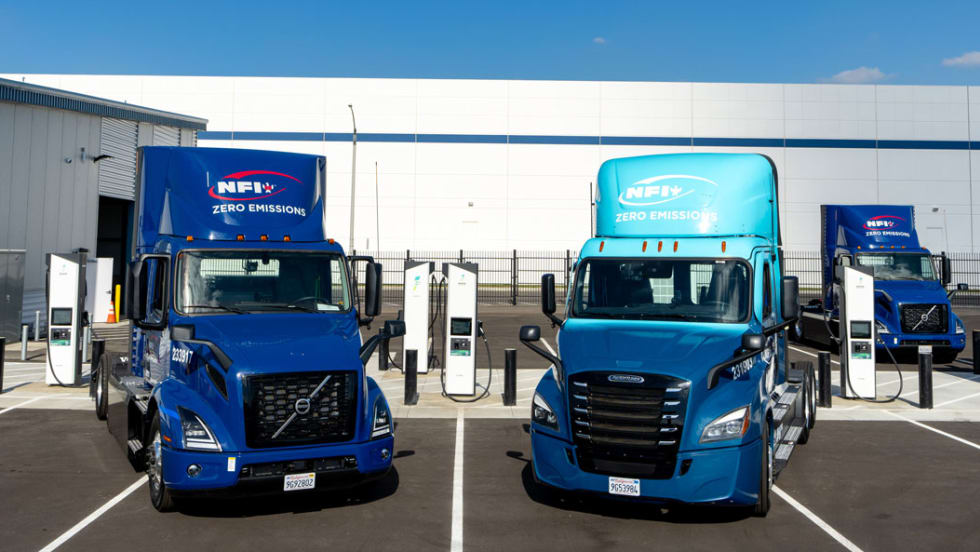
New California Law Could Shed Light on Electric Truck Prices
Why do battery-electric Class 8 trucks remain so expensive? A California bill signed by Gov. Gavin Newsom would give fleets and state agencies more visibility into what manufacturers charge.
Read More →