



The founder and Chief Executive Officer of Nikola Motor Company suggested today’s truck manufacturers face a fate similar to Kodak, which watched its film business collapse during the advent of digital cameras.
 MENU
MENU SEARCH
Nikola Motor CEO Trevor Milton said that the Nikola One's hydrogen-powered electric motor could change the industry in the same way digital cameras changed photography.
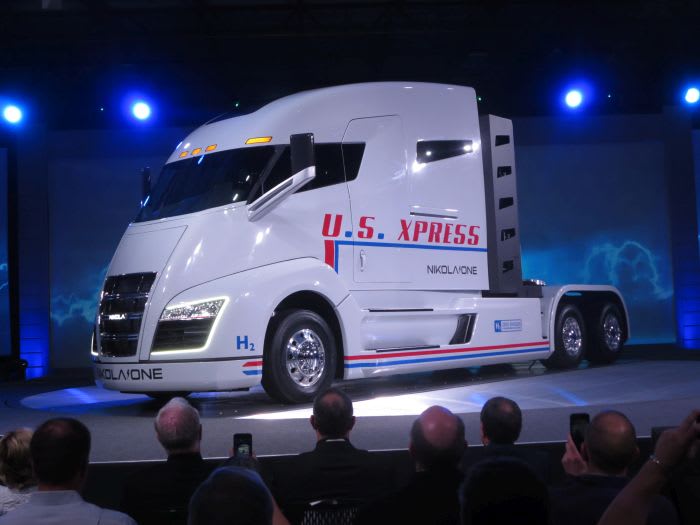
Photo: Tom Berg
The founder and Chief Executive Officer of Nikola Motor Company suggested today’s truck manufacturers face a fate similar to Kodak, which watched its film business collapse during the advent of digital cameras.
“They [Kodak] were so powerful that they never expected to change anything,” Trevor Milton said in an address to the 66th annual meeting of the Quebec Trucking Association. “Why change something that already works?”
His Utah-based company is certainly looking to reinvent the idea of a Class 8 truck, as it looks to produce a hydrogen-powered electric model known as the Nikola One.
One of Kodak’s main mistakes was that it focused solely on an existing product without considering a changing environment, he told the crowd. "In the event of a war, for example, the liter of diesel could reach five or seven dollars ... You'll never have to pay that kind of money to run the Nikola One."
Milton also compared the truck’s concept to the arrival of the first smartphones, which also took the marketplace by surprise.
Apple combined the iPhone and iTunes to change the way people purchased music. Nikola One’s monthly payments will include the price of the truck as well as fuel, maintenance, insurance, and even the windshield wipers. The company plans to develop a related network of hydrogen fueling stations, too.
"In the automotive world, emotions sometimes motivate acquisitions," he said. "But not in trucking. It is only money that dictates decisions.”
"The other companies took a long time to figure out what was happening, and that's what's going to happen with the trucking industry," he said.
Once produced, the Nikola One is expected to travel up to 1,900 kilometers on a single filling of the hydrogen fuel cell system, while delivering 1,000 horsepower and 2,000 lb-ft of torque.
"Other manufacturers are trying to meet the new emissions standards by sacrificing torque and power, but drivers do not want to drive a truck that does not have power," he said, stressing that his truck will also offer a quicker braking response than its diesel-powered counterparts.
"I love the history of diesel," Milton added. "It used to be the most efficient and efficient alternative. But there is now a more efficient, efficient and emissions-free alternative."
The truck’s batteries will offer a further environmental benefit when they are removed after 1.6 million kilometers of service and sold for a fifth of their traditional price to store solar energy, he said.
"By 2021 the truck will be on the road, it's not a dream," Milton concluded. "The future is here and we're all going to be part of it.”
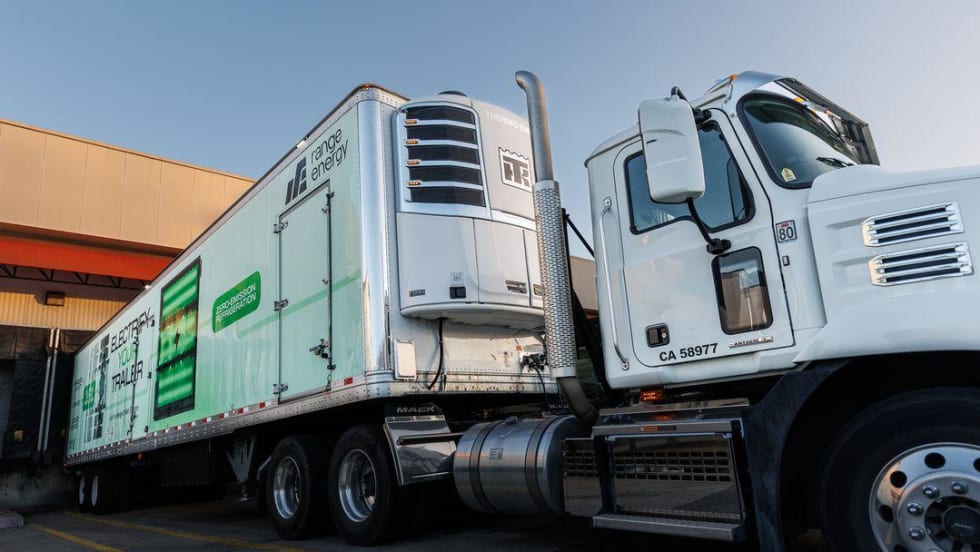
Range Energy said its production-ready eTrailer system proved it can boost stability, safety, and efficiency in sub-zero winter conditions as the company moves toward scaled deployment.
Read More →
Is your company a leader in sustainability efforts among trucking fleets? If so, Heavy Duty Trucking's editors want to hear from you.
Read More →
Watch to learn how Deflecktor's new wheel cover design is taking a simpler approach to aerodynamics, with an eye toward making it more practical for both trucks and trailers.
Read More →
Aerodynamic wheel covers can deliver small but meaningful fuel-economy gains for fleets, and Deflecktor says its latest design aims to make the technology easier and more affordable to deploy.
Read More →
When diesel prices are as volatile as they've been in 2026, it makes it tough for trucking fleets to plan and control costs. Breakthrough Fuel's Jenny Vander Zanden has insights on near-term savings strategies.
Read More →
Practical steps fleets can take to manage fuel costs, from purchasing strategies to driver behavior.
Read More →
Prices jumped another 24 cents in a week, with California topping $7.50 and new data showing fleet fuel costs may already be at record levels.
Read More →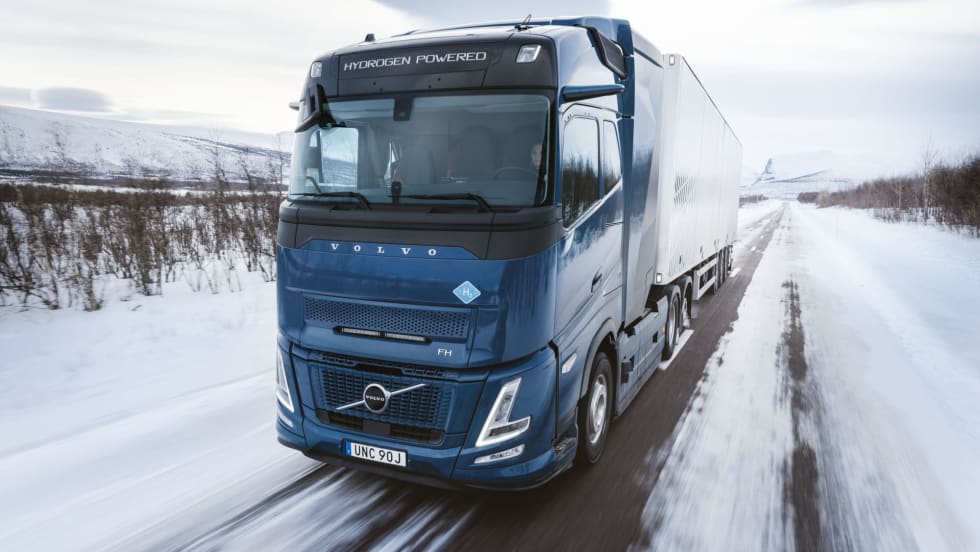
Hydrogen combustion engine trucks will be especially suitable over longer distances and in regions where there is limited charging infrastructure or time for recharging of battery-electric trucks, according to the company.
Read More →
By joining Daimler Truck and Volvo, Toyota brings fuel cell expertise to a joint effort aimed at making hydrogen viable for heavy-duty transport.
Read More →Trucking operators are slowing speeds, cutting empty miles, and declining unprofitable freight as diesel costs continue to rise due to conflict in the Middle East.
Read More →