





Related: Mesilla Valley Transportation Swears by Its B20 Biodiesel Blend
CNG: From an Idea to a Solution
Before starting down the path of alternative fuels Ryder System had the benefit of a deep understanding of diesel technologies, which led them to research some alternatives.
September 23, 2015
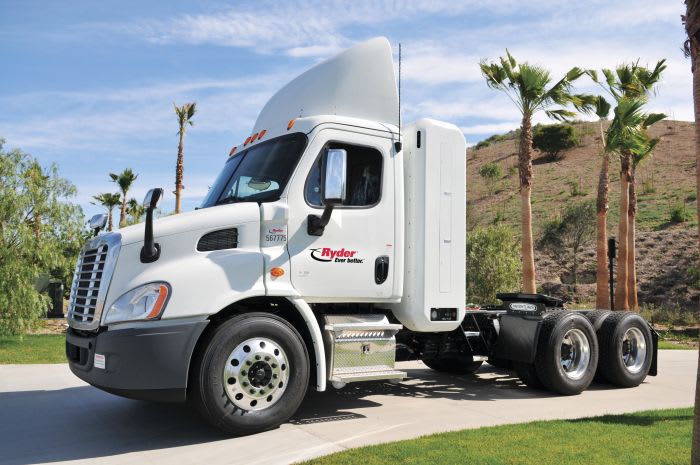
Photo: Ryder
2 min to read
Photo: Ryder
Before starting down the path of alternative fuels, commercial transportation, logistics, and supply chain management solution provider Ryder System had the benefit of a deep understanding of diesel technologies, which led them to research some alternatives.
“We wanted to make sure we were prepared to support advanced fuels as part of a broader portfolio of services to support the energy diversification that we felt was imminent,” says Scott Perry, vice president of supply management and global fuel products for the company’s fleet management solutions business segment. The result is one of the largest natural gas fleets in North America.
Perry points to the number of different duty cycles or segments that Ryder supports through this fleet, adding that “it’s that multi-use, multi-customer mix that makes our experience so unique.”
When first looking into natural gas as an option, Perry and his team focused on reliability, maintenance costs, fuel economy, durability, residual values, driver acceptance, fuel availability, fuel network accessibility, vehicle range, and safety. As a result, the company has seen a significant savings in fuel expense by introducing natural gas into their operations in most instances.
“The duty cycle and annual mileage utilization is a key determining factor in how large those savings are, so that’s a key determining factor for anyone looking at the overall value proposition,” says Perry.
When it comes to the biggest sticking point for most fleets — infratructure — Ryder continues to focus on the issue as the network continues to evolve. Every new station that opens makes the total network that much more efficient.
“We’ve been fortunate in that we’ve been able to develop some very strategic relationships in the fuel infrastructure space and have been able to introduce those to our customers to help in developing the business case to build and open new stations to support those fleet deployments,” says Perry.
Ryder has also developed an expertise in pursuing local, state, and federal incentives where available. The company has been able to include those as part of the value proposition for its customers’ benefit in many cases. Ryder has also been able to use its natural gas solutions as a key element of many of its customers’ pursuit of sustainability objectives, and the company expects that trend to continue.
Subscribe to Our Newsletter
More Fuel Smarts

How Volvo Updated Its D13 for EPA 2027 [Watch]
Volvo’s updated D13 promises lower emissions without sacrificing performance or fuel economy. Take a closer look at what changed inside the engine in this HDT Spotlight video.
Read More →
Diesel Price Spike Shortens Payback for Natural Gas Trucks, Report Says
Energy Vision estimates fleets could recover the higher purchase price of an RNG-fueled Class 8 tractor in 1.3 to 2.8 years under current fuel-price scenarios.
Read More →
Calstart Becomes Catalyst Mobility, Reflecting Broader Focus
Calstart is now Catalyst Mobility, reflecting the nonprofit’s growing national role in clean transportation, including zero-emission trucks, infrastructure and incentive programs.
Read More →

Record Diesel Prices Squeeze Trucking Fleets
Average U.S. diesel prices have climbed to nearly $6 a gallon, surpassing the 2022 record as tight refinery capacity and Middle East disruptions keep fuel costs elevated.
Read More →
Sponsored•September 9, 2026
How Fuel Delivery Shapes Engine Performance
Fuel delivery depends on more than what happens at the injector. For fleet, maintenance and technical professionals, looking at the full path from pump to injector can provide useful context for understanding engine performance.
Read More →
East Coast Port Launches $45M Electric Truck Push
The Port Authority of New York and New Jersey announced millions in incentives for zero-emission drayage trucks, yard tractors, and new charging hubs near the port.
Read More →
California Bill Could Shed Light on Electric Truck Prices
Why do battery-electric Class 8 trucks remain so expensive? A California bill headed to Gov. Gavin Newsom would give fleets and state agencies more visibility into what manufacturers charge.
Read More →
Detroit Opens Orders for EPA 2027 Engines
Detroit isn’t starting from scratch to meet EPA 2027 diesel emissions standards. Its Gen 6 DD13 and DD15 engines keep much of today’s platform while updating the fuel and aftertreatment systems.
Read More →
Zero-Emission Truck Corridor Planned for West Coast
California, Oregon, Washington, British Columbia and Baja California are coordinating plans for truck charging and hydrogen fueling from Canada to Mexico.
Read More →
A Closer Look at Kenworth’s Electric T880E Vocational Truck [Video]
Learn more about Kenworth's T880E battery-electric vocational truck at the Paccar Technical Center, including its range, applications, upfitting considerations, and PTO options, in this HDT Spotlight video.
Read More →