




Related: Wrightspeed's Tantalizing Turbine-Electric Drivetrain
How Targeting Inefficient Fleets Leads to Big Gains
Q&A with Fleet Technology Expo's opening keynote speaker Ian Wright. He's one of the founders of Tesla Motors but these days he is setting aside luxury electric cars to tackle a much larger problem: How to make medium-duty trucks more efficient.

Steven Martinez・Web Editor
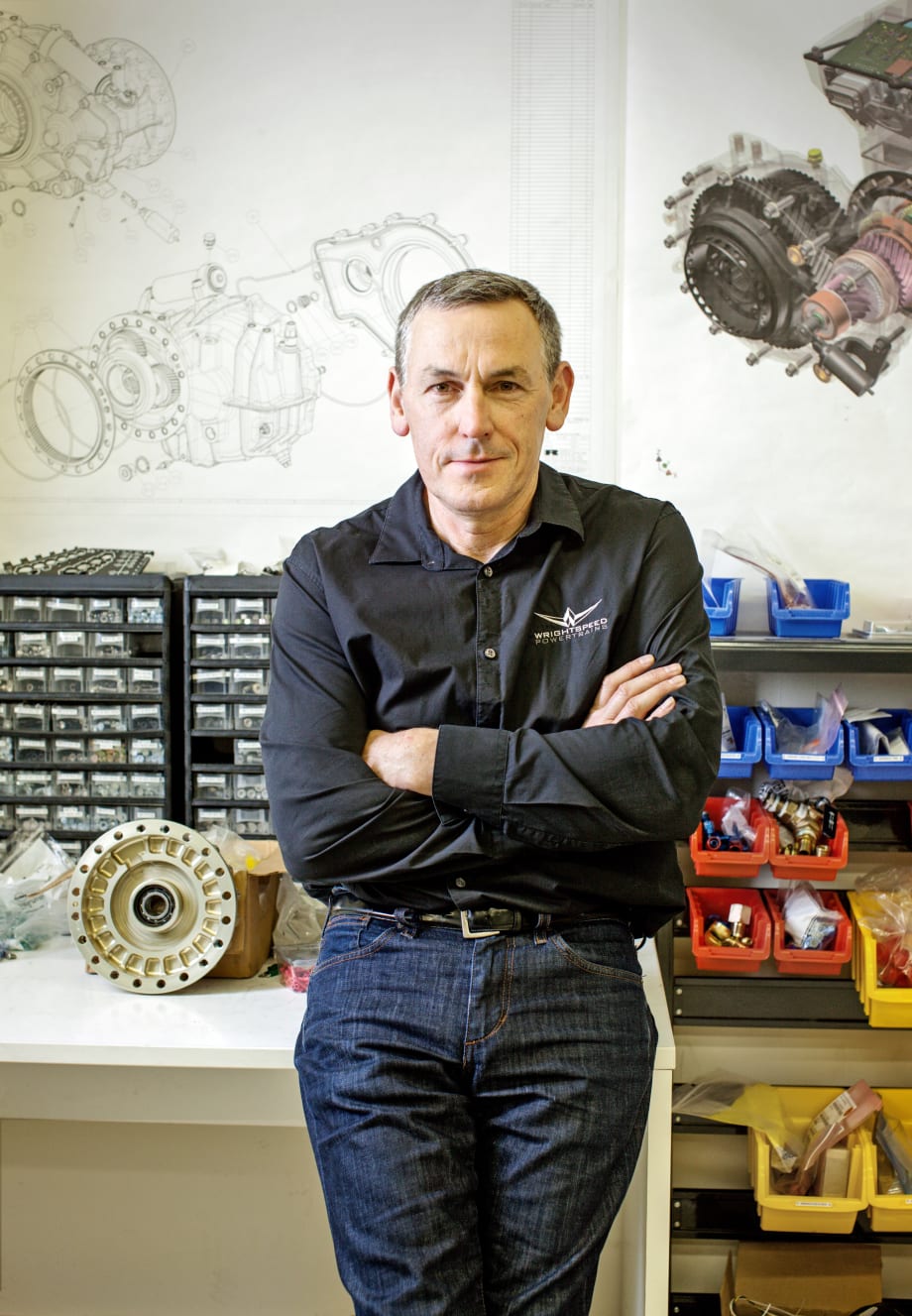
Ian Wright
6 min to read
Tesla co-founder Ian Wright’s company Wrightspeed produces range-extended battery electric powertrains for medium-duty trucks in urban applications. By targeting the least efficient fleets, his smart, fuel-sipping powertrain can have the most financial impact while also significantly cutting emissions.
Understanding the limitations of batteries, his powertrains combine battery-powered electric motors with a turbine generator to extend their range. What this allows for is a much more efficient truck that avoids many of the shortcomings of other alternative powertrains.
Wright is the opening keynote speaker at the 2015 Fleet Technology Expo, held Aug. 24-26 in Long Beach, Calif.
How did you come to be involved in the medium-duty truck industry?
It’s kind of a business plan development process. We try to figure out how big is the market for what you’re trying to start a company to build and what is the value proposition to the customer when you finally take it to market.
So all of those things lead you in the direction of high fuel consumption vehicles and that would be trucks. Then there’s the straight economics of the fuel consumption. The point of electric drive is that it’s more efficient but you can’t save more fuel than the vehicle burns in the first place. Trying to get this to work in vehicles that only burn 250 gallons a year is not possible. But if you get into garbage trucks, for example, they burn 14,000 gallons a year — that’s a lot easier.
How would you describe one of your trucks?
We don’t call it a hybrid because if you do then everybody thinks you’re retaining the original engines and we don’t. It's a range-extended EV. So it’s basically a complete battery-powered EV powertrain. Plug it in, charge it. But it has also a range-extended generator which is, in this case, a turbine.
So how much range are we talking for urban and refuse trucks where the mileage might not be high but fuel consumption is?
Well, with the range extender it is unlimited — as long as you have fuel you can keep driving.
So if your question is ‘why don’t they just make it all battery packs since they don’t do that many miles in a day?’ then let's do the numbers for a garbage truck. They average about 130 miles per day at 2.8 mpg with a thousand hard stops. To do that as a battery-EV, you would use up about half of the payload and about half of the space that is currently occupied by the garbage body for the battery pack, which would cost half a million dollars. So it isn’t feasible to do those as battery vehicles. People try, but what happens is they wind up with not enough range to do an average day’s work and generally they can’t do it in the full-size trucks anyway.
So, how much equivalent miles per gallon can these trucks get?
Conventional diesel garbage trucks get about 2.83 miles per gallon on average and with our system they’re up to a little over a 6-mpg equivalent. Equivalence is worked out on a cost basis. The arithmetic of this is interesting.
I used to freak people out by pointing out that it's actually kind of pointless to improve a 50 mpg car up to 100 mpg, which is what people are trying to do by improving on the Prius or Nissan Versa and making an electric car that gets 100 mpg equivalent — yeah, big deal. Really, you can save more fuel per vehicle per year by taking a 10 mpg pick-up truck and improving it to 11.2 mpg.
The way to think about it is to convert that into gallons per year. Your garbage truck is burning 14,000 gallons per year and we can save well over half of that. We can save more than 8,000 gallons per year in a garbage truck but in a little city car that gets 50 mpg that’s burning 200 gallons per year, you can make it twice as efficient but you’ve only saved 100 gallons. Eight thousand vs. 100 — that’s the difference.
Another way to look at it is if you look at cars that do 35 mpg or better. They only use 0.3% of the total amount of fuel consumed. There’s almost no point in improving them because they’re burning so little of the fuel and creating so little of the emissions that really it doesn’t matter. The high emissions, high fuel-consumption vehicles are the ones needing improvement. Making them quieter as well would be even better.
Since your powertrain uses a turbine generator, is it quieter than a gasoline or diesel engine? Obviously jets are very loud and this is similar to a small jet engine.
Yeah jets are loud but that’s because they’re making thrust by pushing a lot of air out the back. This is actually a turboshaft engine. It’s making electricity by turning the generator, it’s not making thrust. So it doesn’t have that high-velocity air stream and can be made quieter than a conventional diesel engine. A lot quieter than a gasoline engine as well.
The exhaust noise is actually quite low because there’s a recuperator heat exchanger inside the engine that recovers waste heat from the exhaust and that makes a pretty effective muffler. Most of the noise you actually get is intake noise from the compressor.
In the FedEx trucks or the Isuzu we have here for tests, if you’re driving out on the street with the windows up and the turbine starts, you can’t even tell. You’d have to look at the instrument panel to see if it’s running or not.
How did you come up with the idea of using a turbine generator?
It’s not a new idea. Designline has been building buses with them in for at least 10 years. So it wasn’t an original idea. There have been turbine cars done before too – Chrysler did it in 1962. The thing that struck me is now that we have the high-power batteries and the high-power motors and inverters we can do a real, serious hybrid with range-extended EV architecture.
We had to find out if we could make one cheap enough. The turbines look a lot like automotive turbochargers, so we figured if you designed one using automotive manufacturing technology and used automotive production techniques you could probably make it pretty cheap.
So we did that and then suddenly we were free to take advantage of all the really cool things about turbines. They have a great power to weight vs. durability. The equivalently durable diesel generator would weigh 2,500 pounds and the turbine weighs 250 pounds. You get a 10-times gain in power to weight for a given engine life and you get a 10-times gain in emissions performance as well.
Are fleets seeing the value in what you offer?
We’re getting a lot of interest in the new turbine generator for all kinds of use cases. We’re getting interest in using the powertrain in different applications, different kinds of vehicles – from port drayage vehicles to yard switching tractors to off-road vehicles to military applications to low-floor buses and airport shuttle buses. We’re getting interest from all over the place.
Are fleets comparing this to alternative fuels like CNG?
Well it’s not an either or decision because we can use CNG as well — except we would use less than half as much of it as you would with a conventional engine.
We’re competing with conventional powertrains. There is nothing out there that does what we do.
You’re going to be speaking to people who run all types of fleets at our Fleet Technology Expo event, what sort of message will you be giving them?
I think that there is an actual, viable alternative out there now that really does cross the chasm or break the barrier. For the first time you’ve got something that doesn’t have performance compromises and can do the job just as well, if not better, than a conventional diesel and it’s economically compelling. This is a turning point.
Subscribe to Our Newsletter
More Drivers

Truck Drivers Need More Than Another Alert
Fleets have more visibility into truck health, safety events, and driver activity than ever. The next challenge is turning all that information into useful guidance for the person who has to decide what to do next.
Read More →
FMCSA Removes 110 Truck Driver Training Schools from Certified ELDT List
Federal regulators also are targeting more than 160 additional training providers and launching a nationwide audit of third-party CDL skills testers as part of a broader crackdown on trucking fraud.
Read More →
Hours of Service Pilot Programs: FMCSA Readies for 2027 Rollout
Two pilot programs could eventually reshape hours-of-service rules, giving truck drivers options to pause their 14-hour clock or use longer split sleeper rest periods.
Read More →
Medical Cards, English Proficiency Reshape Roadcheck Violations
Medical-card violations jumped to the top of the driver out-of-service list during CVSA’s 2026 International Roadcheck, while English-language proficiency violations appeared among the leading violations for the first time.
Read More →
Driver Trust Can Make or Break the Success of Fleet Safety Technology
New Teletrac Navman research suggests that onboarding, transparency about driver data, and positive feedback can play a significant role in how commercial drivers respond to safety and coaching technology.
Read More →
EEOC Sues KLLM Over Alleged Sex Discrimination in Driver Training
KLLM is facing a federal sex-discrimination lawsuit over policies the EEOC alleges put female truck driver trainees at a disadvantage.
Read More →
FMCSA Moves to Codify English Language Requirements for Commercial Drivers
By changing regulations on English-language proficiency requirements for commercial drivers, rather than relying on a guidance memo, the FMCSA said future administrations won't be able to walk back the Trump administration's stricter enforcement with just a memo.
Read More →
Drivers Put Western Star Trucks to the Test at Star Nation Experience
Watch to get an inside look at the Western Star trucks, technology, and community behind the Star Nation Experience 2026!
Read More →
Trump Administration Looks to Put More Veterans Behind the Wheel
The Freedom Haulers program pulls together existing and expanded programs at several federal agencies to recruit veterans to drive commercial heavy-duty trucks and cut the red tape for them to get a CDL, training, and employment.
Read More →
Putting Mack’s Command Steer to the Test
A test drive of Mack’s Command Steer active steering system evaluates how it can make truck driving easier and less tiring.
Read More →