




Despite the buzz about natural gas, propane remains the most popular alternative fuel in the United States.
 MENU
MENU SEARCH
The country’s third most popular vehicle fuel powers everything from gas grills to medium-duty trucks.

UPS made headlines earlier this year when it announced a $70 million investment in propane-powered delivery trucks. Photo: UPS
Despite the buzz about natural gas, propane remains the most popular alternative fuel in the United States.
Propane has been used as a transportation fuel since 1912, according to the California Energy Commission. Today, there are about 200,000 propane-powered vehicles running in the U.S., “and growing,” says Mike Taylor, business development manager at the Propane Education and Research Council. Elsewhere in the world, propane powers some 2 million autos and trucks.
Fleets such as Frito-Lay and United Parcel Service run hundreds of propane-fueled trucks, and in March UPS announced that it was acquiring 1,000 more propane “package cars,” primarily for use in areas where natural gas is not readily available.
Fuel-system suppliers such as Roush CleanTech offer testimonials from commercial and municipal customers who appreciate the fuel’s low price, clean-burning characteristics and gasoline-like energy content and performance.
More properly called liquefied petroleum gas or LPG, propane historically has been a byproduct of oil refining. But about three-quarters of it is now produced from natural gas or is extracted from gas wells, the industry says. It becomes a liquid under moderate storage pressure, usually about 125 psi. If released into the atmosphere, it puddles on the ground or a floor before evaporating, and its fumes stay low, like gasoline. That’s why shops need no extra safety equipment to accommodate propane-fueled vehicles.
Propane used as a motor vehicle fuel is called autogas, and 2,714 public filling stations in the U.S. now dispense it. Compare that to 737 for compressed natural gas and 57 for liquefied natural gas, according to the U.S. Department of Energy’s website that tracks natural-gas fueling locations.
Natural gas stations are expensive to build. A propane station, however, costs only $10,000 to $15,000, and consists of a simple steel storage tank, a pump and dispenser. It can be set up quickly on a fleet’s premises, Taylor says, and “a supplier will work with any long-term customer. He’ll put in the station for free, in return for a modest upcharge on the per-gallon price. Mobile refueling is available if you’re trying to make up your mind about switching over your fleet. Fill rates are equivalent to gasoline and diesel,” or 5 to 7 gallons per minute.
Autogas prices vary around the country and according to agreements with suppliers. A typical per-gallon price is $2 to $2.50, though a consumer might pay $3 at a U-Haul outlet. Because propane is a popular heating fuel in rural areas, prices temporarily spiked during extremely cold weather last winter. But Taylor says a lot of that was due to supply interruptions, and users with contracts were not affected.
Current propane engines are based on gasoline blocks, as are scores of available conversion kits. Light-truck kits cost $9,000 to $12,000, about the same as a CNG kit, and those for midrange trucks with gasoline engines are a little higher.
A Cummins Westport 5.9-liter ISB that burned propane was dropped in 2009 for lack of sales, but Taylor says that can change.
“Our growth is Class 1 through Class 7,” he says. “We haven’t pursued the over-the-road market. But we are experimenting with dual-fuel, and with dedicated diesel-block-type engines. Now there is the (gasoline-block) 8.8-liter Power Systems International engine that gives you benefits of diesel. There’s also the 8-liter Powertrain Integration Pithon engine that Freightliner Custom Chassis is using in the S2G.”
Taylor says PERC is funding two R&D projects, though he declined to name the companies involved.
“We are developing engines that will fit in the heavy-duty market, for delivery and regional carriers.”
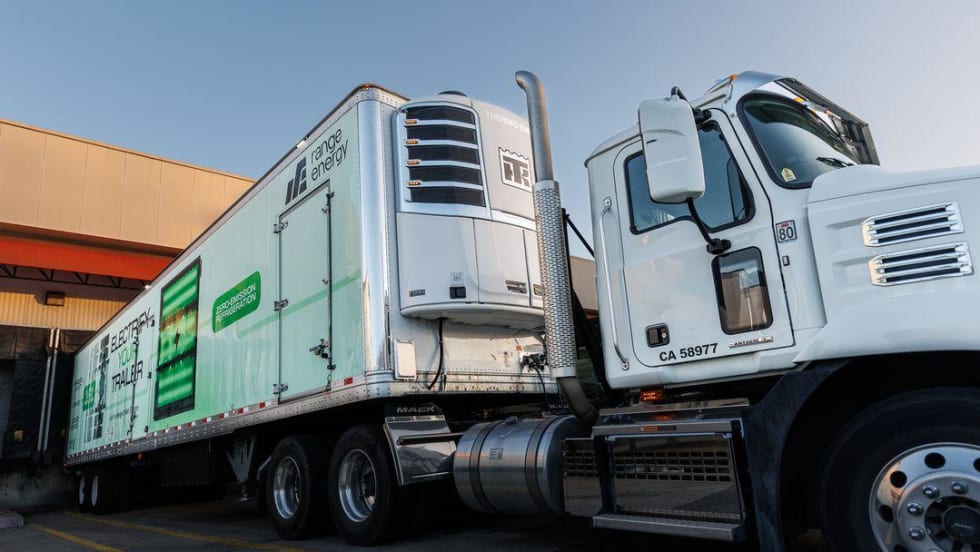
Range Energy said its production-ready eTrailer system proved it can boost stability, safety, and efficiency in sub-zero winter conditions as the company moves toward scaled deployment.
Read More →
Is your company a leader in sustainability efforts among trucking fleets? If so, Heavy Duty Trucking's editors want to hear from you.
Read More →
Watch to learn how Deflecktor's new wheel cover design is taking a simpler approach to aerodynamics, with an eye toward making it more practical for both trucks and trailers.
Read More →
Aerodynamic wheel covers can deliver small but meaningful fuel-economy gains for fleets, and Deflecktor says its latest design aims to make the technology easier and more affordable to deploy.
Read More →
When diesel prices are as volatile as they've been in 2026, it makes it tough for trucking fleets to plan and control costs. Breakthrough Fuel's Jenny Vander Zanden has insights on near-term savings strategies.
Read More →
Practical steps fleets can take to manage fuel costs, from purchasing strategies to driver behavior.
Read More →
Prices jumped another 24 cents in a week, with California topping $7.50 and new data showing fleet fuel costs may already be at record levels.
Read More →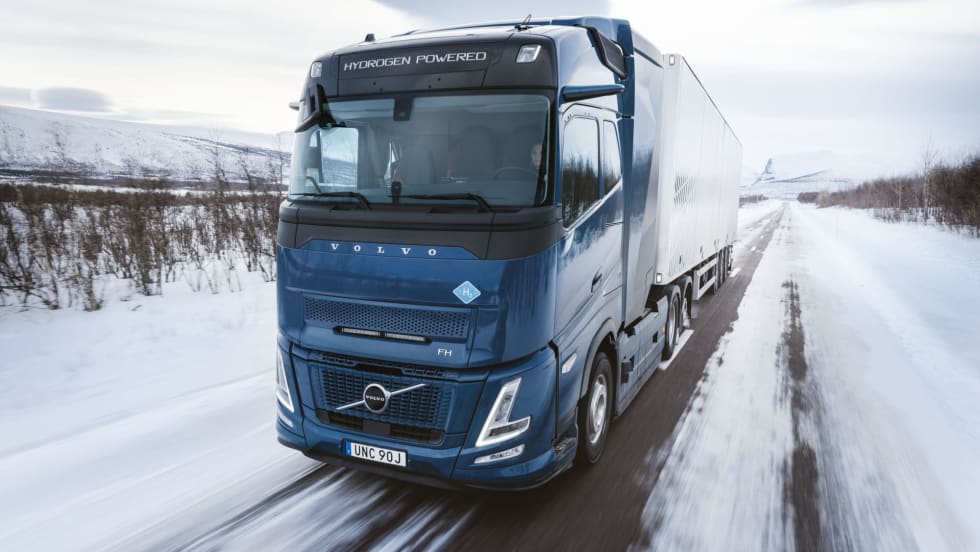
Hydrogen combustion engine trucks will be especially suitable over longer distances and in regions where there is limited charging infrastructure or time for recharging of battery-electric trucks, according to the company.
Read More →
By joining Daimler Truck and Volvo, Toyota brings fuel cell expertise to a joint effort aimed at making hydrogen viable for heavy-duty transport.
Read More →Trucking operators are slowing speeds, cutting empty miles, and declining unprofitable freight as diesel costs continue to rise due to conflict in the Middle East.
Read More →