




Turn to Technology to Keep Tires at Proper Inflation
We know from experience that many fleets don't do a great job at tire inflation management. And we know there's little point in looking to drivers for help in the matter, so what's left to do? Enter technology.

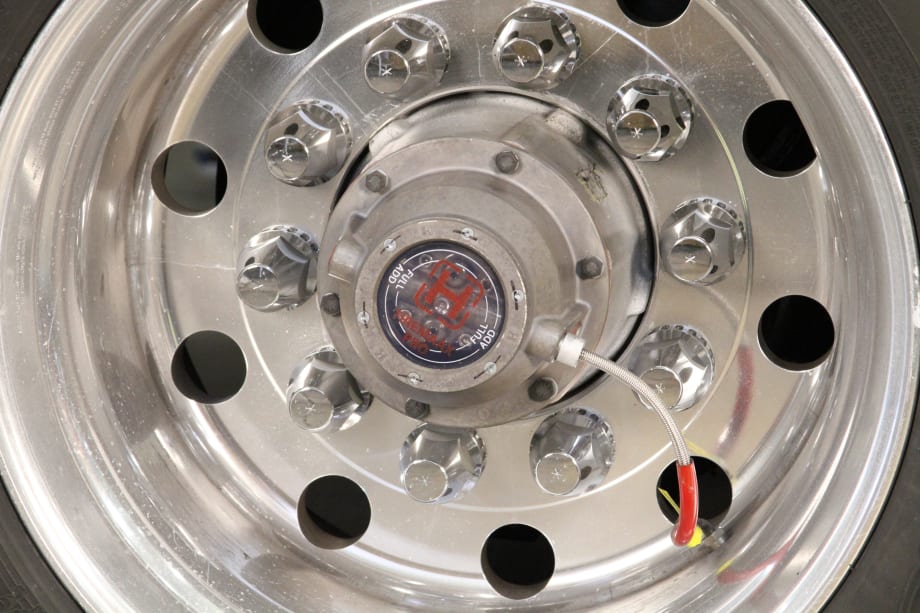
We know from experience that many fleets don't do a great job at tire inflation management. And we know there's little point in looking to drivers for help in the matter, so what's left to do? Enter technology.
Automatic tire inflation systems have been on the market more than a decade now, and tire pressure monitoring systems nearly as long. Both bring proven ROI to the table, and both eliminate most of the chore associated with maintaining optimum tire pressure.
And given the number of factors worth considering, automating the process makes even more sense. Many fleets choose 100 psi as an arbitrary but safe pressure, but it may not be ideal.
"There are several variables that fleets consider when setting a standardized pressure, including ambient temperature changes, vehicle speed, and of course, load," notes Donn Kramer, director of product marketing innovation, Goodyear Commercial Tire Systems. "A tire with an initial cold inflation pressure of 100 psi at 60 degrees Fahrenheit ambient temperature will experience a 2-psi change for every 10-degree Fahrenheit change in ambient temperature. And fleets operating at 66 to 70 mph should increase their tires' cold inflation pressure by 5 psi."
That's a lot for a fleet manager or a driver to consider. Most of the automatic inflation systems can maintain a preset pressure -- emphasis on preset, because the fleet can set a precise target pressure rather than an arbitrary pressure.
"No matter the minimum or maximum pressure selected by the carrier, most automatic tire inflation systems can maintain that pressure," says Bob Montgomery, vice president, Intelligent Transportation Systems at Stemco. "The pressure regulator in the Aeris system, for example, is adjustable up to the pressure in the brake air tank, and will inflate to the pressure set point as long as there is sufficient air in the brake system."
Kramer also notes that maintaining the same pressure across a set of dual tires is an excellent way of minimizing irregular wear, and ATIS systems manage that, well, automatically.
The risk there, according to Matt Wilson, controls business unit manager at Hendrickson, is with unequal loading across the tires. The harder of the two does most of the heavy lifting, while the soft tire flexes its way to an early grave. You end up damaging two tires because of a single problem.
"Equalizing the pressure across duals as well as maintaining optimum pressure by bleeding off excess pressure due to changes in ambient temperature or operational temperature helps prolong tread and casing life," Wilson says. "Our TireMaaxPro inflation system keeps tires within the manufacturers' guidelines."
But do ATIS systems help save fuel? According to a lengthy Department of Transportation field test of ATIS and TMPS systems, they do -- 1.4%.
When presenting his findings at Technology & Maintenance Council of The American Trucking Associations Annual Meeting and Transportation Technology in February 2012, Chris Flanigan of FMCSA's Office of Analysis, Research and Technology noted the fleets using the ATIS systems and the TPMS systems both showed a 1.4% reduction in fuel consumption.
"That DOT study put any concerns to rest," observes John Morgan, product manager for Meritor Tire Inflation Systems. "The final bit of proof is that the fleets in the trial are still using the systems, and have equipped more vehicles in their fleets since the study wrapped up in 2010."
That study put a fairly good number to the value of ATIS, Morgan says. "Improved tire and tread life are intuitively top of mind when you talk about ATIS, but DOT found fuel economy benefits as well, and lower service call rates. That's about everything we've been offering since we began."
While ATIS systems have been able to reinflate trailer tires only, TPMS systems, with some help from drivers, provide the opportunity to manage air pressure at every wheel position.
"When we first install a TPMS system on a fleet, they can't believe what they see," says Jim Samocki, general manager at Doran. "Tire pressures are usually all over the map. That's when the impact of improper inflation starts to sink in. They're thinking of tire wear and damage, of course, but fuel economy is never far behind."
While auto inflation systems are so far seen only on trailers, a few manufacturers are readying product for drive axles too. It's a bit tougher getting air into the hub when the axle in the way, but it's coming. The Meritor system is said to be in field tests, as is a system from Airgo.
But there's one system available now from Aperia Technologies that uses an internal pump rather than air lines to deliver up to 120 psi to the drive tires.
"The system operates on a similar principle to a self-winding watch," says Josh Carter, CEO and co-founder of Aperia Technologies, which makes the Halo system. "It uses a wheel's rotational motion to pump and maintain optimal tire pressure. It does not require any connection to a compressor, and can be installed in about 10 minutes per wheel end."
Halo has successfully completed two years of in-service fleet evaluations, racking up close to 8 million miles of on-road testing.
So, while pressure management is critical to tire life, lack of pressure management can certainly be detrimental to fuel economy. Find the ideal pressure for your fleet based on loaded conditions, and use all the help you can get to maintain it. The money you save on tires and road calls is just the tip of the iceberg.
More Fuel Smarts

Jennie Abarca Is Proving Electric Trucks Can Do the Job
HDT Truck Fleet Innovator Jennie Abarca is building confidence in fleet electrification one load at a time while openly sharing the challenges she encounters along the way as a small-fleet owner.
Read More →
Cummins Adjusts 2027 Engine Rollout After EPA Proposal
The engine maker will gradually introduce its new Model Year 2027 diesel engines while continuing to offer current models during the transition, citing the EPA's proposed emissions rule changes.
Read More →
EPA Proposal Could Ease 2027 Truck Costs and Buying Uncertainty
The proposal doesn't change the tougher NOx standard, but it would revise key implementation requirements that manufacturers say have driven up costs and complicated fleet purchasing decisions.
Read More →
Cummins, Paccar Ease DEF Derates After EPA Guidance
Updated diesel engine software gives truck operators more time to address emissions-system issues while staying compliant with EPA emissions standards.
Read More →
Maintenance in the Messy Middle Part 3: Biodiesel
Biodiesel can reduce emissions, improve fuel-system lubricity and use existing diesel infrastructure. But NACFE’s Messy Middle maintenance report says fleets must actively manage storage, cold-weather operation, filters and oil drain intervals to avoid problems.
Read More →
Enhance Fleet Performance with High-Efficiency Auxiliary Power Units
Drive sustainable cost savings while increasing driver comfort during short- and long-haul logistics operations.
Read More →
Maintenance in the ‘Messy Middle’ Part 2: Renewable Diesel Fuel
NACFE's latest Messy Middle Powertrain Service & Maintenance report says renewable diesel gives fleets an opportunity to reduce carbon emissions without changing trucks, fueling infrastructure or maintenance practices. But technicians still need to understand several important operational differences.
Read More →
The Diesel Engine Enters NACFE’s ‘Messy Middle’
NACFE’s new Messy Middle Powertrain Service & Maintenance report says keeping modern diesel engines running now depends as much on software, diagnostics and data as traditional mechanical service.
Read More →
DTNA Software Update Gives Truckers More Time Before DEF Derates Take Effect
The changes reflect EPA guidance aimed at reducing downtime caused by emissions-system faults while maintaining compliance requirements.
Read More →
New Agentic Predictive Maintenance Report Demonstrates How Degraded Aftertreatment Systems Waste Fuel
Questar analyzed a large mixed-class fleet and discovered it was wasting as much as $30 in fuel per vehicle, per day, because of mechanically degraded aftertreatment systems.
Read More →