




Keeping Tabs With Fuel Cards
Fleets don’t always have a clear picture of what’s happening with their fuel purchasing plans. That’s become quite clear in the recent Pilot Flying J scandal, where the truckstop chain allegedly bilked customers out of fuel rebates.

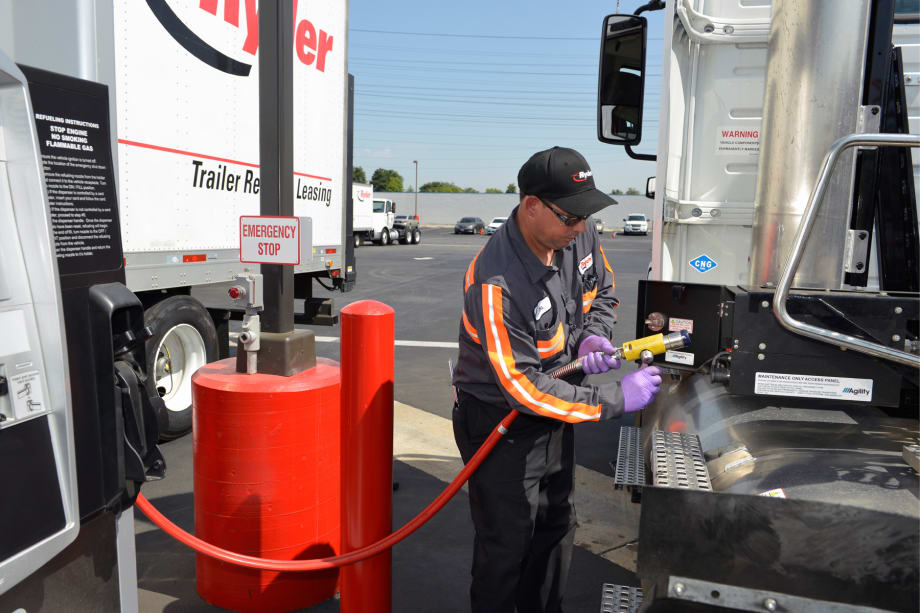
Analyzing fuel card and
telematics/GPS data offers
fleets increased visibility of fuel purchase transactions.
Fleets don’t always have a clear picture of what’s happening with their fuel purchasing plans. That’s become quite clear in the recent Pilot Flying J scandal, where the truckstop chain allegedly bilked customers out of fuel rebates.
Analyzing fuel card and
telematics/GPS data offers
fleets increased visibility of fuel purchase transactions.
Fleets can find clarity in their fuel purchasing plans. Fuel card vendors give their customers detailed information on the fuel tax purchases, amounts, prices, fuel taxes and other information. A number of fleets deploy back office technology (or personnel) to evaluate that information to ensure compliance with fleet fuel purchasing programs.
The marriage of fuel card data, telematics and analytics technology can help fleets save money on fuel in many ways, from making sure drivers fuel at the truckstops where fleets have discounts to identifying potential fuel theft or mechanical problems.
Glen Sokolis, founder of The Sokolis Group, says fleets often just don’t have the time to look at their fuel program. His company evaluates a fleet’s fuel purchasing program to help find areas that need tightening.
For instance, maybe a fleet hasn’t negotiated the kind of discount they could, or they are already getting a great discount, but don’t realize that most of their trucks are stopping at other fueling locations. “If a company doesn’t watch their fueling program, they can lose money,” he says.
There is plenty of information to study. The key is to do it.
Using the technology
With technology, fuel card providers can give customers immediate access to transaction information, often integrating directly with a fleet’s telematics, dispatch and enterprise systems. Randy Morgan, executive vice president with Comdata, notes that the fueling activity for some of the larger fleets is “probably one of the most sophisticated things you can envision.” Fleets can restrict cards to certain locations, certain quantities per locations, etc. “They are managing everything that closely,” Morgan says.
Other fleets might not be as thorough.
The integrated technologies mean that it’s no longer just a fueling transaction, Morgan explains. There is what is happening at the front end in terms of the transaction itself: the amount of fuel, price paid, location of the fueling location. But Morgan says the real benefits lie at the back end: “What can we learn from all of this data through analytics?”
Earlier this year, Comdata introduced a new program that uses real-time transaction data to help fleets better track fuel purchases and to make better decisions. The FleetAdvance program is designed to help fleets take advantage of price-saving opportunities.
The program scores fuel transactions as they occur and compares the net price paid to the price that could have been paid at nearby locations. For each transaction that falls outside pre-established score guidelines, Comdata sends an immediate email or text notification.
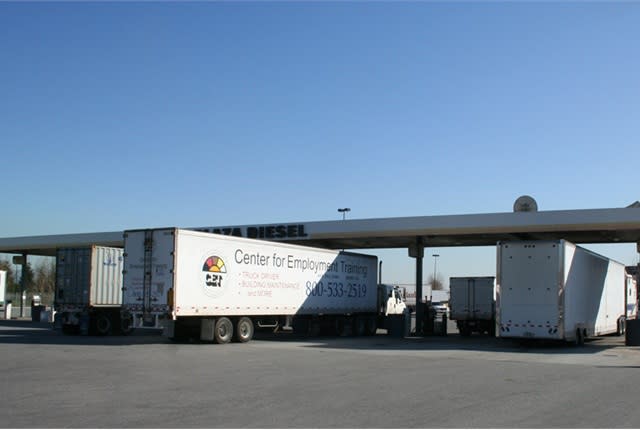
Many fuel card providers have inked agreements with vehicle telematics providers that give fleets additional control over fuel-buying practices.
Telematics providers combine fuel card data with other information their systems collect, such as GPS location information, to monitor fuel usage and purchasing. PeopleNet offers such a service through its Vusion division, for instance.
Vusion’s analytic tools can gather and analyze information from various systems within a fleet and from outside vendors including dispatch, enterprise and maintenance management, mobile communications and fuel tax auditing.
The analysis can look at fuel card data, fuel tax information, fuel use data from the engine’s ECM and fuel level at key on/key off to develop a more complete picture of actual fuel use and purchases. Such analysis may detect fuel theft, maintenance issues or other problems that may not be apparent otherwise.
For instance, such analysis may determine that one driver is getting consistently lower mpg than other drivers in similar vehicles. That could indicate a mechanical problem, or it could mean fuel theft.
Blue Tree System’s R:Com Fuel Auditor module performs a similar function as it compares the fuel burned by the engine against the fuel purchased during the same time. Fleets can set their own parameters as far as what is out of limits and such instances are flagged. You can know with a mouse-click where that fuel was purchased, when and how much.
NetworkFleet offers similar fuel fraud protection through its association with fuel-card provider Wright Express. “We can track fuel fraud through the information we provide,” says Chris Ransom, director of sales.
Because the system monitors GPS location of the vehicle, “we can see if a fuel card was used in a place where the vehicle was not. If that happens, the fuel card is in some other vehicle.”
NexTraq, which offers dispatch and vehicle tracking products, uses GPS and fuel card data to monitor possible fuel fraud.
For fleets operating remote fueling locations, such as oil-field work, telematics helps control fuel loss by watching fuel monitors. For instance, if authorization has gone out to fill three trucks from a remote fuel tank and more fuel is pumped than those three tanks can hold, you can see you’ve got a problem.
Another way to prevent fuel card abuse is to do away with them altogether. Comdata introduced a cardless fueling solution last year that has been implemented at the major truckstop chains and several regional groups. The system automates the fueling process and data entry requirements via RFID technology.
A reader on the pump scans an RFID tag on the vehicle to get information such as vehicle number, company name, billing instructions and authorizations to fuel.
Comdata says the cardless solution benefits both the truck fleet and the fuel stop by reducing the risk of fraudulent transactions. It also automatically shuts off the pump when the truck pulls away.
More Fuel Smarts

How Volvo Updated Its D13 for EPA 2027 [Watch]
Volvo’s updated D13 promises lower emissions without sacrificing performance or fuel economy. Take a closer look at what changed inside the engine in this HDT Spotlight video.
Read More →
Diesel Price Spike Shortens Payback for Natural Gas Trucks, Report Says
Energy Vision estimates fleets could recover the higher purchase price of an RNG-fueled Class 8 tractor in 1.3 to 2.8 years under current fuel-price scenarios.
Read More →
Calstart Becomes Catalyst Mobility, Reflecting Broader Focus
Calstart is now Catalyst Mobility, reflecting the nonprofit’s growing national role in clean transportation, including zero-emission trucks, infrastructure and incentive programs.
Read More →

Record Diesel Prices Squeeze Trucking Fleets
Average U.S. diesel prices have climbed to nearly $6 a gallon, surpassing the 2022 record as tight refinery capacity and Middle East disruptions keep fuel costs elevated.
Read More →
How Fuel Delivery Shapes Engine Performance
Fuel delivery depends on more than what happens at the injector. For fleet, maintenance and technical professionals, looking at the full path from pump to injector can provide useful context for understanding engine performance.
Read More →
East Coast Port Launches $45M Electric Truck Push
The Port Authority of New York and New Jersey announced millions in incentives for zero-emission drayage trucks, yard tractors, and new charging hubs near the port.
Read More →
California Bill Could Shed Light on Electric Truck Prices
Why do battery-electric Class 8 trucks remain so expensive? A California bill headed to Gov. Gavin Newsom would give fleets and state agencies more visibility into what manufacturers charge.
Read More →
Detroit Opens Orders for EPA 2027 Engines
Detroit isn’t starting from scratch to meet EPA 2027 diesel emissions standards. Its Gen 6 DD13 and DD15 engines keep much of today’s platform while updating the fuel and aftertreatment systems.
Read More →
Zero-Emission Truck Corridor Planned for West Coast
California, Oregon, Washington, British Columbia and Baja California are coordinating plans for truck charging and hydrogen fueling from Canada to Mexico.
Read More →
A Closer Look at Kenworth’s Electric T880E Vocational Truck [Video]
Learn more about Kenworth's T880E battery-electric vocational truck at the Paccar Technical Center, including its range, applications, upfitting considerations, and PTO options, in this HDT Spotlight video.
Read More →