




Studies Indicate TPMS and ATIS Are Money Makers
There are lots or reasons not to embrace fuel-saving technology (some better than others), but validation exists for tire-pressure mitigation systems. And the payback is significant.

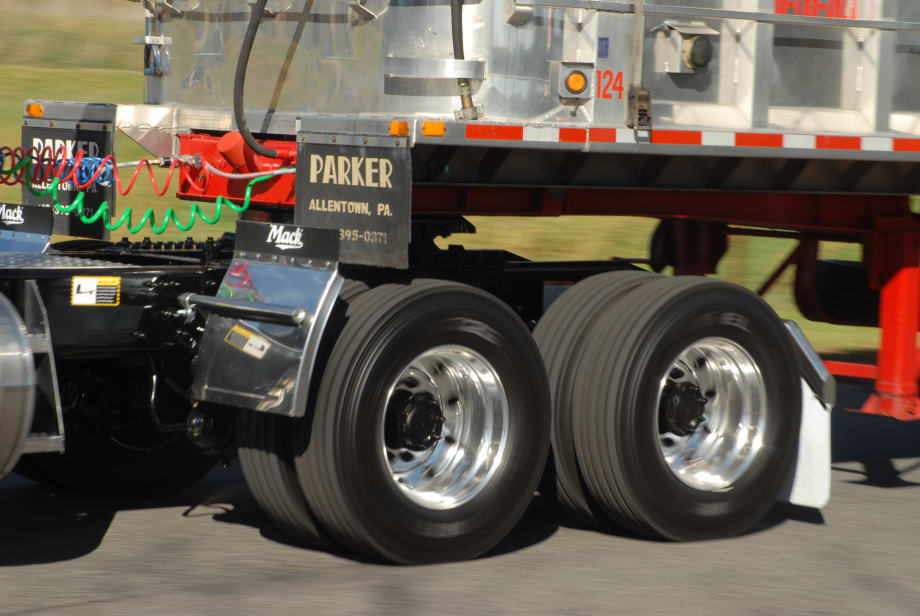
Soft, underinflated tires increase rolling resistance and shorten tire life. TPMS and ATIS systems solve both problems at once.
Soft, underinflated tires increase rolling resistance and shorten tire life. TPMS and ATIS systems solve both problems at once.
Have you equipped your fleet with tire pressure maintenance or monitoring systems? If not, you're not alone. In fact, you are in the majority. Fleet surveys conducted by The North American Council for Freight Efficiency show that only about 10% of fleets have embraced TPMS technology, while about 30% of fleets are using automatic inflation systems on trailers.
Both these technologies have proven themselves in real-world fleet testing, including a long-term study conducted by the U.S. Department of Transportation in 2010. The ROI was there. Fuel savings was there. Reduced unscheduled tire maintenance was there. So what's the hangup? Why are fleets not all over these simple, inexpensive technologies?
The answer is complex, but partially revealed in a study called "Barriers to Increased Adoption of Fuel Efficiency Technologies in Freight Trucking" published by NACFE and the International Council for Clean Transportation.
With the cost of fuel steadily increasing, conventional wisdom would dictate that available technologies to improve fuel economy efficiency would be widely adopted by the trucking sector. In reality, this is not the case. There are a number of available technologies shown to improve fuel economy that have had limited adoption to date, including TPMS and ATIS.
The report sought to investigate the prevailing barriers to greater adoption of fuel-saving technologies for tractor-trailers in North America.
The study included a unique survey approach. It amassed the perspectives of a number of decision makers in the long-haul sector from fleets, to manufacturers, to integrators and builders, dealers, shippers, and owner-operators to assess the complex issues that govern decisions about technology investment and deployment.
It's worth noting that the study participants are likely to be more technology progressive than the industry as a whole, so the barriers identified in the study are likely to be even more pronounced for the industry as a whole.
Six principle barriers were identified:
Uncertainty about payback
Lack of capital
Lack of credible information
Insufficient reliability
Lack of availability
What the study's authors call the split-incentive barrier.
When it comes to investing in tire-pressure mitigation systems as a fuel savings measure, most of the reasons cited by the respondents fail to meet the definitions of the barriers described above. There is a great deal of data available quantifying the payback, they are not expensive relative to the savings they produce, reliability of the systems has improved over time, and they certainly are not hard to come by.
That leaves the so-called split-incentive barrier, which is described as a situation where the party paying for the product is not the same party that would realize the savings. One could see where that might play in this discussion, but it shouldn't be an insurmountable barrier in most cases.
Next page: Real-World Results
[PAGEBREAK]Real-World Results
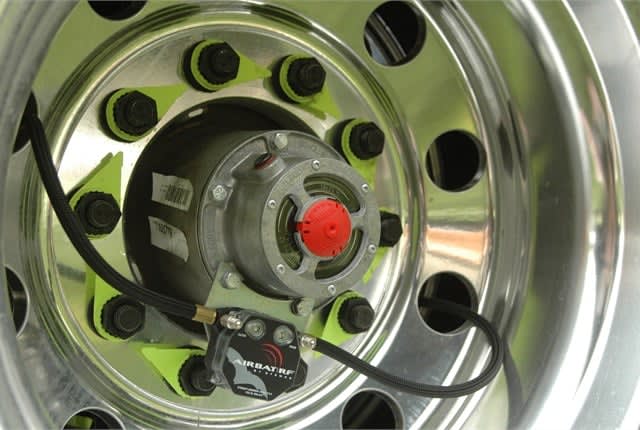
Tire pressure monitoring systems alert driver and fleet managers to low-pressure situations than can suck fuel and ruin tires.
The results of a research project conducted by the U.S. Department of Transportation between 2008 and 2010 were made public last year at the Technology and Maintenance Council of the American Trucking Associations annual meeting in Tampa. Presented by Chris Flanigan of the Federal Motor Carrier Safety Administration's Office of Analysis, Research and Technology, the study quantified the ROI on both TPMS and ATIS systems.
"We saw an increase in fuel economy in both fleets of 1.4%," Flanigan told the crowd. "And based on current fuel costs [about $4/gallon] and equipment costs of about $1,500 per tractor-trailer unit, the ROI comes in under one year."
The study was comprehensive. It documented fuel savings accrued from running correctly inflated tires, as well as the savings in tire wear, premature failures due to under inflation and the reduced maintenance costs resulting from longer tire life and the lower failure rate.
Flanigan said the results showed both fleets experienced an equal reduction in fuel consumption of 1.4 percent. Tread wear reductions recorded in the Sheetz fleet were notable. Steers tires saw an improvement in tread wear of 5/32 per million miles and trailer tires saw an improvement of almost 2/32 of an inch per million miles. The drive tires improved by nearly 3/32 per million miles.
So, that lays to rest the questions of uncertainty about payback and the lack of credible information. Granted it was one study, but there are others reporting similar results. In fact, in its report on tire pressure systems, NACFE's fleet survey reported similar results among users that responded using the payback calculator tool.
The NACFE calculator shows, for example, a payback for TPMS systems of about 14 months and 9 months for ATIS systems. It demonstrated improvements in tire wear of 4% and 8% respectively and fuel economy improvements of between 0.75% and 1.25%.
In the follow up interviews to the initial survey, Mike Roeth, executive director of NACFE, saw fleets getting 1.5% improvement in fuel economy just by keep tires properly inflated.
"I'd say to produce savings on that magnitude, the fleet would have had pretty poor tire management before installing the systems," he said. "In this case, we looked only at the fuel savings. Imagine what better pressure management did for their tire costs."
In the case of tire-pressure mitigation systems, it's likely that both the fuel purchasing department and the maintenance department would share in the savings. One of the barriers reported in the detailed survey analysis of these systems was a feeling in the maintenance department that added complexity of the systems and potential installation and ongoing maintenance concerns would add up to more trouble than they were worth. The cost/benefit analysis seems to dispute that too, both in the DOT study and the NACFE Fleet Survey.
There is fuel savings and tire wear savings and reduced tire failure savings to be had, all from the installation of a couple of simple, inexpensive and unobtrusive systems. If you need more information, the purveyors of such product would be glad to help. Or you can read the full Barriers reports. If you're looking for excuses, they're all in there. If you want results, that's in there too.
More Fuel Smarts

How Volvo Updated Its D13 for EPA 2027 [Watch]
Volvo’s updated D13 promises lower emissions without sacrificing performance or fuel economy. Take a closer look at what changed inside the engine in this HDT Spotlight video.
Read More →
Diesel Price Spike Shortens Payback for Natural Gas Trucks, Report Says
Energy Vision estimates fleets could recover the higher purchase price of an RNG-fueled Class 8 tractor in 1.3 to 2.8 years under current fuel-price scenarios.
Read More →
Calstart Becomes Catalyst Mobility, Reflecting Broader Focus
Calstart is now Catalyst Mobility, reflecting the nonprofit’s growing national role in clean transportation, including zero-emission trucks, infrastructure and incentive programs.
Read More →

Record Diesel Prices Squeeze Trucking Fleets
Average U.S. diesel prices have climbed to nearly $6 a gallon, surpassing the 2022 record as tight refinery capacity and Middle East disruptions keep fuel costs elevated.
Read More →
How Fuel Delivery Shapes Engine Performance
Fuel delivery depends on more than what happens at the injector. For fleet, maintenance and technical professionals, looking at the full path from pump to injector can provide useful context for understanding engine performance.
Read More →
East Coast Port Launches $45M Electric Truck Push
The Port Authority of New York and New Jersey announced millions in incentives for zero-emission drayage trucks, yard tractors, and new charging hubs near the port.
Read More →
California Bill Could Shed Light on Electric Truck Prices
Why do battery-electric Class 8 trucks remain so expensive? A California bill headed to Gov. Gavin Newsom would give fleets and state agencies more visibility into what manufacturers charge.
Read More →
Detroit Opens Orders for EPA 2027 Engines
Detroit isn’t starting from scratch to meet EPA 2027 diesel emissions standards. Its Gen 6 DD13 and DD15 engines keep much of today’s platform while updating the fuel and aftertreatment systems.
Read More →
Zero-Emission Truck Corridor Planned for West Coast
California, Oregon, Washington, British Columbia and Baja California are coordinating plans for truck charging and hydrogen fueling from Canada to Mexico.
Read More →
A Closer Look at Kenworth’s Electric T880E Vocational Truck [Video]
Learn more about Kenworth's T880E battery-electric vocational truck at the Paccar Technical Center, including its range, applications, upfitting considerations, and PTO options, in this HDT Spotlight video.
Read More →