




Prime Inc. Uses APUs, Innovative Tanker System to Cut Idle Costs
Prime Inc., Springfield, Mo., has its entire fleet equipped with auxiliary power units to limit idling, with an automatic 5-minute idle shutdown timer. But its tanker fleet was experiencing significantly higher idling, because product had to be kept heated to the right temperature.

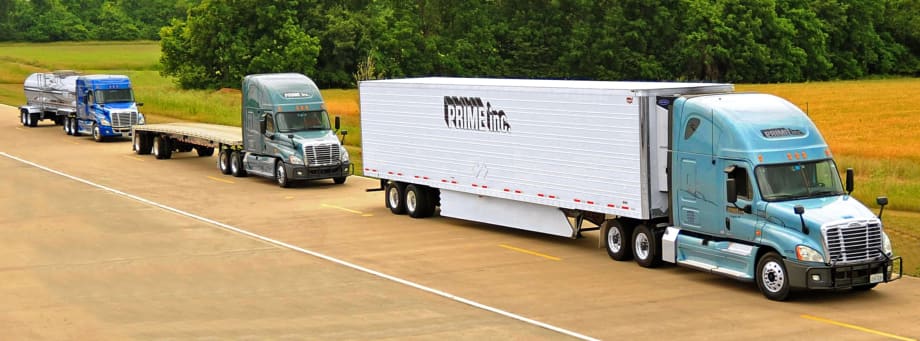
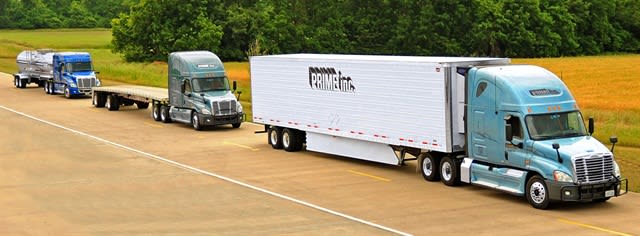
Prime Inc., Springfield, Mo., has its entire fleet equipped with auxiliary power units to limit idling, with an automatic 5-minute idle shutdown timer. But its tanker fleet was experiencing significantly higher idling, because product had to be kept heated to the right temperature.
"If you're carrying oils or chocolate, you have to keep it hot to keep it from congealing in the tanker." explains Nick Forte, fleet maintenance administrator. "Normally you idle the truck engine, it pumps water into the trailer from the radiator, circulates back to the engine. You have to idle the big engine to produce the heat and the power to pump that back to the trailer."
So Prime came up with an innovative solution using a Webasto heater designed for school buses. "We're using it to pump the coolant and heat the coolant without running the big engine. it's about a 0.7 per gallon an hour fuel savings," Forte says.
"I saw something similar a few years back but it was really complex. So I did some research online to come up with a viable solution that does what we need but is simpler. For the drivers there's just an on-/off switch."
After testing the solution on a few of its tankers, Prime is now rolling out the heaters to its entire tanker division of about 240 units. Although the fleet is primarily owner-operator, the company is classifying it as standard equipment as part of its lease purchase program.
"So far, the ones that have seen that it works are beating down my door trying to get them," Forte says. "In a typical night, you idle 11 hours, using 1.2 to 1.6 gallons per hour. If you're only burning at 0.4 [with this solution], you're saving a gallon an hour -- that's $44 per night at $4 for diesel fuel."
APUs
As for its APUs, Prime is using RigMaster. Forte says the company got new owners a few years ago, Mobile Thermo out of Toronto, which completely redesigned the product using premium components.
"Their LG200 is built to our spec and now they're marketing it. It's only 327 pounds; the others are closer to 500," Forte says.
"Everybody sees the RigMaster name and they associate it with the failed company, but it's whole new management, forward thinking," Forte says. "We've got probably 2,000 of their units now."
This unit fits easily under the bunk, Forte says, with a cooling capacity of 17,000 BTU.
For running in California, he says, "The great thing is, this unit is retrofittable -- there's a plug and play DPF. It's Tier 4 compliant."
The company doesn't have any problem getting its independent contractors to use APUs, he says, with a little education.
"We show that there is a direct correlation, if you reduce idle, that's money you keep in your pocket. We'll actually show the dollar expense to the operator, vs. giving it to the oil companies. Once you sit down and show them the numbers, generally it all kind of takes over."
More Fuel Smarts

Calstart Becomes Catalyst Mobility, Reflecting Broader Focus
Calstart is now Catalyst Mobility, reflecting the nonprofit’s growing national role in clean transportation, including zero-emission trucks, infrastructure and incentive programs.
Read More →
Record Diesel Prices Squeeze Trucking Fleets
Average U.S. diesel prices have climbed to nearly $6 a gallon, surpassing the 2022 record as tight refinery capacity and Middle East disruptions keep fuel costs elevated.
Read More →
How Fuel Delivery Shapes Engine Performance
Fuel delivery depends on more than what happens at the injector. For fleet, maintenance and technical professionals, looking at the full path from pump to injector can provide useful context for understanding engine performance.
Read More →

East Coast Port Launches $45M Electric Truck Push
The Port Authority of New York and New Jersey announced millions in incentives for zero-emission drayage trucks, yard tractors, and new charging hubs near the port.
Read More →
California Bill Could Shed Light on Electric Truck Prices
Why do battery-electric Class 8 trucks remain so expensive? A California bill headed to Gov. Gavin Newsom would give fleets and state agencies more visibility into what manufacturers charge.
Read More →
Detroit Opens Orders for EPA 2027 Engines
Detroit isn’t starting from scratch to meet EPA 2027 diesel emissions standards. Its Gen 6 DD13 and DD15 engines keep much of today’s platform while updating the fuel and aftertreatment systems.
Read More →
Zero-Emission Truck Corridor Planned for West Coast
California, Oregon, Washington, British Columbia and Baja California are coordinating plans for truck charging and hydrogen fueling from Canada to Mexico.
Read More →
A Closer Look at Kenworth’s Electric T880E Vocational Truck [Video]
Learn more about Kenworth's T880E battery-electric vocational truck at the Paccar Technical Center, including its range, applications, upfitting considerations, and PTO options, in this HDT Spotlight video.
Read More →
Kenworth T880E Brings EV Power to Vocational Trucks
A closer look at the Kenworth T880E’s range, charging, powertrain and upfit options — and where fleets are showing the most interest.
Read More →
Jennie Abarca Is Proving Electric Trucks Can Do the Job
HDT Truck Fleet Innovator Jennie Abarca is building confidence in fleet electrification one load at a time while openly sharing the challenges she encounters along the way as a small-fleet owner.
Read More →