




Going Green Without Saying Goodbye to Diesel
Green shouldn't be the only color a fleet is considering when making a move toward “going green.” "The most important colors in business are still red and black," said Joe Fiorelli, fleet and safety director for Gulfeagle Supply, during a session for the National Truck Equipment Association's recent Green Truck Summit entitled, "Compounding the Green: Incremental Measures for Going Green and Sustainable."

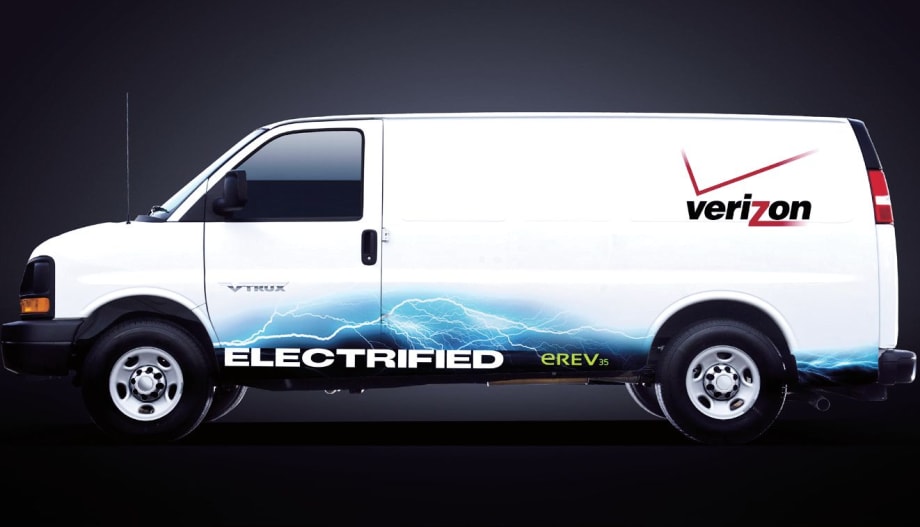
Verizon has tested alternative-fueled vehicles like this one but says there are many other ways to go gree, including using telematics.

Green shouldn't be the only color a fleet is considering when making a move toward “going green.” "The most important colors in business are still red and black," said Joe Fiorelli, fleet and safety director for Gulfeagle Supply, during a session for the National Truck Equipment Association's recent Green Truck Summit entitled, "Compounding the Green: Incremental Measures for Going Green and Sustainable."
As fleets and the trucking industry increasingly focus on the many ways of going green, Fiorelli said there isn't one “right” solution. Each fleet is unique, and the path each takes to greening their fleet will be slightly different.
The spotlight on ways to improve a fleet's fuel economy and reduce greenhouse gas emissions has largely been focused on hybrid or alternative-fueled vehicles, which can be an expensive proposition.
While some fleets have found success with converting their die-sel- and gasoline-powered vehicles to hybrid, dual-fuel or alternative-fuel vehicles, there are many other ways to “go green” without dropping a lot of green to do it.
Fleets can go green and still be powered by the traditional diesel or gasoline fuel all while keeping their eye on the bottom line.
Fiorelli cited many questions that still linger for alternative-fuel vehicles, including lifecycle cost, the best long-term fuel choice, and facility requirements for vehicles other than diesel.
“As green is coming on board, we still need to work at reducing operating costs. In my perspective, the private Class 7 and 8 trucking industry is already challenged every day to move enough product down the road to be profitable,” said Fiorelli. “I think you can stick with low-capital investments and still reduce your fuel consumption.”
Lower-cost green options
Fiorelli has focused on proven green alternatives such as GPS for vehicle tracking and turn-by-turn directions.
“If you have a Class 8 truck that misses a turn, they might have to drive 10 miles before they can turn around. That's an added 20 miles that costs you money,” he said.
Other easy ways he suggested to improve fuel economy and cut GHG emissions included working closely with your engine manufacturer on idle shutdown and other parameters.
More suggestions include low-rolling-resistance tires, tire pressure monitoring systems, and taking a hard look at aerodynamics.
“Go green, but just go smart green,” Fiorelli said. You have to really understand what will work best for your fleet, he stressed.
Green data
George Mayhew with Verizon Fleet Operations agreed with Fiorelli that every company, fleet and driver should find the best way for their operation to go green.
Verizon has more than 35,000 on-road vehicles consuming around 40 million gallons of fuel. Those vehicles are separated by geography and by the jobs they need to perform.
“There are many different ways to go green besides changing the actual make-up of the vehicle,” Mayhew said.
Mayhew stressed that one of the most important things a fleet can do is to obtain and review empirical data to see where and how technology or alternative-fuel-powered vehicles will do the most good.
“You can't manage what you can't measure. We see telematics as extremely important to managing the whole green process,” he said.
For example, through the data it collected, Verizon determined that unnecessary idling is perhaps its greatest opportunity to reduce its fuel consumption and GHG emissions.
Telematics was able to identify those drivers who were found to idle too much, too often and Verizon was then able to correct that behavior.
According to Mayhew's presentation, Verizon's idle reduction efforts saved the company more than 200,000 gallons of fuel in 2012.
Mayhew stressed that fleets must make sure that the right technology or fuel economy step is taken with the right vehicles.
“Improper deployment will lengthen or eliminate ROI and mitigate the valuable environmental benefits these technologies offer — we must confirm effective technology application and have alternate solutions where they don't fit."
More Fleet Management
AUCTION OF EQUITY INTEREST IN HEAVY HAUL TRUCKING COMPANY!!
Mark your calendar: June 30, 2026 (10:00 a.m. PDT). MagnaTrans, LLC, a California limited liability company doing business as Magna Transportation Group is going to auction! Bid on a 37.5% ownership interest in this Rancho Cucamonga-based heavy haul and over-dimensional trucking company operating across California, Oregon, and Arizona. The equity interest will be sold to the highest bidder or bidders under Article 9 of the Uniform Commercial Code at 10:00 a.m. PDT.
Read More →
Volvo Trucks Adds Unattended Over-the-Air Software Update Capabilities
The latest evolution of Volvo’s over-the-air update technology allows software updates to run while trucks are parked, helping fleets keep vehicles current without disrupting operations.
Read More →
How Waste Connections is Using Data, Telematics, and AI
How do you manage and maintain more than 18,000 connected trucks? Data. Lots of it.
Read More →
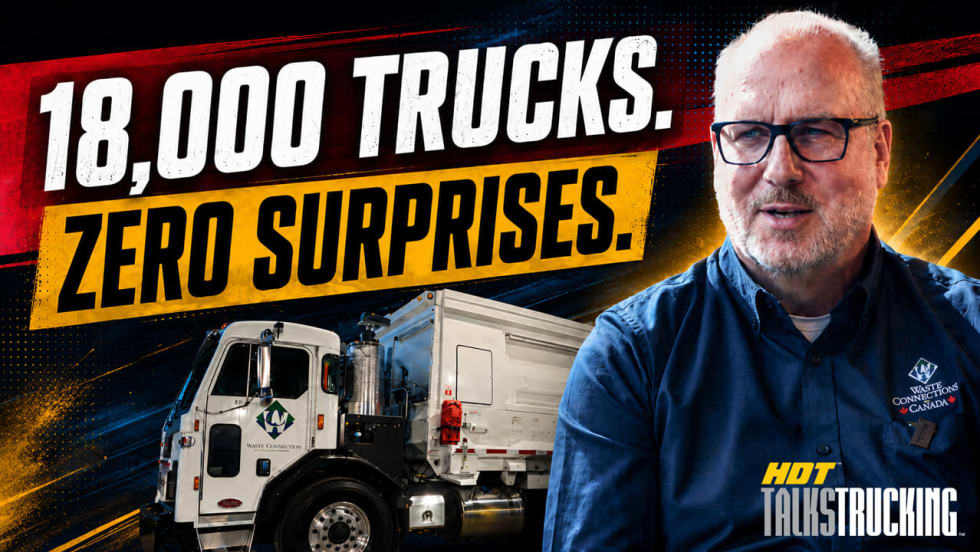
Why Fleet Data Matters More Than Ever at Waste Connections [Watch]
Waste Connections' Chuck Palmer explains how telematics, predictive maintenance, safety analytics, and AI help keep vehicles on the road and drivers safe in this episode of HDT Talks Trucking.
Read More →
NMFTA Launches Free, Anonymous Cybersecurity Threat Report Portal
Organizations are encouraged to anonymously report freight fraud, cargo crime, and cyber threats while gaining visibility into incidents reported across the transportation sector.
Read More →
AI Can Optimize a Fleet. Can It Replace Human Judgment?
Fleets fear falling behind if they don’t adopt AI quickly enough. They also fear what happens if the technology makes the wrong decision.
Read More →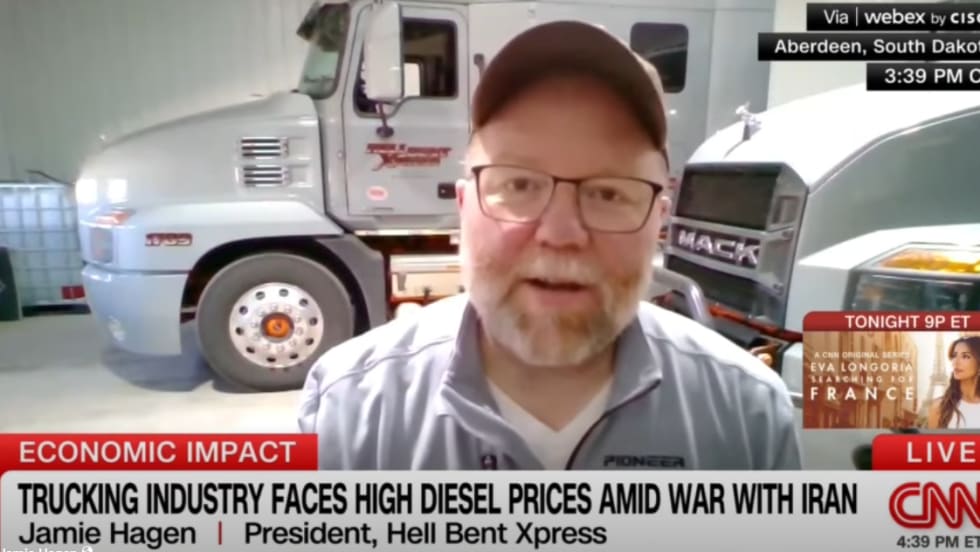
Jamie Hagen Gets Real About Running a Small Fleet in an Uncertain Economy
Small fleet owner Jamie Hagen says new legal risks, volatile fuel prices, and a changing freight market are forcing small carriers to rethink how they operate — and what they can afford.
Read More →
Jamie Hagen Gets Real About Freight, Fuel Prices, Safety, and Small-Fleet Survival
Running a small trucking fleet right now isn’t easy, especially right now. And Jamie Hagen doesn’t sugarcoat it.
Read More →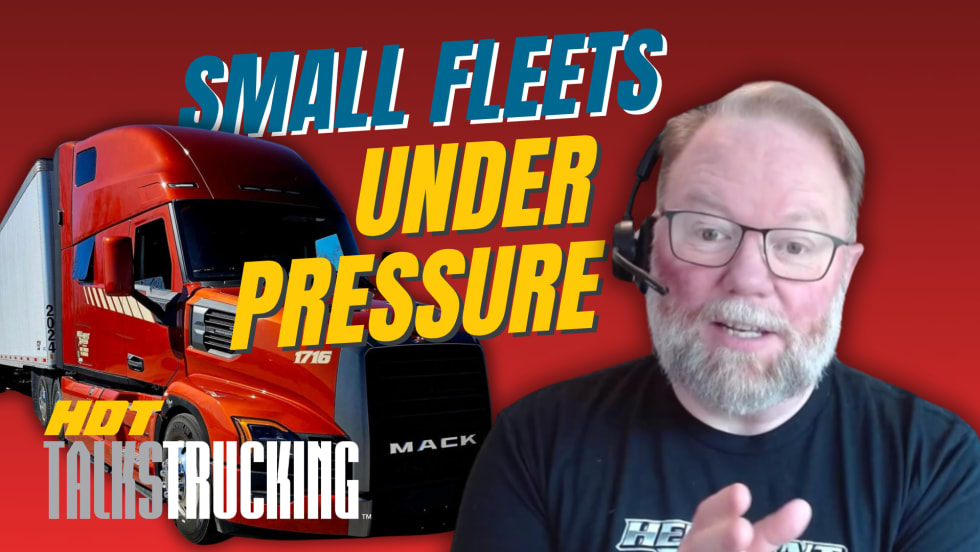
Jamie Hagen Gets Real About Freight, Fuel Prices, Safety, and Small-Fleet Survival
Running a small trucking fleet right now isn’t easy, especially right now. And Jamie Hagen doesn’t sugarcoat it.
Read More →
Data Lock‑In or Integration Lock‑Out?
Data fragmentation is costing dealerships, OEMs, fleets, and upfitters millions. Here’s why interoperability may be the fix the trucking industry needs.
Read More →