




A Peek at How Engine Makers Might Hit New Fuel Efficiency and Greenhouse Gas Reduction Targets
Barely had the trucking industry heaved a collective sigh of relief at putting EPA 2010 behind us when in May of 2010, from the Rose Garden at the White House, came a Presidential Memorandum targeting greenhouse gas emission

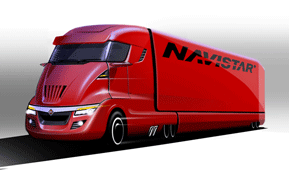
Apart from teh fuel economy regs, the Department of Energy is funding research at Navistar and other companies to develop a Class 8
Barely had the trucking industry heaved a collective sigh of relief at putting EPA 2010 behind us when in May of 2010, from the Rose Garden at the White House, came a Presidential Memorandum targeting greenhouse gas emissions
in heavy trucks.
Because you lower GHG emissions by burning less fossil fuel, that directive led to North America's first fuel economy standards for medium- and heavy-duty trucks, finalized by the Environmental Protection Agency and the National Highway Traffic Safety Administration last August.
The first round of emissions reductions targets kicks in for the 2014 model year, which means trucks hitting the street in calendar year 2013 will have to comply. Because of the structure of the rule, the engine, the chassis and eventually trailers each have targets to meet.
Fuel economy attributable directly to the engine will have to improve by 6% over a MY 2010 baseline by MY 2018 (3% by MY 2014 and another 3% by MY 2018). By MY 2018, the chassis alone must contribute an additional 5% improvement in fuel savings.
Compliance with the rule will not be the carriers' responsibility. It will be up to the truck and engine makers to meet standards or comply using credits. Carriers will likely see price hikes -- some say in the order of 6% -- and they may see limits to their spec'ing preferences. Because OEs will benefit from accruing credits on compliant vehicles sold, fleets should expect premium pricing on less-than-compliant vehicles as a way to drive the preferred fuel-efficient spec.
Engine makers have several ways to meet their goals:
- They can demonstrate improved fuel economy through prescribed testing methods;
- They can apply technology such as idle reduction or speed limiters that yield recognized benefits through a defined set of standards;
- They can earn additional credits by applying advanced technologies (such as waste heat recovery or auxiliary power for onboard components) ahead of the deadline.
Individual trucks may or may not actually be more fuel-efficient, since the manufacturers will earn credits across the spectrum of vehicles sold into market. Allowances are made for categories of vehicle (there are five), and manufacturers earn credits according to which category their vehicles are placed in. The more trucks the manufacturer sells in the more efficient categories, the more credits the manufacturer earns.
While there is a lot of interesting technology in development, commercialization is still a few years off. What is expected to materialize for the 2014 round is equipment that is already on the market -- though perhaps not widely accepted -- coupled with the normal advancements OEs are making in existing engine platforms.
For instance, Dave McKenna, director of powertrain sales and marketing at Mack Trucks, says Mack will rely mostly on existing engine management technology, while maximizing its credit-producing potential.
As an example, one of the customer-programmable features currently available is the ability to disable a timed engine shutdown program for extended idling. For 2014, Mack will enable the shutdown on most highway vehicles, McKenna said. It can still be disabled, but the default will be to a short shutdown period.
In addition, certain vehicle top-speed limiters may be used that will target the most fuel-efficient engine speed and hold it there -- with a set amount of time per day that could exceed the set speed. Mack calls this a "puff-top" speed limiter.
Detroit, too, says its "overall strategy will remain greatly unchanged," according Brad Williamson, director of engine and component marketing at Daimler Trucks North America, even as Detroit engine technology continues to evolve to meet government regulations and customer demands.
At a press event earlier this year in Napa, Calif., Tim Tindall, director of component sales at Detroit, indicated that Daimler expects to see a 1 mpg improvement overall in its Cascadia product by calendar year 2015. Only a portion of that will be directly attributable to the engine, but he talked about using lighter-grade motor oils to reduce internal friction (see p. 56), variable-speed fans to reduce parasitic loss, predictive cruise control to counteract inefficient driving habits, and unnamed "further engine technology changes."
"We're looking at incremental gains from our ongoing product development," he said. "We're already the only engine maker currently using turbo compounding, and that's giving us 50 free horsepower, with no fuel consumption penalty."
Navistar, too, does not expect to make any significant engine changes to meet the 2014 GHG requirements, according to Titus Iwaszkiewicz, director of V-engine product development at Navistar. He predicts engine fuel efficiency improvements of 5% to 15% over the next six to 10 years. But for MY 2014, the changes won't be dramatic. "Navistar is not expecting it," he says.
Like his competitors, Iwaszkiewicz says Navistar will continue to refine existing products, while stepping up research on future applications of technology.
Competitive concerns keep OEMs reluctant to share a lot of details about how they're planning to meet the new standards at this point. However, McKenna indicated that Mack and others are looking at everything from clutched air compressors to the electrification of various engine systems that are now mechanically driven.
There already are some recently introduced technologies out there that may play a part.
Take Bendix's PBS Air Injection Booster, Electronic Air Control (EAC) Air Dryer and Turbo-Clutch Air Compressor. Steve Mance, Bendix vice president and general manager for the Charging business group, says a commercial vehicle operating with all three components can realize more than 5% in fuel savings. Further savings are possible when the PBS Air Injection Booster is combined with transmission and drivetrain optimizations.
The Turbo-Clutch compressor is, as it sounds, a clutch-operated compressor that saves fuel by reducing parasitic load on the engine by mechanically decoupling from the engine when it's not needed.
Bendix's PBS air injection system is designed to boost engine output at critical moments. This enables the use of smaller engines in some cases, or simply improved performance with no measurable increase in fuel consumption. The PBS system injects compressed air from an auxiliary air tank into the engine intake manifold, delivering the desired amount of air to overcome turbo lag. Once the turbo is at optimum air delivery, the PBS shuts off.
In testing last year, Bendix demonstrated the PBS system improved acceleration on a 10% grade by more than 150% compared to a similarly loaded and equipped truck without the PBS system.
For another example, take a look at Volvo's recently announced XE13 Fuel Efficiency package, based on the principle of reducing engine speed at cruise speed -- called downspeeding. It uses a very low-ratio axle, the iShift automated transmission, and software tweaking to broaden the torque band sweet spot from 1,050 to 1,500 rpm.
Ed Saxman, Volvo Trucks powertrain product manager, says for every 100 rpm reduction in engine speed while traveling at the same road speed, you save about 1.5% in fuel.
"We have dropped about 200 rpm," Saxman says. "Compared to a direct-drive transmission, XE13 is 1.5% better and 3% better than an overdrive transmission. At 7 mpg, we're already 3% or two-tenths of a mile per gallon better than a traditional drivetrain."
It's that out-of-the-box thinking that will get the engine makers over the 2014 hurdle without huge investments in new hardware or so-called advanced technologies.
MY 2018, however, could bring with it some very interesting technology, if the engine makers succeed in commercializing it at a competitive price and packagi
More Fuel Smarts
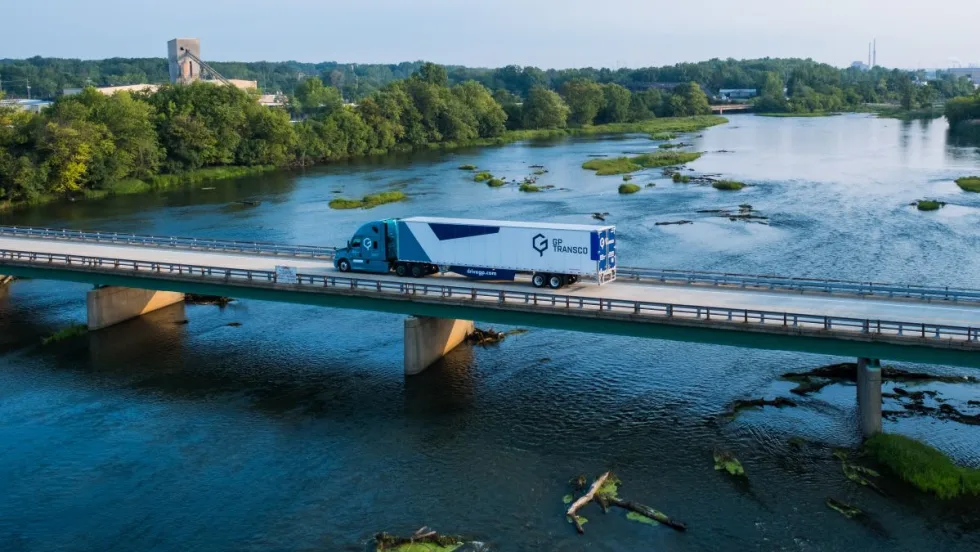
How GP Transco Builds Fuel Savings a Fraction at a Time
Aerodynamic specs, solar panels, and driver incentives help GP Transco turn small efficiency gains into savings it can reinvest in its people.
Read More →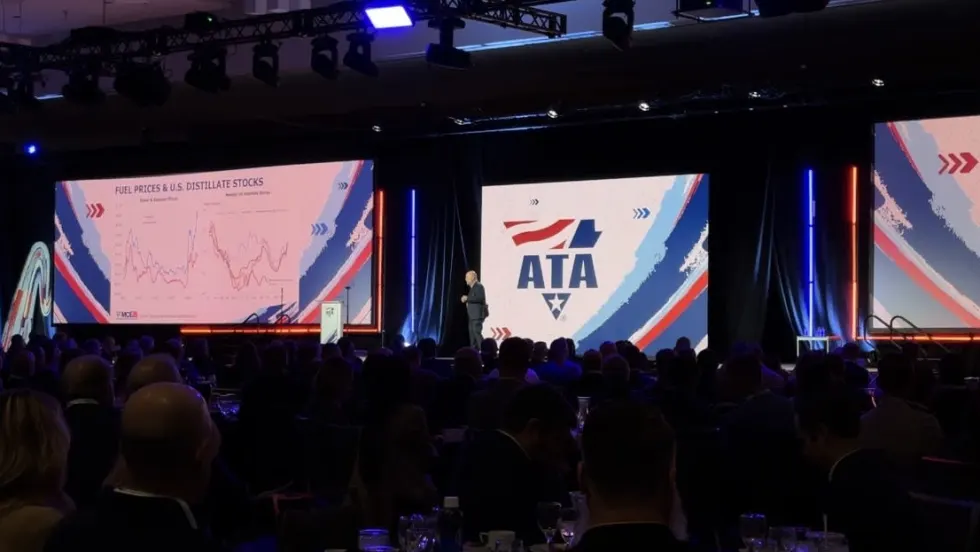
Trucking’s Diesel Squeeze Isn’t Letting Up
With diesel topping $6 a gallon nationally, ATA's Bob Costello explains why fleets should prepare for continued pressure at the pump.
Read More →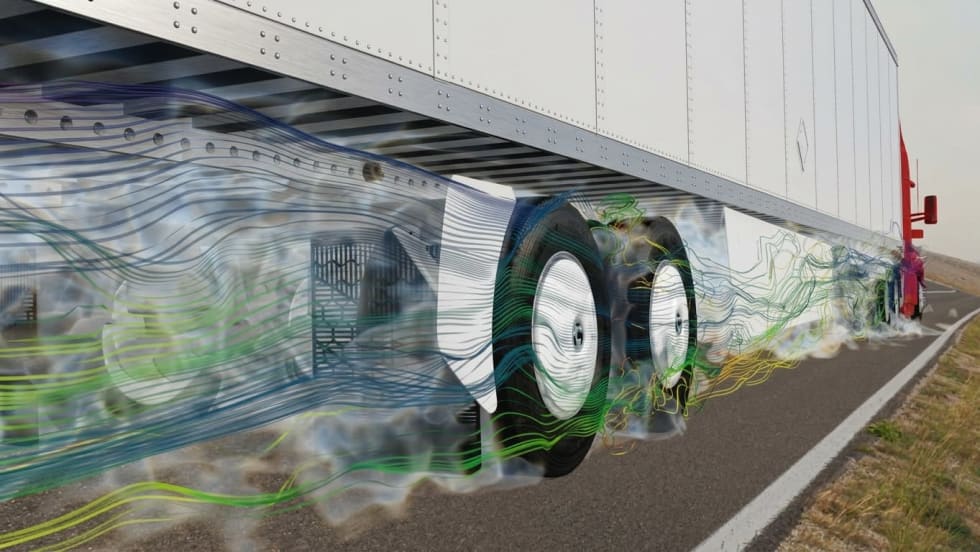
FlowBelow Redesigns Trailer AeroSlider to Cut Fuel Use
The lighter trailer aerodynamic system installs in less than 45 minutes, according to the company, with potential payback in under a year depending on fuel prices and trailer mileage.
Read More →
Why Diesel Price Relief Efforts May Fall Short
Diesel prices have eased from September’s record high, but doubts about additional Russian supply and limits on dyed-diesel tax relief mean trucking fleets still face expensive fuel. And prices could go higher.
Read More →
Why Small Fuel Savings Matter in Trucking
Can better fuel economy help pay for driver raises? In this podcast, GP Transco explains how small efficiency gains create room to reinvest in its people.
Read More →
How GP Transco Cuts Trucking Fuel Costs, a Tenth of a Gallon at a Time
What’s another tenth of a mile per gallon worth? GP Transco shares how equipment upgrades and driver coaching turn small gains into meaningful fuel savings.
Read More →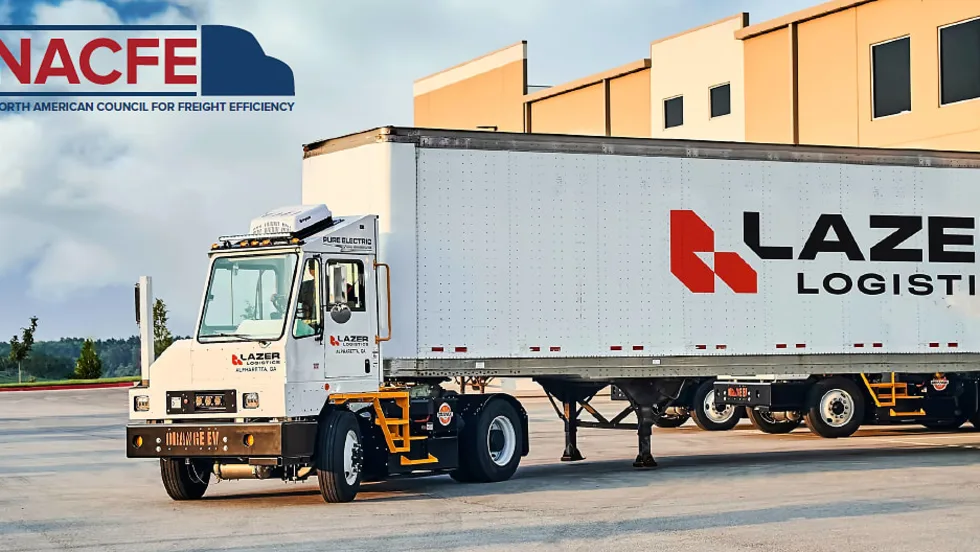
Electric Yard Tractors Move Beyond Pilots
Operating-cost savings have overtaken sustainability goals as the leading reason surveyed fleets are adopting battery-electric terminal tractors, according to new NACFE research.
Read More →
Geotab Links Fleet Card to Vehicle Data
The new card combines fuel discounts with telematics-based purchase controls. Geotab’s analysis also points to potential savings from choosing lower-priced fuel stops.
Read More →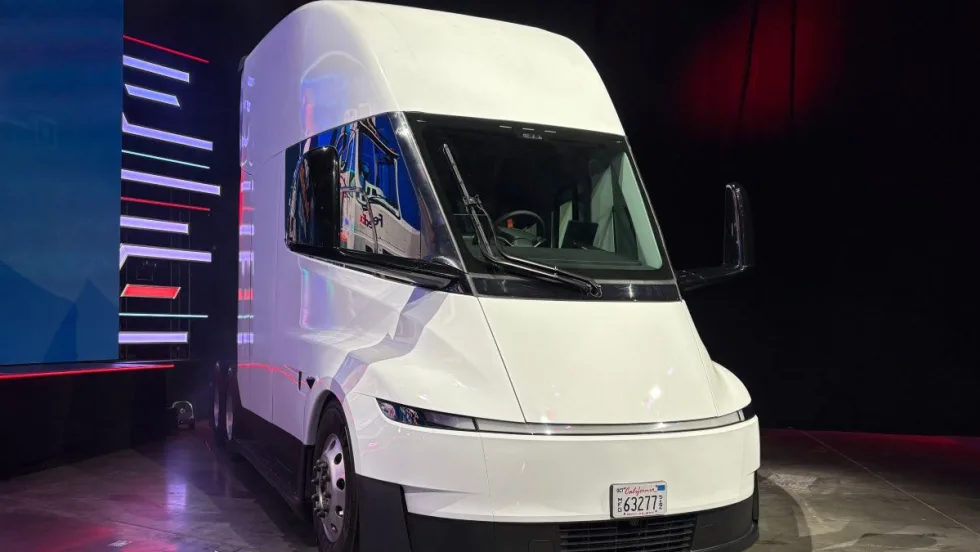
Fleet Economics Shape Electric Truck Outlook
ACT Research expects costs, charging infrastructure, and technology improvements to drive zero-emission commercial vehicle adoption as federal regulations and incentives retreat.
Read More →
Wex Adds Cardless Fuel Payments for Over-the-Road Customers
A new fuel card feature for Wex customers offers convenience and security.
Read More →