




Oil Viscosity and Fuel Economy
For 2010, the U.S. Department of Energy expects diesel prices to average nearly $3 a gallon. As diesel prices head back up, it may be time to look at the possibility of switching to a more fuel-efficient engine oil

For 2010, the U.S. Department of Energy expects diesel prices to average nearly $3 a gallon. As diesel prices head back up, it may be time to look at the possibility of switching to a more fuel-efficient engine oil.
Several lubricant companies have recently made announcements related to fuel-saving engine oils.
New research from Chevron finds you could save as much as 1 percent on your fuel economy simply by switching from a 15W-40 engine oil to a 10W-30 oil.
Chevron conducted fuel economy testing using the Volvo D12D Fuel Economy Test, a lab-based test used in Europe. This kind of testing allows researchers to precisely load the engine and run it under prescribed conditions the computer controls.
The Chevron testing used a 15W-30 as a reference oil. The results were "weighted" with factors to represent hilly conditions or flat conditions.
In flat conditions, a 15W-40 oil performed nearly 0.8 percent worse than the base 15W-30. The 10W-30 performed nearly 0.2 percent better than the 15W-30. That's close to a 1 percent difference between the 15W-40 and the 10W-30.
Why Lower Viscosity can Save Fuel
The oil pump in the engine sucks the oil out of the oil pan, pumps that oil and circulates it around in your engine to lubricate it - much like your heart pumps to circulate the blood in your body. The thicker that oil is, the more energy it takes to pump that oil, which uses fuel.
Just like people may take blood thinner to make it easier on their heart to pump it, it's the same with engine oil.
Or, as Shell's Chris Guerrero explained it during the introduction of Shell's revamped Rotella line (including a fuel-efficient 10W-30 Rotella T5 synthetic blend): "If you think about a swimming pool filled with water and a swimming pool filled with honey, you'd find it easier to swim in water than honey, because the honey is more viscous. Lower viscosity makes it easier to pump and lubricate."
So why not go even lower? Why not a 5W-30?
In a multigrade engine oil rating, the first number, like the 10W or 15W, indicates how thick the engine is under low temperature conditions. The second number, the 30 or 40, is how the engine behaves at full operating temperature.
Most heavy-duty trucks and even midrange trucks operate most of the time at operating temperature, explains Gary Parsons, Global OEM and industry liaison manager for Chevron Oronite Co. "So you see a fuel economy difference more related to the 30 vs. the 40 rather than the 10W vs. the 15W."
While the 5W-30 performed even better in Chevron's test, at close to 0.4 percent over the base 15W-30 oil, 5W-weight oils typically require more synthetic base oils, raising the cost, Parsons says. On top of that, at the moment, according to Shell, a 5W-30 does not meet API CJ-4 engine standards for heavy-duty diesel engines.
Many truckers are skeptical of lower-viscosity engine oils, believing they won't offer enough protection. However, lower-viscosity oils for heavy-duty engines are being adopted successfully in other parts of the world. And lubricant developers are well aware of the concern.
"If you're going to improve fuel economy, one of the biggest things customers say is there needs to be no reduction in durability," says Dan Arcy, OEM technical manager for Shell Lubricants. "So we built in the same wear protection as we'd get from a 15W-40 product." Arcy has results to prove it from engine tests as specified by Mercedes, Volvo and other manufacturers. And Mack, he says, is scheduled to come out with the first 10W-30 approval list in North America, and the new Rotella T5 will be on that list.
Part of the reason you can use lower-viscosity oils today is that the precision and the tolerances in the engine hardware itself is much better, Parsons says. Today's engines are produced with high-tech machining practices that create surfaces with fewer microscopic peaks and valleys - more mirror-like.
The Engine Oils
Chevron's testing features its Delo 400 LE SAE 10W-30 engine oil. In addition to the 1 percent fuel economy improvement over 15W-40 oils, testing found it offered a 0.5 percent savings over 5W-40 grade synthetic lubricants. The product is made with Chevron's Isosyn technology, which combines highly refined base oils with advanced additives to create products that rival synthetic lubricants in critical performance tests, according to the company.
Shell recently rolled out a new Rotella T5 Synthetic Blend oil, in 10W-30 and 10W-40, formulated to provide fuel economy performance and improved low-temperature flow.
Shell Rotella T5 10W-30 demonstrated fuel economy savings of up to 1.6 percent in on-the-road field testing in medium-duty trucks. It also offers extended-drain capability.
A new player on the scene, Total Lubricants, has a history of 10W-30 usage in Europe. The company is embarking on a major effort to establish its brand here in the U.S. Total says its FE line - Rubia TIR 7900 FE 10W-30 motor oil and Transmission XRD FE 75W90 - offers "cutting-edge fuel economy technology leading to major fuel savings."
For those who need a 5W-40 for cold weather performance, lubricant makers also tout mpg gains:
Shell says its Rotella T6 5W-40 full synthetic delivered fuel economy savings of up to 1.5 percent in the same testing as the T5 product, compared to a regular 15W-40 Rotella T.
CHS introduced the newest addition to the Cenex family of lubricants this year; Maxtron Enviro-Edge SAE 5W-40 demonstrated up to 1.2 percent fuel savings in dynamometer tests, compared to conventional 15W-40 oils.
Amsoil upgraded its CJ-4 5W-40 Premium Diesel Oil this year, saying it provides an average fuel economy improvement of 1.6 percent.
The Driver Factor
Valvoline has gone a step further, teaming up with in-truck driver coaching aid tiwi in its new Fuel Proof Guarantee program. Fleets with at least 30 trucks will have 120 days to test Valvoline's Premium Blue Extreme engine oil (a 5W-40 full synthetic) and Syn Gard FE gear oil.
The tiwi onboard system will be used to establish baseline data and monitor fuel economy improvements. The tiwi verbal-coaching system will give drivers real-time mentoring about speeding violations, aggressive driving and other inefficient habits.
"According to EPA statistics, driving habits affect mpg by as much as 35 percent," said Todd Follmer, CEO for tiwi.
If the fleet does not experience an increase in fuel economy, the two companies will remove their products from the vehicles and reimburse the fleet for any incremental costs.
The Future of Fuel Economy
Chevron's Parsons points out that there is a very strong likelihood that truck fuel economy standards will be coming in the next four to five years as part of government efforts to reduce greenhouse gas emissions.
"The last 10 or 15 years, the focus has been on reducing NOx and particulate emissions, which we've all done an incredible job on," Parsons says. "For 2010, those emissions are almost taken to zero. Now the focus will shift back to fuel economy."
From the December 2009 issue of Heavy Duty Trucking.
More Fuel Smarts
Electric Yard Tractors Move Beyond Pilots
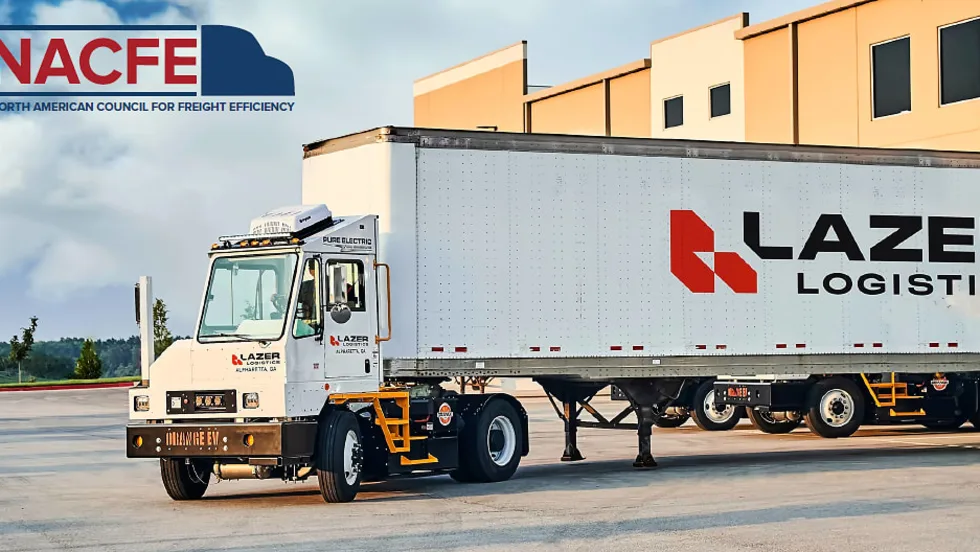
Operating-cost savings have overtaken sustainability goals as the leading reason surveyed fleets are adopting battery-electric terminal tractors, according to new NACFE research.
Read More →
Geotab Links Fleet Card to Vehicle Data
The new card combines fuel discounts with telematics-based purchase controls. Geotab’s analysis also points to potential savings from choosing lower-priced fuel stops.
Read More →
Fleet Economics Shape Electric Truck Outlook
ACT Research expects costs, charging infrastructure, and technology improvements to drive zero-emission commercial vehicle adoption as federal regulations and incentives retreat.
Read More →
Wex Adds Cardless Fuel Payments for Over-the-Road Customers
A new fuel card feature for Wex customers offers convenience and security.
Read More →
New California Law Could Shed Light on Electric Truck Prices
Why do battery-electric Class 8 trucks remain so expensive? A California bill signed by Gov. Gavin Newsom would give fleets and state agencies more visibility into what manufacturers charge.
Read More →
How Volvo Updated Its D13 for EPA 2027 [Watch]
Volvo’s updated D13 promises lower emissions without sacrificing performance or fuel economy. Take a closer look at what changed inside the engine in this HDT Spotlight video.
Read More →
Diesel Price Spike Shortens Payback for Natural Gas Trucks, Report Says
Energy Vision estimates fleets could recover the higher purchase price of an RNG-fueled Class 8 tractor in 1.3 to 2.8 years under current fuel-price scenarios.
Read More →
Calstart Becomes Catalyst Mobility, Reflecting Broader Focus
Calstart is now Catalyst Mobility, reflecting the nonprofit’s growing national role in clean transportation, including zero-emission trucks, infrastructure and incentive programs.
Read More →
Record Diesel Prices Squeeze Trucking Fleets
Average U.S. diesel prices have climbed to nearly $6 a gallon, surpassing the 2022 record as tight refinery capacity and Middle East disruptions keep fuel costs elevated.
Read More →
East Coast Port Launches $45M Electric Truck Push
The Port Authority of New York and New Jersey announced millions in incentives for zero-emission drayage trucks, yard tractors, and new charging hubs near the port.
Read More →