Spot Flatbed Rate Rises Again, Van and Reefers Continue Decline
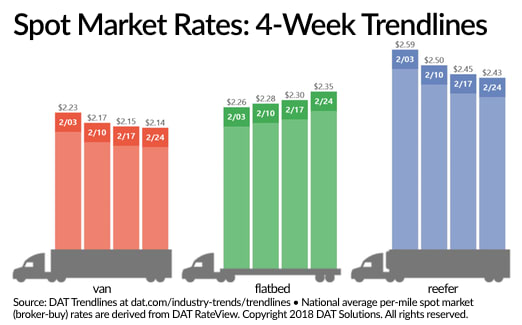
The national average rate for spot flatbed loads increased for the third straight week and the flatbed load-to-truck ratio topped 70 to 1 during the week ending Feb. 24, according to DAT Solutions and its network of load boards.
Evan Lockridge・Former Business Contributing Editor
February 28, 2018
2 min to read
The national average rate for spot flatbed loads increased for the third straight week and the flatbed load-to-truck ratio topped 70 to 1 during the week ending Feb. 24, according to DAT Solutions and its network of load boards.
The number of available flatbed loads increased 10% compared to the previous week while truck posts dipped 1%. The load-to-truck ratio rose 10% as the national average flatbed rate gained 5 cents to $2.35 per mile. All rates include fuel surcharges.
Ad Loading...
Van and refrigerated freight rates continued their gradual slide but remain higher than at this point last year.
The national average van rate lost 1 cent to $2.14 per mile on a 6% decline in the number of van loads and a 1% gain in available capacity. The van load-to-truck ratio fell slightly to 6.7 loads per truck.
The national average reefer rate fell 2 cents to $2.43 per mile. The number of available loads was down 2% and truck posts edged up 1% for a 9.3 to 1 load-to-truck ratio.
Ad Loading...
The mixed performance with freight rates happened as the average cost of diesel fell to $3.023 per gallon.
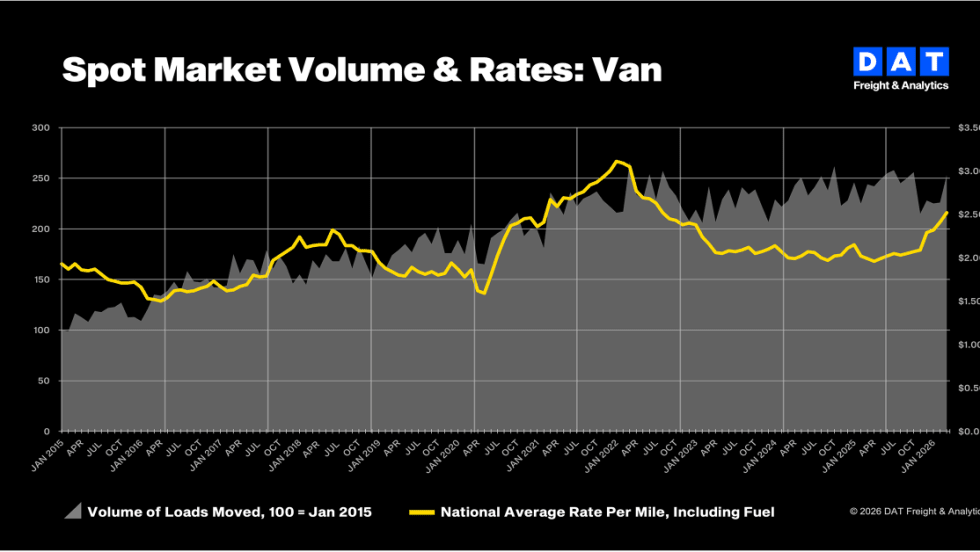
The national average spot van rate has now fallen for seven straight weeks, according to DAT, but there are some signs they may have hit bottom and could rebound soon:
Most declines last week were slight, and pricing has been stable in many markets.
Volumes rebounded 2% last week on the top 100 van lanes.
The "phase-in" period for the electronic logging device mandate ends on April 1, which is when trucks will be placed out of service if they don't have an electronic logging device (ELD) installed. If capacity tightens the way that it did when the mandate started in December, prices could spike again.
Just when capacity gets tight, demand is expected to surge. The first quarter closes on Saturday, March 31, and shippers will be in a rush to move freight before the weekend. Then the spring freight season starts to rev up in April, and rates typically keep climbing at least until July 4th.
You can read more about the latest spot market trends in the DAT blog.
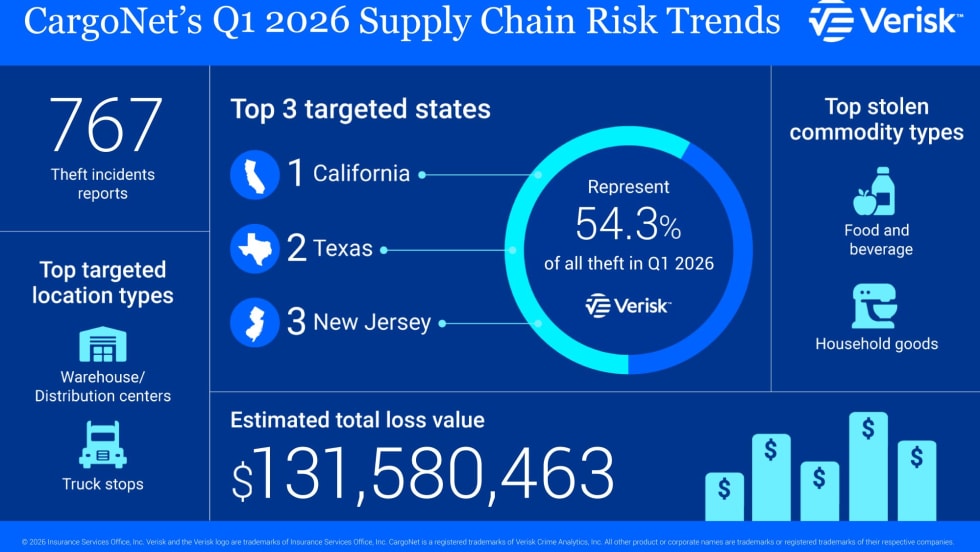
CargoNet reports fewer supply chain crime events to start 2026. But losses hold steady as organized crime shifts tactics toward impersonation schemes and high-value goods.
Heavy Duty Trucking is searching for forward-looking leaders at trucking fleets as nominations for HDT’s Truck Fleet Innovators 2026. Deadline is May 15.
Cargo theft rings plant operatives as drivers inside legitimate, fully vetted carriers, then execute coordinated thefts that look like a traditional straight theft from the outside.
The American Transportation Research Institute will examine driver coaching, regulatory impacts — including the "Beyond Compliance" concept —and weather disruptions that shape trucking operations.
Fleet Advantage's Brian Antonellis says it's time for fleets to get back to the fundamentals of good maintenance practices. And that includes replacing older, inefficient equipment.
Load matching for flatbed, lowbed, oversize and overweight loads can't be automated like basic van freight, but Truckstop.com is adding more high-tech tools to help.
An expanded Trucker Path and Truckstop.com integration brings more freight opportunities into the TruckLoads app while emphasizing security and network quality.
Strong March freight demand combined with a spike in fuel costs pushed both spot and contract truckload rates to their highest levels in more than two years.