




Economic Watch: Employment, Factory Orders Continue Growing
A sizeable gain in trucking employment helped the total number of job additions move higher in January, according to a new Labor Department report.


A sizeable gain in trucking employment helped the total number of job additions move higher in January, according to a new Labor Department report.
The trucking industry added 2,200 jobs in the first month of 2018 as the overall economy added a total of 200,000 non-farm jobs, the 88th straight month of job growth and the longest streak on record.
While trucking employment expanded, the wider transportation and warehousing sector added even more jobs for the month, slightly more than 11,000. More than 5,000 of these jobs were in the warehousing and storage sector with nearly as many coming from the couriers and messengers category.
Despite this continued strength in overall employment, the nation’s unemployment rate remained at 4.1%, the lowest its been since 2000, while wage growth during was the strongest since in nearly nine years.
Average hourly earnings rose 0.3% in January following December’s 0.4% gain. This boosted the year-on-year increase in average hourly earnings to 2.9% the largest rise since June 2009 and up from 2.7% in December.
According to Wells Fargo Securities, the job gains are consistent with 2.5% to 3% economic growth in the first half of 2018. Economic growth in the final quarter of 2017 was at an annual rate of 2.6% following performances of slightly better than 3% in the second and third quarters of last year.
“Quarterly annualized gross domestic product growth rates of 3% are not out of the question, however, sustained growth of 3% should largely be written off if the labor force participation rate does not improve,” said John E. Silvia, chief economist at Wells Fargo Securities.
He said structural issues continue to hold back growth in this metric.
“While the labor force participation rate for men is higher than for women, growth in the prime age participation rate during this expansion has been led by women,” Silva said. “The overall labor force participation rate peaked in the early 2000s and trended sharply downward until 2016, where it has been relatively stable at just under 63.”
Despite this, Silva said he expected the Federal Reserve to raise interest rates when it meets in March and expected another rate hike in the second quarter of 2018.
Factory Orders and Shipments Continue Moving Higher, Business Investment Lowers But Still Stong
Meantime, a separate Commerce Department report showed continued gains when it comes to factory orders and shipments, but an indicator of business investment has slowed from the pace seen in 2017.
New orders for manufactured goods in December, up six of the last seven months, increased an 1.7%, following an upwardly revised 1.7% November increase. Shipments, up twelve of the last thirteen months, increased 0.6%, following a November gain of 1.4%.
There were also gains in orders and shipments for big ticket durable goods, rising 2.8% and 0.5% in December, respectively.
The one area of concern is for new orders for non-defense capital goods excluding aircraft, regarded as a measure of business spending plans. It declined 0.6% in December instead of falling 0.3% as reported last month. Orders for these so-called core capital goods edged up 0.1 percent in November.
Shipments of core capital goods, which are used to calculate business equipment spending in the gross domestic product report, rose 0.4% in December rather than increasing 0.6% in an earlier report. Core capital goods shipments rose 0.3% in November.
According to analysts at Econoday, even with this latest numbers about core capital goods the report “is consistent with a factory sector that…is probably accelerating into the new year.”
Wells Fargo Securities pointed out even with the decline in new orders for core capital goods, the sector grew in December at an annualized rate of 11.2%.
Also, a separate report, released a few days earlier, showed factory activity in January remained strong despite it slowing just a little bit from December.
More Fleet Management
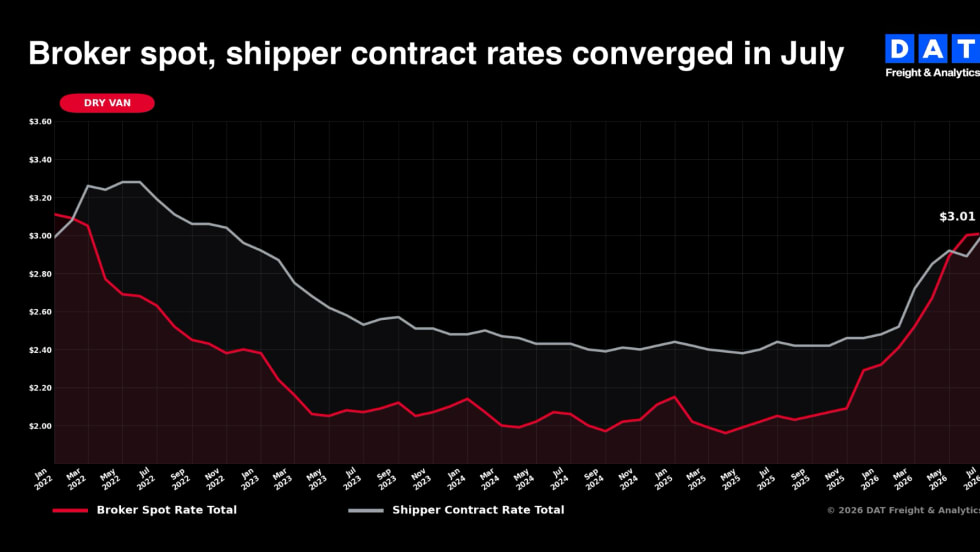
Tight Trucking Capacity Pushes Rates Higher Even as Freight Volumes Fall
“Spot rates moving ahead of contract rates have historically signaled a tightening market, but we haven’t seen a capacity-driven market quite like this one,” said DAT's Dean Croke.
Read More →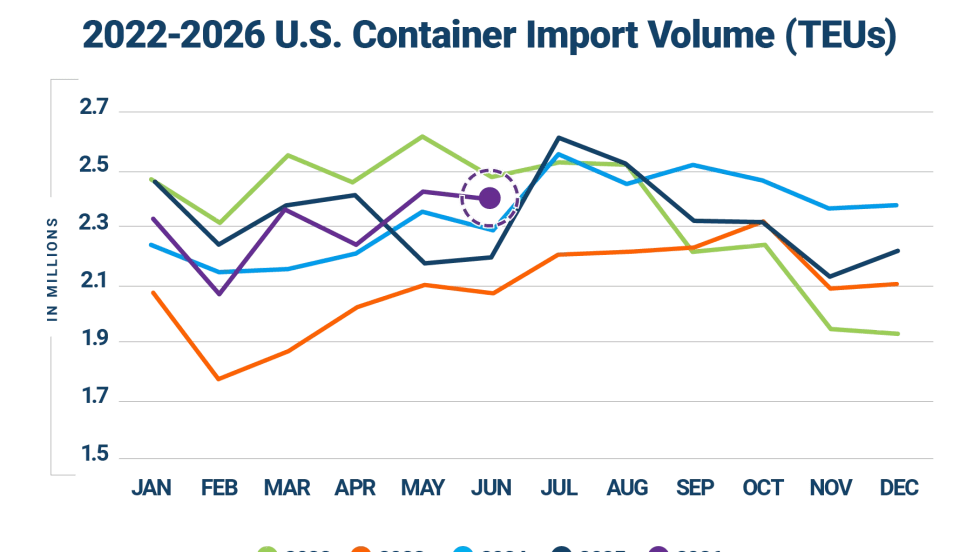
Import Cargo’s Early Peak Season is Winding Down
There was an early start to peak season this year at the nation's gateway ports, as retailers brought in merchandise ahead of tariff changes in late July and responded to other supply chain uncertainties,
Read More →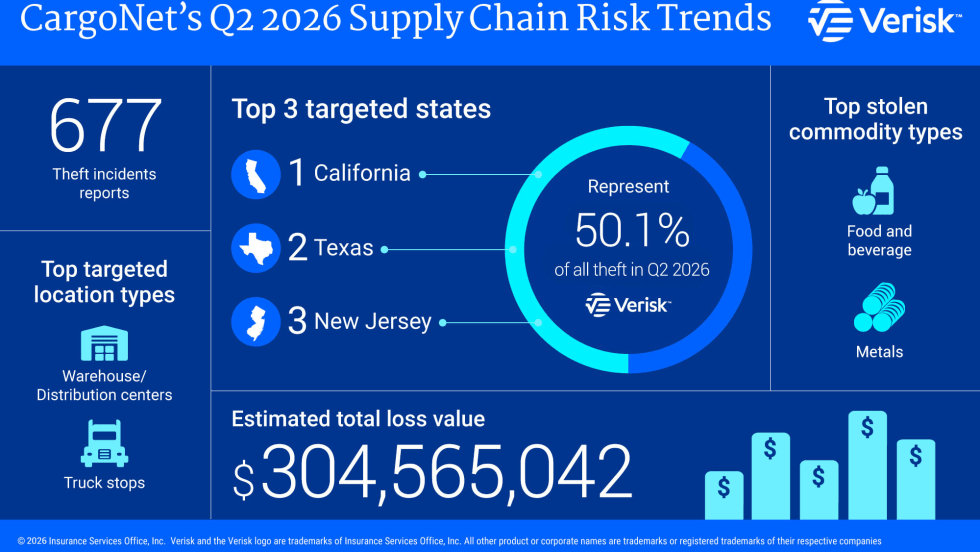
Fewer Cargo Thefts, Bigger Losses: Criminals Target Higher-Value Loads
CargoNet says organized theft rings are stealing fewer shipments but choosing more valuable freight, including metals and technology, resulting in record losses.
Read More →
How Innovative Trucking Leaders Turn Change Into an Advantage
As the pace of change accelerates in trucking, the fleets that adapt best have more than the latest technology. They have cultures that embrace improvement.
Read More →
Freight Broker Bonds Just Got Harder to Get. Here's What That Means for Your Fleet.
When it gets harder for a freight broker to prove they are financially sound, the ones who cannot clear that bar get pushed out of the market. And those are exactly the brokers who used to leave motor carriers holding the bag.
Read More →
Long-Awaited Canadian Border Bridge to Open in Detroit
For trucking, the bridge opening should offer immediate improvements in efficiency and reliability, with new customs facilities, expanded inspection capacity, and direct freeway-to-freeway connections.
Read More →
Aurora Rolls Out Next Generation of Driverless Trucks for Commercial Freight
Aurora's latest autonomous trucks it's rolling out with International feature lower-cost hardware designed for a million miles as the company expands commercial driverless freight operations across the U.S. Sun Belt.
Read More →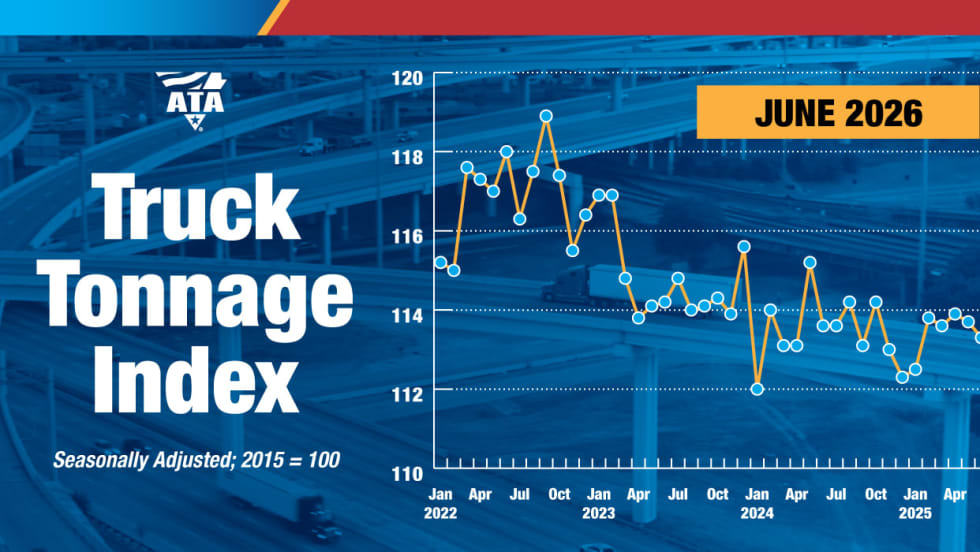
Freight Tonnage Down, Rates up, as Lower Capacity Powers Trucking Recovery
The recovery from the freight recession continues to be driven by reduction in capacity rather than by increased demand.
Read More →
Think Your Trucking Fleet Isn't Using Much AI? Think Again
Shadow AI — the use of unauthorized artificial intelligence tools at work — is becoming increasingly common, putting sensitive company data at risk. Learn how trucking fleets can protect sensitive data while embracing AI.
Read More →
ArcBest Consolidates Brands, Cuts Workforce
The company will bring three business units under the ArcBest brand, eliminate about 2% of positions, and expects the changes to generate $40 million in annual savings.
Read More →