




California Fires: Impact on Freight Movement Remains Uncertain
Despite several wildfires breaking out across Southern California in recent days, the impact on trucking spot rates is not expected to exceed levels seen during the October wildfires in Northern California.

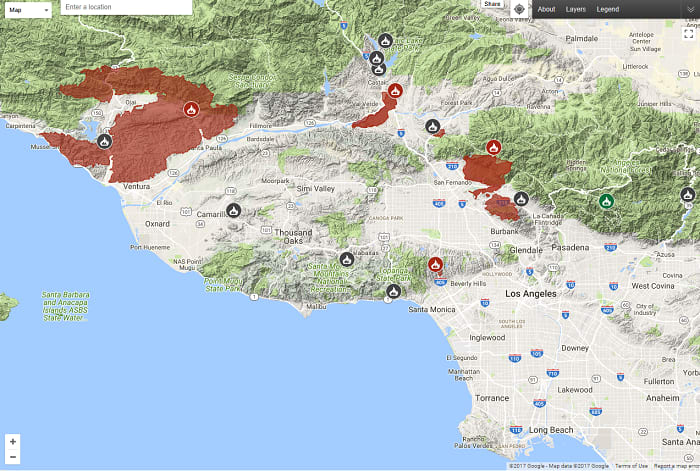
Map of wildfires burning in Los Angeles and Ventura counties Source: CalFire
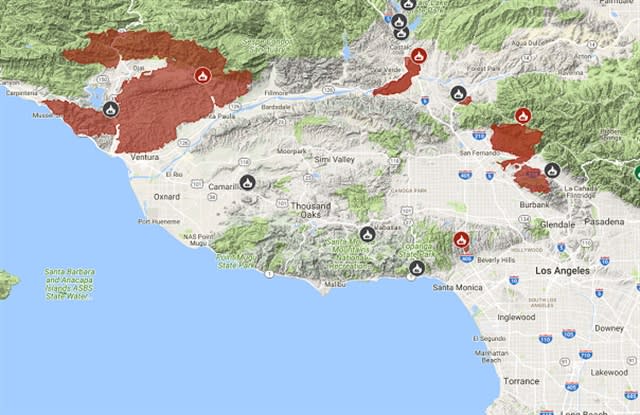
Map of wildfires burning in Los Angeles and Ventura countiesSource: CalFire
Despite several wildfires breaking out across Southern California in recent days, the impact on trucking spot rates is not expected to exceed levels seen during the October wildfires in Northern California.
The current fires were driven by low humidity and unpredictable windy conditions hitting several spots in the Los Angeles, Ventura, and San Diego counties. An unusually strong rainy season earlier this year followed by months of low precipitation may have also contributed to the volatile conditions.
So far, the six wildfires have burned nearly 160,000 acres in total and forcing 190,000 people to evacuate, according to CNN.com.
While the fires have mostly stayed in the hilly, more sparsely populated areas of the region, several of the fires have approached and threatened major north-south highway arteries in the state.
Fires have hit key areas along Interstates 5, 101, and 405, which run the length of the state and are used to transport goods throughout California. So far, however, the closures have been short and located outside of major metropolitan areas.
FTR Transportation Intelligence, which tracks weekly spot truck rates, has yet to publish official numbers for the week but told HDT that the impact on freight rates is approaching what was seen during the October wild fires around Sonoma county.
According to FTR chief operating officer Jonathan Starks, when the October fires hit, West Coast spot volumes dropped by more than a quarter but returned to normal within three weeks. Rates also dipped by a small amount but returned to normal within two weeks.
Starks said he expects a similar impact from this recent spate of fires, though maybe not as strong.
Because the fires have been occurring on the outskirts of metroplitan Los Angeles, the impact on freight moves coming to and from the Ports of Los Angeles and Long Beach is expected to be minimal, Starks told HDT. However, the fires could still impact routes as truckers try to avoid areas near the fires.
FTR plans to publish data on the fire’s impact on Dec. 11 to provide more clarity on it. Factors that are uncertain include the holiday timeframe of the fires and how much that could affect food produce.
More Fleet Management

Nominations Open for HDT Emerging Leaders
Heavy Duty Trucking is looking for accomplished trucking fleet professionals under 40 who are making an impact and helping lead the industry forward.
Read More →
Why Private Fleets Are Taking More Freight
Private fleets are putting their own trucks on demanding customers and high-cost lanes as companies seek greater control over service, costs, and capacity.
Read More →
Color Match Smarter: Tools That Restore & Perform
For fleet managers and collision repair professionals keeping heavy-duty trucks on the road, getting the color right the first time isn't just about appearance — it's about efficiency, turnaround time, and bottom-line results. Discover how today's digital color tools are transforming the repair process from guesswork to precision.
Read More →


FMCSA Pauses Biennial-Update Enforcement Amid Motus Transition
Carriers whose updates were due on or after June 1 have more time, while FMCSA works to stabilize its new registration system and warns of phishing sites impersonating its new carrier registration system, Motus.
Read More →
2026 Blueprint for Countering Smarter Supply Chain Theft
Cargo theft is no longer just the cost of doing business. It's a multi-billion-dollar criminal enterprise exploiting vulnerabilities across your fleet, drivers, and supply chain.
Read More →
How Telematics Improves Visibility, Control, and Performance in Refrigerated Fleets
Explore how telematics help refrigerated fleets improve visibility, uptime, efficiency, compliance, and cargo protection across connected cold chain operations.
Read More →
What the U.S.-Canada Trade War Means for Trucking
Escalating U.S.-Canada tariffs could disrupt cross-border freight, reduce truck volumes, raise costs, and create new uncertainty for carriers on both sides of the border.
Read More →
What Are Trucking’s Top Concerns for 2026?
The American Transportation Research Institute wants to know what's worrying trucking fleet managers, drivers, and other stakeholders in its annual Industry Issues survey.
Read More →
American Trucking Associations Looks for a New Leader
ATA President and CEO Chris Spear abruptly left his job at the association on August 21, at a pivotal time for the trucking industry.
Read More →
Public Wi-Fi Cybersecurity Risks: How Truck Drivers and Fleets Can Protect Their Data
Public Wi-Fi can expose truck drivers and fleets to credential theft, malware, and other cyber threats. Here’s how to reduce the risk on the road.
Read More →