




Eroad Tapped for Major Mileage-Based User Fee Pilot
Eroad has been selected to take part in the first multi-state truck pilot to explore the feasibility of instituting a Mileage-Based User Fee along I-95, the East Coast's main north-south Interstate highway.

Photo: I95Coalition.org

Eroad, a global provider of fleet-management technology, has been selected to take part in the first multi-state truck pilot to explore the feasibility of instituting a Mileage-Based User Fee along I-95, the East Coast's main north-south Interstate highway, running from the Canadian border in northern Maine through Miami in South Florida.
The I-95 Corridor Coalition truck pilot, slated to begin next year, will encompass the length of the highway, which is a critical freight lane feeding the U.S. economy. Over 5 billion tons of freight, representing almost 40% of the country’s GDP, moves annually across the area’s 1,917 miles of roads— which add up to approximately 20% of all U.S. roadways. Average daily truck traffic in the region includes over 10,000 vehicles with peak daily traffic averaging over 31,000 units. Looking to the future, the amount of truck traffic in the corridor is expected to more than double by 2035.
The pilot will include 50 vehicles equipped with Eroad in-vehicle hardware for a period of six months. The system will record accurate mileage data and apply applicable formulas for a truck-based MBUF as prescribed by the program’s Steering Committee, which includes the American Trucking Associations. Eroad will produce “dummy invoices,” demonstrating payments to appropriate agencies within the I-95 Corridor Coalition.
“This is an extremely significant opportunity for Eroad as it’s the first truck pilot in the U.S. to explore the feasibility of a Mileage-Based User Fee across multiple states,” said Steven Newman, CEO of Eroad. “It will highlight our ability to demonstrate a highly flexible, feasible and cost-effective way to introduce road charging across jurisdictions without needing an intrusive and expensive roadside infrastructure, while also reducing the reporting burden on motor carriers.”
Eroad noted that for the $1.6 million pilot program, the I-95 Corridor Coalition has partnered with the Delaware Department of Transportation to explore the feasibility of replacing fuel taxes with a mileage-based user fee approach in a multi-state environment. Previous mileage-based usage approaches have primarily focused on a single state.
Patricia Hendren, executive director of the I-95 Corridor Coalition, said that trucks are an important component of exploring the feasibility of an MBUF approach. “Commercial vehicles have a long list of reporting requirements, they are heavy users of the system and they are heavy payers,” she said. “Our goal is to look at the data that commercial vehicles are currently required to submit and ask, ‘Within that framework, what would a mileage-based approach look like?’”
She added that Eroad has significant experience providing technology solutions that address International Fuel Tax Agreement, International Registration Plan, Hours of Service, and Electronic Logging Device requirements. “We need their knowledge and understanding of the reporting challenges the freight industry faces in order to truly assess the feasibility of a usage fee approach across multiple jurisdictions.”
The I-95 Corridor Coalition is a partnership of transportation agencies, toll authorities, public safety officials, and related organizations along the East Coast. The pilot is being partially funded through the U.S. DOT Surface Transportation Funding Alternatives program, which was established to explore alternative mechanisms for road funding to fuel taxes.
The federal fuel tax was last raised in 1994 and is not indexed to inflation. Eroad pointed out that besides that, the increasing adoption of fuel-efficient and electric vehicles means that motor-fuel based tax revenues are not keeping pace with the demands of the country’s aging highway infrastructure.
Related: Only Fuel Tax Hike Can Deliver on Infrastructure Promise, ATRI Says
More Fleet Management
Enhance Fleet Performance with High-Efficiency Auxiliary Power Units
Drive sustainable cost savings while increasing driver comfort during short- and long-haul logistics operations.
Read More →
Is Your Parts Procurement Process Reactive or Proactive?
Ready to revamp your parts procurement process? Learn how now with “Strategic Parts Purchasing: A Process Checklist”
Read More →
What Trucking Events are Happening in 2026?
Looking for trucking-related conventions, expos, and other events? Heavy Duty Trucking has developed this list of national and larger regional trucking shows and events.
Read More →
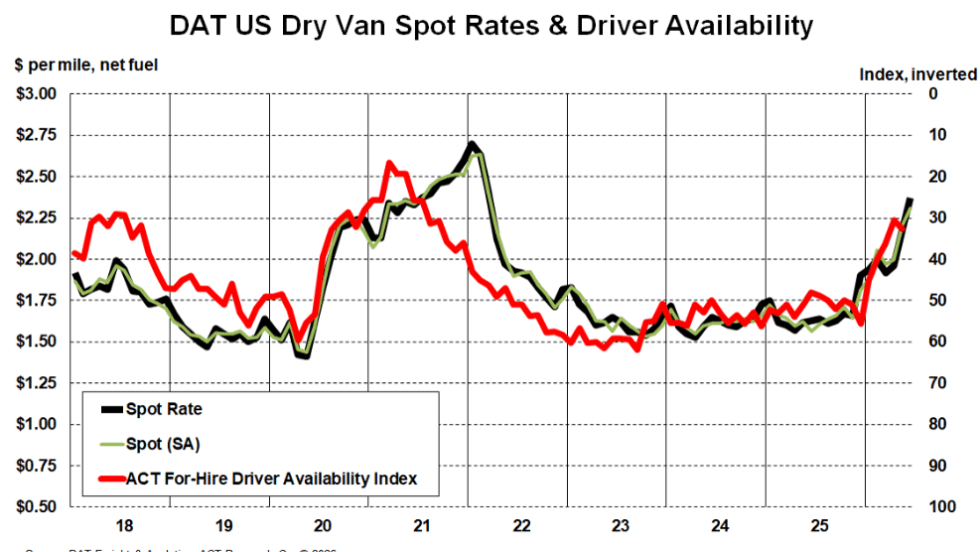
Truckload Rates Keep Rising as Tight Capacity Fuels Freight Market Recovery
Spot and contract rates continued climbing in May and June, not because freight demand is surging, but because fewer trucks and drivers are available.
Read More →
What Geotab's New AI Connector Means for Fleets
Fleets can now ask their usual AI assistants questions about maintenance, safety, fuel use, and vehicle performance, using their live Geotab data, and take action on the answers without leaving their preferred AI tool.
Read More →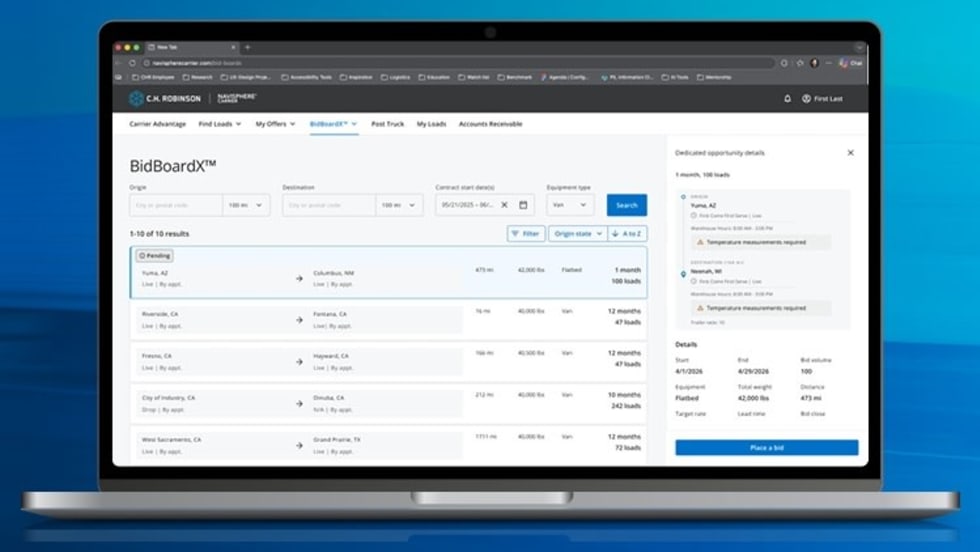
New C.H. Robinson Tool Opens Door to More Predictable Freight
BidBoardX lets carriers search, bid on, and secure committed freight opportunities through a single digital marketplace.
Read More →
New York City's Microhub Project is Delivering Results
Trucking, last-mile delivery companies, and environmental advocates like what they are seeing so far with New York's microhub program.
Read More →
Why Truck Detention Keeps Costing Fleets Time and Money
A 2024 ATRI study found detention affects nearly 40% of truckload stops and costs the industry more than $15 billion annually. Despite the toll on drivers, fleets, and supply chains, the problem remains stubbornly persistent.
Read More →
Time is Running Out to Apply for Exclusive HDT Event
Heavy Duty Trucking Exchange brings fleet managers and suppliers together for the deeper conversations that lead to ideas, partnerships, and solutions. Time is running out to apply for the September event.
Read More →
Amazon Launches Less-Than-Truckload Freight Offering for All Businesses
This launch is the latest addition to Amazon Supply Chain Services, a portfolio of supply chain capabilities from Amazon, including freight, distribution, fulfillment, and parcel shipping.
Read More →