




Earnings Watch: Knight-Swift Affected by Merger Costs, Driver Shortage
Truckload and logistics provider Knight-Swift Transportation Holdings Inc. released third quarter earnings on Monday that showed a big drop in profit compared to a year ago, but the numbers do not paint an entirely accurate picture following the merger of the two truckload companies.


Truckload and logistics provider Knight-Swift Transportation Holdings Inc. released third quarter earnings on Monday that showed a big drop in profit compared to a year ago, but officials said the numbers do not paint an entirely accurate picture following Knight Transportation's acquisition of Swift Transportation, which closed in September.
Net income totaled $4.2 million, or 4 cents per share, compared to $24.1 billion, or 29 cents per share, a year earlier for Knight Transportation alone.
Total revenue nearly doubled to $521.6 million from $280.5 million in the third quarter of 2016.
The reported results include the results of Swift Transportation only for 22 days after the Sept. 8 merger date, as well as significant merger-related costs, meaning comparisons to prior periods are not meaningful, according to the company.
“Our diluted earnings per share for the third quarter were 4 cents, which includes $12.3 million of legal and professional fees related to the merger with Swift, $6.6 million of other one-time operating expenses associated with the merger, $16.7 million of impairment of software assets identified after the merger and $2.5 million of amortization expense related to the $817.2 million of amortizable intangible assets recorded as a result of the merger,” said Dave Jackson, president and CEO.
Excluding these items, the company’s adjusted diluted earnings per share for the third quarter were 25 cents compared to 29 cents a year earlier.
"The freight environment has strengthened throughout the third quarter and into October,” Jackson said. “The non-contract market improved each month sequentially, leading to a 4.6% year over year increase in Knight’s revenue per loaded mile, excluding fuel surcharges, for the quarter.”
According to Jackson, strong freight demand is beginning to impact both the contract market and customer expectations for the 2018 bid season.
The company was able to report full quarterly numbers for Knight Transportation, which showed revenue in its trucking segment, excluding fuel surcharge, fell 4.2% to $195.8 million.
It was driven by a 3.9% decrease in operational truck count and a 3.9% decrease in miles per truck. That was partially offset by a 4.6% increase in revenue per loaded mile during the period compared to the prior year quarter, according to the company.
Knight’s logistics segment revenue increased revenue 8.8% to $56.6 million.
While the company reported numbers for Swift Transportation’s different segments, it did not provide comparisons for a year earlier, since Knight-Swift has been an entitly only Sept. 9-30 of the third quarter. However, in a statement, the company highlighting the more significant factors influencing the different segments.
“The challenging driver market continues to be the biggest headwind faced by the Swift Truckload, Swift Dedicated, and Swift Refrigerated segments, which is pressuring our recruiting, driver wage and safety-related expenses as well as our operational truck count and utilization,” the company said. “We granted a wage increase to drivers in our Swift Truckload segment effective upon the close of the merger, which essentially made permanent the 1 cent per mile loyalty incentive we instituted when we announced the planned merger in April.”
The soft used equipment market and increasing maintenance expenses are also drags on performance, the company said.
“A strengthening freight market is developing which is supportive of yield and utilization improvement across the asset-based business units,” the company said. “Our focus is on sourcing and retaining drivers and on improving yield, safety, return on investment, efficiency and cost control.”
More Fleet Management
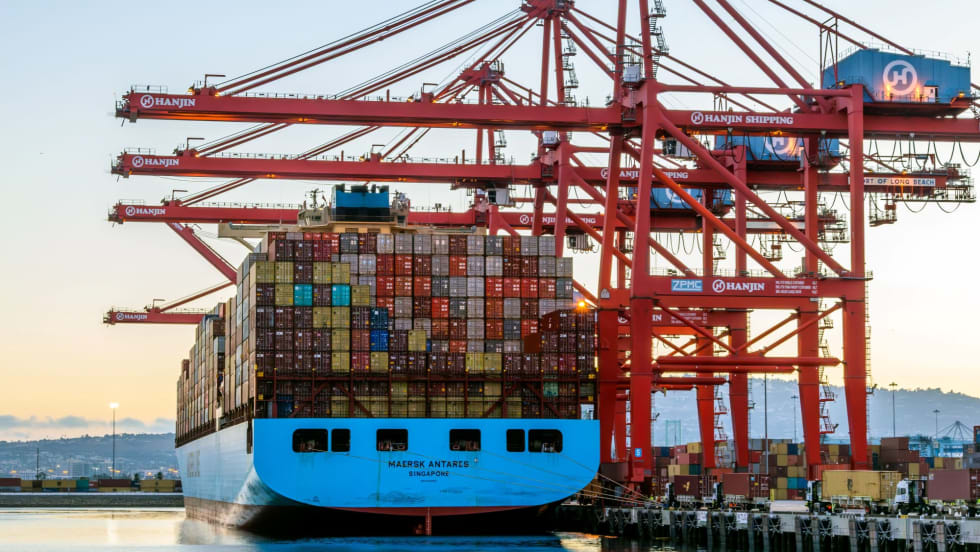
July Imports Poised to Set Container Record
The National Retail Federation projects July container imports will surpass the pandemic-era record as shippers frontload freight ahead of expected August tariff increases.
Read More →
HDT Announces 2026 Truck Fleet Innovator Finalists
From AI and fleet electrification to safety, operations, and leadership, these HDT Truck Fleet Innovator finalists are changing how trucking gets done.
Read More →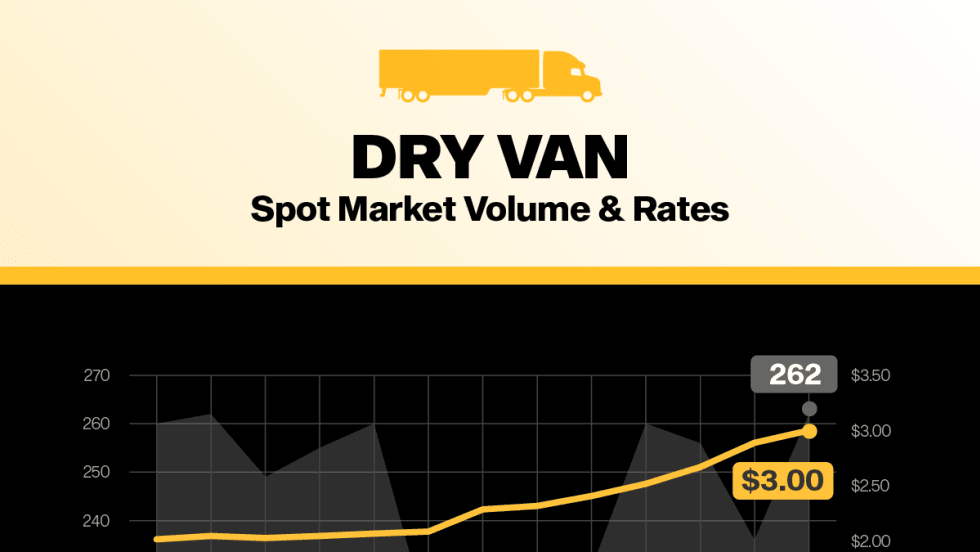
Van Spot Rates Top Contract Rates for First Time Since 2022
There’s more good economic news for the North American trucking industry according to the latest Truckload Volume Index report from DAT.
Read More →
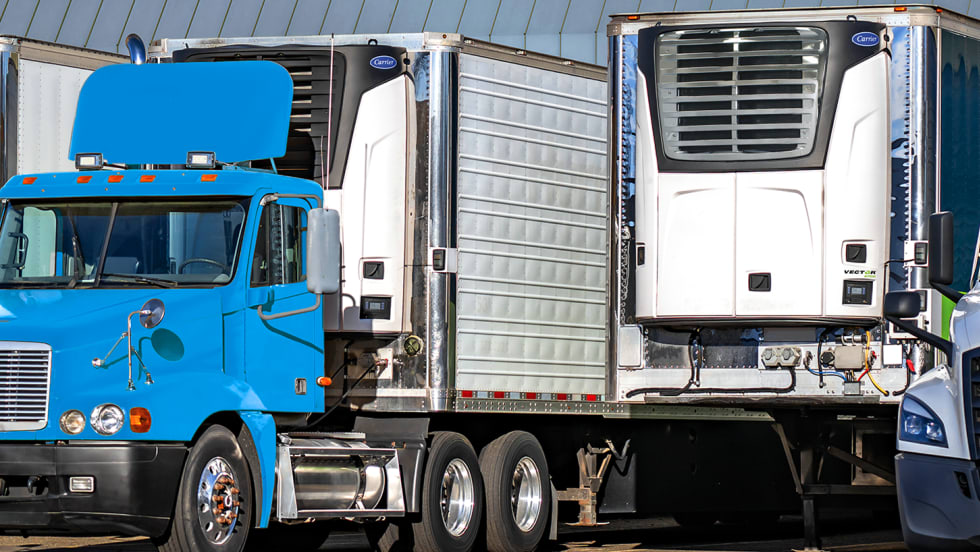
Carrier Transicold Extends Refrigerated Trailer Life
Fleet Refresh enables refrigerated fleets to replace aging transport refrigeration units instead of entire trailers, while adding Lynx Fleet telematics and BluEdge service coverage.
Read More →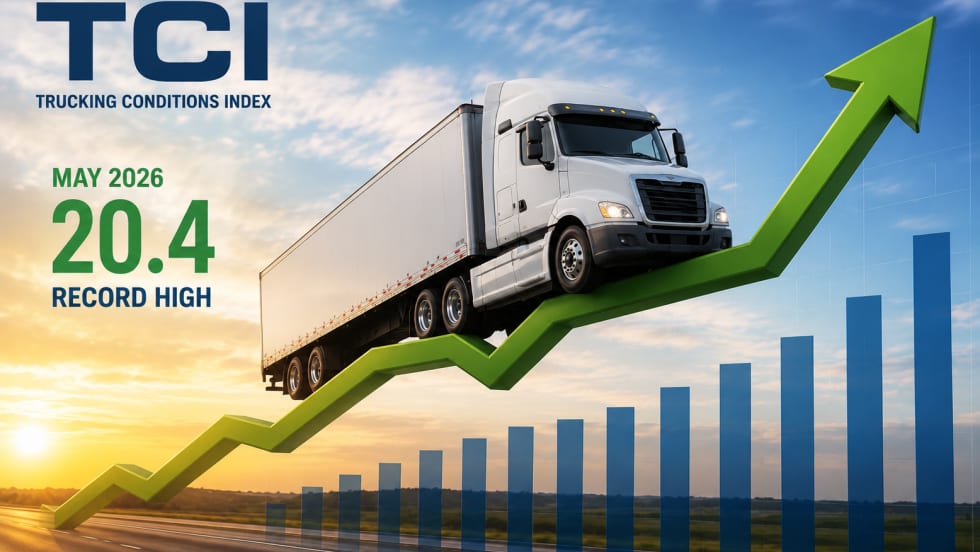
FTR Says Freight Rates Surged in May
FTR's Trucking Conditions Index surged to a record high in May, the analytics firm reports.
Read More →
Meet HDT's Truck Fleet Innovators at Heavy Duty Trucking Exchange
Heavy Duty Trucking Exchange brings fleet managers and suppliers together for the deeper conversations that lead to ideas, partnerships, and solutions. Time is running out to apply for HDTX, September 23-25.
Read More →
Enhance Fleet Performance with High-Efficiency Auxiliary Power Units
Drive sustainable cost savings while increasing driver comfort during short- and long-haul logistics operations.
Read More →
Is Your Parts Procurement Process Reactive or Proactive?
Ready to revamp your parts procurement process? Learn how now with “Strategic Parts Purchasing: A Process Checklist”
Read More →
What Trucking Events are Happening in 2026?
Looking for trucking-related conventions, expos, and other events? Heavy Duty Trucking has developed this list of national and larger regional trucking shows and events.
Read More →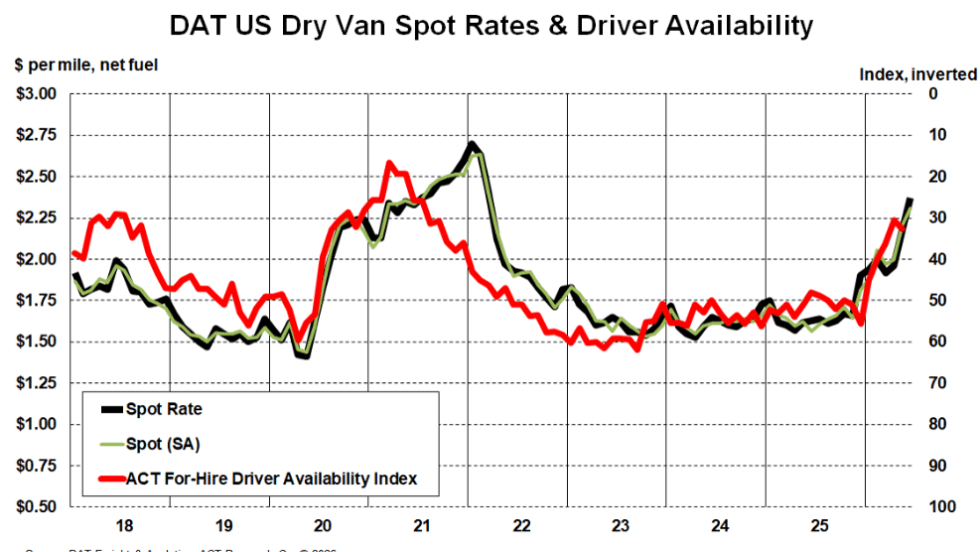
Truckload Rates Keep Rising as Tight Capacity Fuels Freight Market Recovery
Spot and contract rates continued climbing in May and June, not because freight demand is surging, but because fewer trucks and drivers are available.
Read More →