




Southeast Ports Shutting Down Ahead of Hurricane Irma
In a move that will ripple through the supply chain, ports in the Southeast U.S. are shutting down ahead of Hurricane Irma.
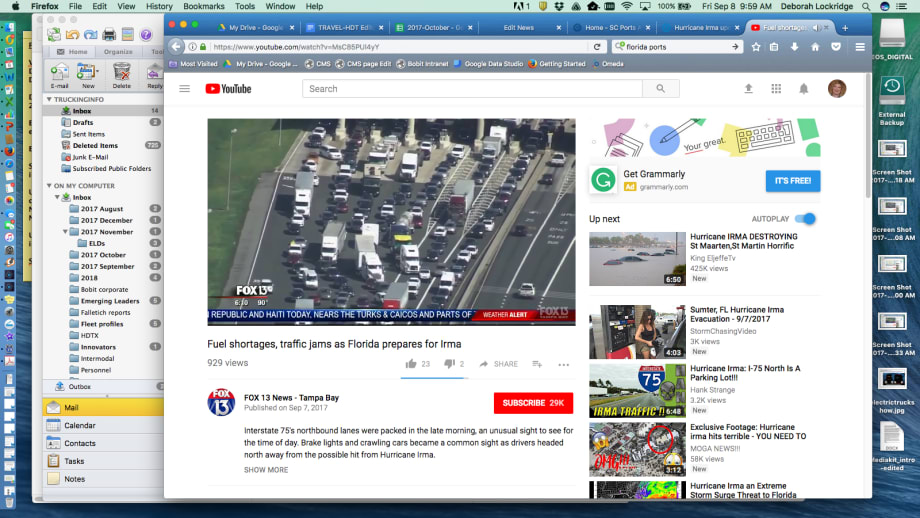
In a move that will ripple through the supply chain, ports in the Southeast U.S. are shutting down ahead of Hurricane Irma.
As the Journal of Commerce reports, ports from Miami to Charleston are in the massive hurricane's projected path, many in mandatory evacuation zones, and are closing their gates.
In Florida, with reports of fuel shortages amidst the massive evacuation, fuel distribution is being expedited at all phases of delivery. The governor has arranged for military vessels to escort fuel ships to the docks and law enforcement escort of fuel trucks to stations.
Motor carriers are being encouraged to continue moving as much freight as possible out of the Southeast before the storm hits, JOC reports. Several trucking companies told the paper that their capacity is spread thin, especially so soon after Hurricane Harvey, with equipment having been sent to the Gulf Coast for relief efforts.
Larry Gross, a senior transportation analyst at FTR, told JOC that if the damage is confined to South Florida, it won't be as bad as Hurricane Harvey shutting down the Houston ports was. But if the storm hits the ports of Jacksonville, Savannah, and Charleston, the orerall supply chain impact will be worse.
Florida and Georgia have both issued evacuation orders for areas east of I-95, where major ports are located, and an evacuation order in South Carolina is likely Saturday.
More Fleet Management

How MFA Helps Protect Trucking Fleets
Multi-factor authentication adds protection when passwords are stolen. Here’s how it works and where fleets should start.
Read More →
How Better Freight Data Helps Trucking Teams Get Ahead of Disruption
Trucking and logistics teams have plenty of data. The problem is getting the right information in front of the right people soon enough to act. Better-connected data can help teams spot trouble earlier and make smarter decisions before small problems become big ones.
Read More →
Trimble: Taking Artificial Intelligence in Trucking Beyond Faster Tasks
At Insight 2026, Trimble executives argued that fleets may need to redesign workflows to get more from AI as it introduced new products and enhancements. AI’s value will depend on how fleets combine automation with their people's knowledge.
Read More →

Nominations Open for HDT Emerging Leaders
Heavy Duty Trucking is looking for accomplished trucking fleet professionals under 40 who are making an impact and helping lead the industry forward.
Read More →
Why Private Fleets Are Taking More Freight
Private fleets are putting their own trucks on demanding customers and high-cost lanes as companies seek greater control over service, costs, and capacity.
Read More →
Color Match Smarter: Tools That Restore & Perform
For fleet managers and collision repair professionals keeping heavy-duty trucks on the road, getting the color right the first time isn't just about appearance — it's about efficiency, turnaround time, and bottom-line results. Discover how today's digital color tools are transforming the repair process from guesswork to precision.
Read More →
FMCSA Pauses Biennial-Update Enforcement Amid Motus Transition
Carriers whose updates were due on or after June 1 have more time, while FMCSA works to stabilize its new registration system and warns of phishing sites impersonating its new carrier registration system, Motus.
Read More →
2026 Blueprint for Countering Smarter Supply Chain Theft
Cargo theft is no longer just the cost of doing business. It's a multi-billion-dollar criminal enterprise exploiting vulnerabilities across your fleet, drivers, and supply chain.
Read More →
What the U.S.-Canada Trade War Means for Trucking
Escalating U.S.-Canada tariffs could disrupt cross-border freight, reduce truck volumes, raise costs, and create new uncertainty for carriers on both sides of the border.
Read More →
What Are Trucking’s Top Concerns for 2026?
The American Transportation Research Institute wants to know what's worrying trucking fleet managers, drivers, and other stakeholders in its annual Industry Issues survey.
Read More →