




FTR: The Economics of 33' Trailers Only Benefit a Few Markets
FTR released a new report detailing the economics of using twin 33-foot trailers, showing that only in specific cases would the extra capacity lead to a benefit. However, for those fleets, the increase would be worth it.
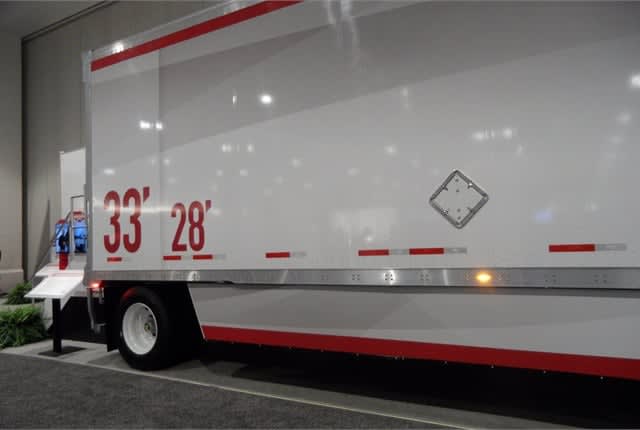
Photo: Tom Berg
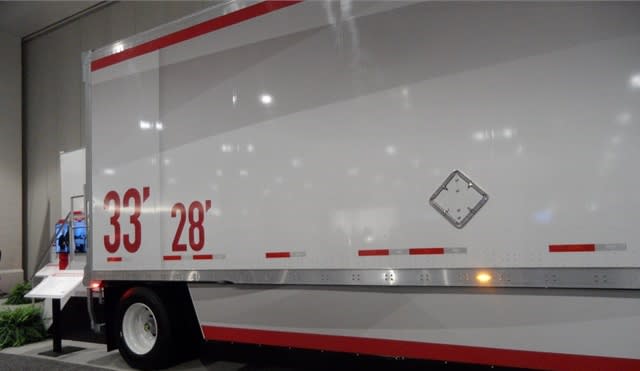
Photo: Tom Berg
FTR released a new report detailing the economics of using twin 33-foot trailers compared to twin 28-foot trailers and standard 53-foot trailers, showing that in only specific cases would the extra capacity lead to a benefit.
The change from 28-foot to 33-foot double trailers has primarily been based on safety concerns, but newer technologies have allowed for the safe operation of larger trucks since the last expansion of length limits in the early 1990s, according to FTR. Regulators have been debating a proposal to increase the federal maximum length, which would lead to an overall increase of 10 feet for the entire rig.
The thinking behind such an increase is that it would increase capacity per truck. But in reviewing the economics of the change, FTR found that adoption of double 33-foot trailers would likely be limited. It would benefit primarily less-than-truckload and parcel carriers and more niche operations such as the movement of caskets or insulation. Based on its own research, FTR expects load conversion in just the 1-2% range.
While double trailers present increased capacity in space and weight over a single trailer, for shippers of low-density freight the gain in loading capacity is only 4%. The main reason that carriers choose twin trailers over a single trailer is what the industry calls "unit" loading, a common practice in LTL and parcel operations. Since the cube advantage over 53-foot trailers is relatively small, the main reason for a carriers’ preference for doubles is to avoid the re-sorting required to consolidate many customer shipments as the freight moves across the hub-and-spoke terminal networks.
FTR found that for the segments most directly affected by increasing the allowable trailer length, they would see as much as a 10% increase in cost savings. It also expects the longer trailers to decrease the number of trucks on the road by 18% in the affected segments of trucking, which would lead to lower overall emissions.
Trucking costs don’t increase in proportion to the length of a trailer, which means that 33-foot trailers would be cheaper to operate than 28-foot trailers on a per-ton basis, according to FTR. A drawback to using longer trailers in the increased handling and need for additional loading space, with FTR calling the change a niche play only.
The limited scope of fleets that would be interested in longer double trailers is actually one of the advantages that FTR wants lawmakers to consider while pushing for the increased maximum length. This could downplay public fears about significant amounts of larger vehicles on the road because the change would not be as obvious.
FTR also believes the because the change is simple and requires no new technology and no need for costly changes to infrastructure, longer trailers would also be an easy sell. Lastly, the tradeoffs for the fleets that would use them are obvious and significant.
The full report is available here.
More Fleet Management
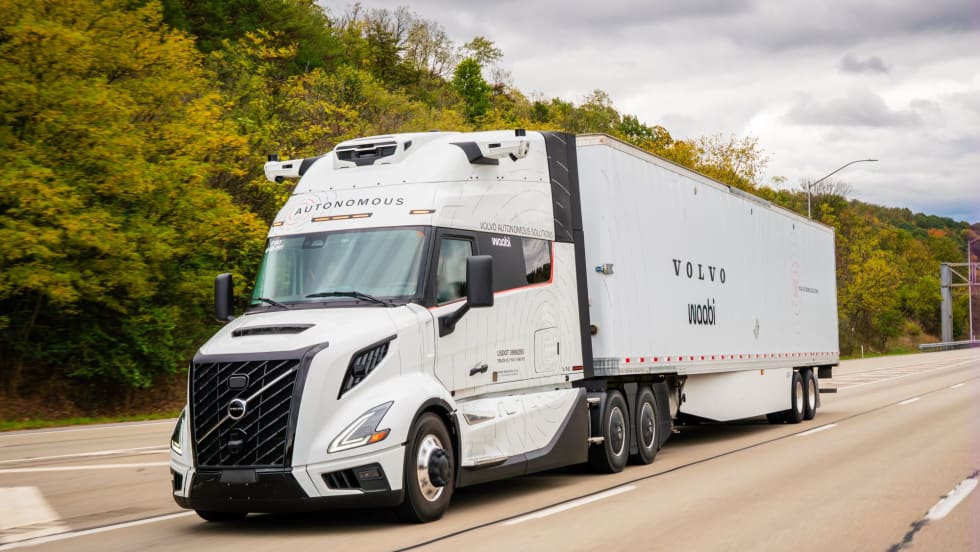
Volvo, Waabi Start Commercial Autonomous Operations in Texas
Volvo VNL Autonomous trucks, powered by the Waabi Driver, are hauling freight directly to third-party facilities for a customer in Texas.
Read More →
Samsara Launches Custom AI Agent Builder
Agent Studio lets fleets create AI tools for hours-of-service monitoring, reporting and driver support, including agents that communicate by phone.
Read More →
Geotab Links Fleet Card to Vehicle Data
The new card combines fuel discounts with telematics-based purchase controls. Geotab’s analysis also points to potential savings from choosing lower-priced fuel stops.
Read More →

How MFA Helps Protect Trucking Fleets
Multi-factor authentication adds protection when passwords are stolen. Here’s how it works and where fleets should start.
Read More →
How Better Freight Data Helps Trucking Teams Get Ahead of Disruption
Trucking and logistics teams have plenty of data. The problem is getting the right information in front of the right people soon enough to act. Better-connected data can help teams spot trouble earlier and make smarter decisions before small problems become big ones.
Read More →
Trimble: Taking Artificial Intelligence in Trucking Beyond Faster Tasks
At Insight 2026, Trimble executives argued that fleets may need to redesign workflows to get more from AI as it introduced new products and enhancements. AI’s value will depend on how fleets combine automation with their people's knowledge.
Read More →
Build a bulletproof fleet: Uniting ELDs and dash cams for total compliance
An ELD can prove compliance, but it cannot always prove what happened on the road. Discover how uniting accurate ELD data with AI-powered dash cam video can help your fleet strengthen compliance, defend against liability, protect drivers and reduce operational costs.
Read More →
Nominations Open for HDT Emerging Leaders
Heavy Duty Trucking is looking for accomplished trucking fleet professionals under 40 who are making an impact and helping lead the industry forward.
Read More →
Why Private Fleets Are Taking More Freight
Private fleets are putting their own trucks on demanding customers and high-cost lanes as companies seek greater control over service, costs, and capacity.
Read More →
Color Match Smarter: Tools That Restore & Perform
For fleet managers and collision repair professionals keeping heavy-duty trucks on the road, getting the color right the first time isn't just about appearance — it's about efficiency, turnaround time, and bottom-line results. Discover how today's digital color tools are transforming the repair process from guesswork to precision.
Read More →