




FMCSA Yanks Minimum Insurance Rulemaking
More than three years after launching a rulemaking to increase minimum insurance requirements for trucking, the FMCSA is dropping the effort because it says it has not collected enough information to warrant going forward-- at least for now.

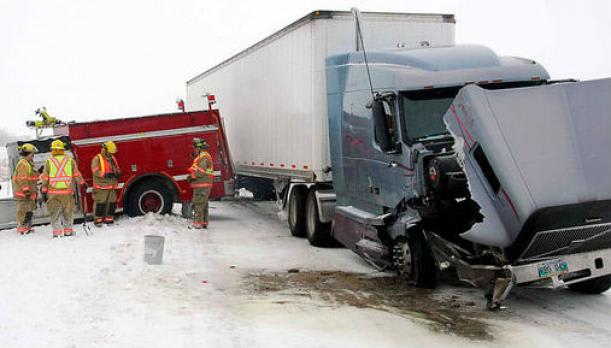
Photo: FMCSA
Photo: FMCSA
More than three years after launching a rulemaking to increase minimum insurance requirements for trucking, the Federal Motor Carrier Safety Administration is dropping the effort because it says it has not collected enough information to warrant going forward-- at least for now.
The agency had first announced back in April 2014 that it was issuing an advance notice of proposed rulemaking to consider whether it should increase the financial responsibility for motor carriers, freight forwarders, and brokers. FMCSA noted that it is authorized to establish minimum insurance levels for motor carriers at or above the minimum levels set by Congress.
FMCSA had been seeking public comment on whether to exercise its discretion to increase the minimum levels and, if so, to what levels. “After reviewing all public comments to the ANPRM, FMCSA has determined that it has insufficient data or information to support moving forward with a rulemaking proposal, at this time,” the agency stated in a notice that will be published in the Federal Register for June 5.
In the ANPRM (Docket No. FMCSA-2014-02110) issued in 2014, the agency stated it was “considering a rulemaking that would increase minimum levels of motor carrier financial responsibility for bodily injury or property damage and sought information in connection with that potential rulemaking.”
Specifically as to motor carriers, the ANPRM sought public comment on a series of questions addressing the following matters:
Premium Rates
Current Minimum Levels of Financial Responsibility
Impacts of Increasing the Minimum Level of Financial Responsibility
Compensation
Sources of Information
Timelines for implementation
FMCSA also said at the time that it would be asking “several questions related to broker/freight forwarder financial responsibility as it continues to implement Section 32918 of the Moving Ahead for Progress in the 21st Century (MAP-21) Act” highway bill, which became law back in 2012.
In addition, the ANPRM sought answers to questions pertaining to trip insurance for Mexican carriers; the discretionary imposition of financial responsibility requirements for motor passenger carrier brokers; and its self-insurance program for motor carriers.
The ANPRM arose from a study ordered by Congress in 2012 (via MAP-21) in response to the increasing costs of truck-related crashes. As it drafted the law, Congress considered raising the insurance minimum for general freight from $750,000 to $1 million, but eventually decided to have FMCSA prepare an analysis that could become the basis for changes in the standard.
The last minimum adjustment was in 1985, which set the current standard of $750,000 for general freight, $5 million for the most dangerous haz-mat freight and $1 million for other haz-mat freight.
A total of 2,181 public comments were received in response to the ANPRM, including those submitted by motor carriers, insurance companies, broker/freight forwarders, safety advocates, attorneys, and drivers, and many others.
FMCSA said approximately 145 submissions expressed “general opposition” to increasing the minimum levels of financial responsibility for motor carriers but did so “without providing a substantive rationale for their opinions.”
Some 120 submissions-- including one submission reflecting a petition signed by 11,366 individuals-- indicated general support for increasing the minimum levels of financial responsibility for motor carriers but, said the agency, did so also “without providing a substantive rationale for their opinion.”
In the end, the effect of receiving so many unconvincing arguments over the past three years was worrisome enough to compel the agency to drop the matter, for now anyway. “Despite receiving a significant number of comments in response to the ANPRM, commenters did not provide responsive information necessary to allow the agency to proceed to a Notice of Proposed Rulemaking,” FMCSA stated.
The agency noted in particular that commenters “did not provide sufficient cost or benefit data and the agency was unable to otherwise obtain sufficient data on industry practice with respect to the level of liability limits in excess of the agency’s minimum financial responsibility requirements, the cost of such premiums and the frequency of, and the amount by which bodily injury and property damage claims exceed policy liability limits.”
What’s more, “anecdotal and hypothetical data provided by commenters are not sufficient to allow the agency to perform a systematic cost-benefit analysis that would be required to raise motor carrier minimum financial responsibility through a rulemaking.”
FMCSA further said that based on the information provided, it is not able to determine potential increases in insurance premiums associated with increased financial responsibility limits, or the impact of an increase in minimum financial responsibility requirements on insurance company capital requirements set by insurance regulators to ensure there are sufficient reserves to minimize the risk of insolvency.
“Moreover, FMCSA is not able to calculate economic benefits from having more financial resources available to assist crash victims associated with increased minimum financial responsibility limits,” the agency added.
It has been speculated that the biggest stumbling block to advancing the ANPRM, is the dearth of data in the docket on truck accidents that can only be supplied by insurance carriers. And the agency cannot compel them to provide that proprietary information.
Lane Kidd, managing director of the Trucking Alliance, a group of major carriers that lobby for safety legislation, told HDT that “it’s important to note that FMCSA didn’t conclude that higher insurance levels aren’t necessary, only that the agency doesn’t have enough statistics to make a decision.
“I’m confident the private sector will now go to work on answering the questions FMCSA says it needs to make a decision,” he continued. “Congress requires the trucking industry to meet its safety obligations to the public in the event of catastrophic truck accidents and self-insured trucking companies are generally meeting that responsibility. But, regrettably, too many trucking companies remain woefully underinsured to meet that congressional mandate.”
David Heller, vice president of Government Affairs for the Truckload Carriers Association, told HDT that, “TCA supports the notion that motor carriers be required to possess minimum liability insurance coverage to help protect those we share the road with at reasonable and relatively stable rates.” However, he advised that in this case, “one size fits all” is not good public policy.
Heller said that while many TCA members have in fact obtained coverage well above the federal minimums, “the difficulty with this rulemaking is defining what would be a reasonable amount for all carriers. Our industry, which represents carriers of all sizes, ranging from one-truck operators to fleets with equipment numbering in the thousands, has shown that in many instances, a one-size-fits-all proposition is not entirely appropriate.
“What one carrier could accept as a reasonable rate may prove costly for another carrier with an entirely different scope of operations, yet identical safety record,” he continued. “The inability to clearly define what would be a new proposed minimum makes it difficult to predict the ramifications it would have on small carriers and large carriers alike, to say nothing of the independent contractor.”
The Owner-Operator Independent Drivers Association outright applauded the withdrawal of the ANPRM, noting that it had “vehemently opposed a proposed rulemaking to arbitrarily increase insurance minimums for commercial motor carriers.”
“We want to thank all the truckers and small-business trucking companies, our OOIDA Board Members and active membership for your work on this issue,” said OOIDA Director of Government Affairs Mike Matousek.
In a statement, the association contended that the FMCSA proposal had been “based on increases in medical inflation,” and noted that OOIDA and its members had told Congress that the initiative “would place significant financial burdens on motor carriers without any improvement to highway safety.” OOIDA added that it had also pointed out that more than 99% of crash damages are covered under current financial requirements.
Matousek also said that the announced withdrawal is “significant in that the agency usually just leaves a docket open if a proposal is no longer being advanced.”
As for the American Trucking Associations’ take on FMSCA’s action, ATA spokesperson Sean McNally told HDT that the trucking lobby “appreciates FMCSA’s decision to withdraw this rulemaking when it determined that there is insufficient data to suggest that current minimum financial responsibility levels are inadequate to the purposes for which Congress established them.
"ATA believes decisions like this should be based on strong data, and until that data exists,” he added, “FMCSA should leave the financial responsibility minimums at current levels."
More Fleet Management

Nominations Open for HDT Emerging Leaders
Heavy Duty Trucking is looking for accomplished trucking fleet professionals under 40 who are making an impact and helping lead the industry forward.
Read More →
Why Private Fleets Are Taking More Freight
Private fleets are putting their own trucks on demanding customers and high-cost lanes as companies seek greater control over service, costs, and capacity.
Read More →
Color Match Smarter: Tools That Restore & Perform
For fleet managers and collision repair professionals keeping heavy-duty trucks on the road, getting the color right the first time isn't just about appearance — it's about efficiency, turnaround time, and bottom-line results. Discover how today's digital color tools are transforming the repair process from guesswork to precision.
Read More →


FMCSA Pauses Biennial-Update Enforcement Amid Motus Transition
Carriers whose updates were due on or after June 1 have more time, while FMCSA works to stabilize its new registration system and warns of phishing sites impersonating its new carrier registration system, Motus.
Read More →
2026 Blueprint for Countering Smarter Supply Chain Theft
Cargo theft is no longer just the cost of doing business. It's a multi-billion-dollar criminal enterprise exploiting vulnerabilities across your fleet, drivers, and supply chain.
Read More →
How Telematics Improves Visibility, Control, and Performance in Refrigerated Fleets
Explore how telematics help refrigerated fleets improve visibility, uptime, efficiency, compliance, and cargo protection across connected cold chain operations.
Read More →
What the U.S.-Canada Trade War Means for Trucking
Escalating U.S.-Canada tariffs could disrupt cross-border freight, reduce truck volumes, raise costs, and create new uncertainty for carriers on both sides of the border.
Read More →
What Are Trucking’s Top Concerns for 2026?
The American Transportation Research Institute wants to know what's worrying trucking fleet managers, drivers, and other stakeholders in its annual Industry Issues survey.
Read More →
American Trucking Associations Looks for a New Leader
ATA President and CEO Chris Spear abruptly left his job at the association on August 21, at a pivotal time for the trucking industry.
Read More →
Public Wi-Fi Cybersecurity Risks: How Truck Drivers and Fleets Can Protect Their Data
Public Wi-Fi can expose truck drivers and fleets to credential theft, malware, and other cyber threats. Here’s how to reduce the risk on the road.
Read More →