




California Carrier Doubles CNG-Powered Fleet Size
Despite the fall-off in interest in natural gas fuel with the return of cheaper diesel prices, Sacramento's Matheson Trucking remains committed to increasing the use of clean energy fuels.
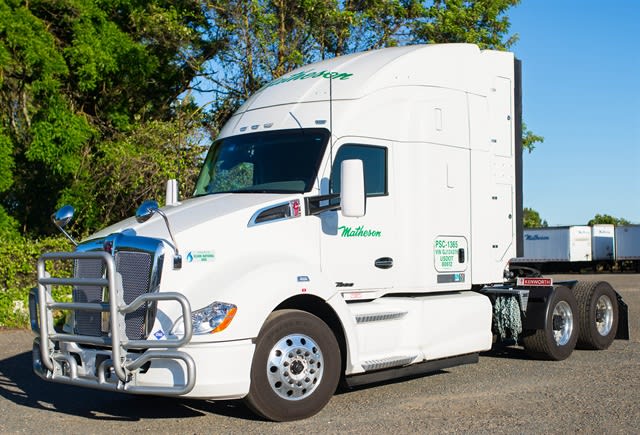
Matheson Trucking has announced it will add 27 new CNG-powered tractors to its fleet this year. Photo: Matheson Trucking
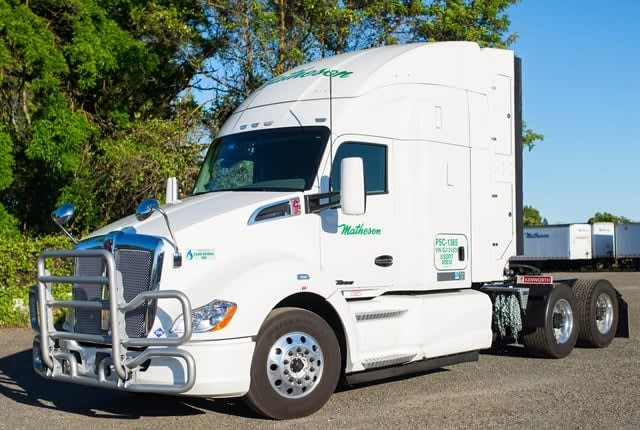
Matheson Trucking has announced it will add 27 new CNG-powered tractors to its fleet this year.Photo: Matheson Trucking
A Sacramento, California, fleet is adding 27 new compressed natural gas tractors to its clean energy fleet – a move that will increase the company's total to 64 alternative energy vehicles by year’s end.
Despite the falloff in interest in CNG-powered trucks after diesel prices returned to “normal” levels, chief operating officer Charles Mellor said Matheson Trucking remains dedicated to a policy of increasing the use of clean energy fuels to improve air quality, decrease diesel fuel consumption and reliance on foreign oil, while helping to preserve the environment. “These new CNG tractors – with more to come – are part of that ongoing commitment," Mellor said.
Mellor said Matheson typically logs approximately 600 trips each day, totaling an average of 98,600 miles per day driven nationwide. And using natural gas-powered trucks helps the fleet reduce greenhouse gas emissions by approximately 30% compared to diesel with significant reductions in sulphur oxide and nitrogen oxide as well as 40% less CO2 (carbon dioxide).
Matheson began converting its fleet to clean energy-powered tractors in 2014. Last year the company had 25 CNG and 12 liquefied natural gas (LNG) tractors for a total of 37. This year 27 new CNG tractors are being added. Fifteen of these already support U.S. Postal Service shipments to and from the Los Angeles basin and Las Vegas, and 12 more will be ordered and placed in service this fall in Denver. They bring the company's alternative energy fleet inventory to 64 tractors, or 26% of its fleet. Across all divisions Matheson's fleet now numbers 286 tractors pulling a mix of 342 trailers.
"Our new CNG tractors display a fresh, contemporary brand identity with a logo symbolizing our growth and transformation, while also celebrating the culture of innovation we have built over a half century in business," said Joshua Matheson, vice president, corporate operations. "It is our way of expressing our values and showing customers and the general public what Matheson is all about."
According to Debra White, vice president for information technology and fleet maintenance, Matheson uses both CNG and LNG in its alternative fuel fleet depending on whether distances to be traveled are short or long haul, the applications involved, time to refuel and other factors. "We will continue to expand our fleet of natural gas or alternative fuel powered tractors wherever it is practical and cost effective to do so," she said.
More Fuel Smarts
FlowBelow Redesigns Trailer AeroSlider to Cut Fuel Use
The lighter trailer aerodynamic system installs in less than 45 minutes, according to the company, with potential payback in under a year depending on fuel prices and trailer mileage.
Read More →
Why Diesel Price Relief Efforts May Fall Short
Diesel prices have eased from September’s record high, but doubts about additional Russian supply and limits on dyed-diesel tax relief mean trucking fleets still face expensive fuel. And prices could go higher.
Read More →
Why Small Fuel Savings Matter in Trucking
Can better fuel economy help pay for driver raises? In this podcast, GP Transco explains how small efficiency gains create room to reinvest in its people.
Read More →
How GP Transco Cuts Trucking Fuel Costs, a Tenth of a Gallon at a Time
What’s another tenth of a mile per gallon worth? GP Transco shares how equipment upgrades and driver coaching turn small gains into meaningful fuel savings.
Read More →
Electric Yard Tractors Move Beyond Pilots
Operating-cost savings have overtaken sustainability goals as the leading reason surveyed fleets are adopting battery-electric terminal tractors, according to new NACFE research.
Read More →
Geotab Links Fleet Card to Vehicle Data
The new card combines fuel discounts with telematics-based purchase controls. Geotab’s analysis also points to potential savings from choosing lower-priced fuel stops.
Read More →
Fleet Economics Shape Electric Truck Outlook
ACT Research expects costs, charging infrastructure, and technology improvements to drive zero-emission commercial vehicle adoption as federal regulations and incentives retreat.
Read More →
Wex Adds Cardless Fuel Payments for Over-the-Road Customers
A new fuel card feature for Wex customers offers convenience and security.
Read More →
New California Law Could Shed Light on Electric Truck Prices
Why do battery-electric Class 8 trucks remain so expensive? A California bill signed by Gov. Gavin Newsom would give fleets and state agencies more visibility into what manufacturers charge.
Read More →
How Volvo Updated Its D13 for EPA 2027 [Watch]
Volvo’s updated D13 promises lower emissions without sacrificing performance or fuel economy. Take a closer look at what changed inside the engine in this HDT Spotlight video.
Read More →