




‘Better Year Ahead’ Despite Flat Trucking Conditions Index
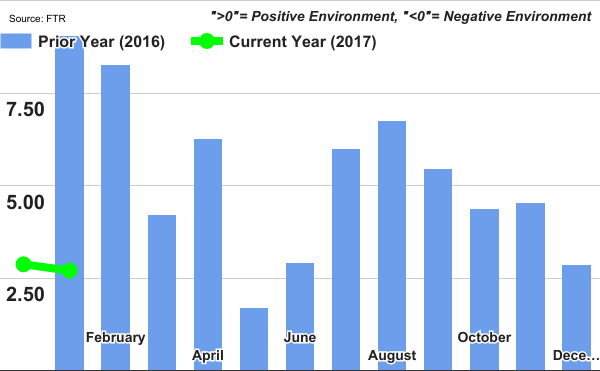
FTR has released its Trucking Conditions Index for January, showing an unchanged reading from the month before of 2.7. Conditions are expected to improve in 2017 as a result of a rebounding economic environment.
Source: FTR
Source: FTR
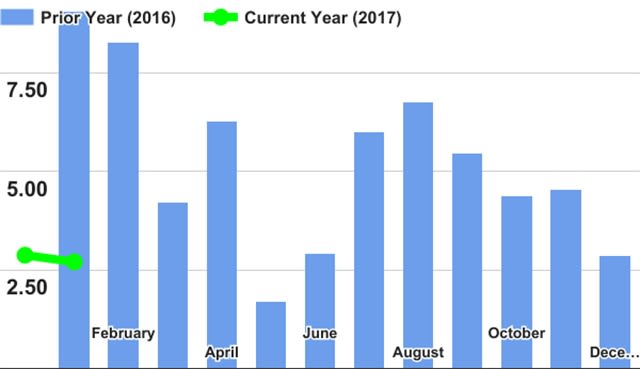
FTR has released its Trucking Conditions Index for January, showing a nearly unchanged reading of 2.7 compared to December's 2.9.
FTR expected January to be the low point of the year for trucking conditions as it projects an uptick in 2017 as the year progresses. Productivity and capacity are projected to take a hit as a result of the upcoming ELD mandate but FTR said that early adopters will be ahead of the curve.
A big issue for the upcoming year is the longstanding driver shortage, which could cause companies to struggle to meet overall demand for new drivers. If capacity fails to meet demand, truckers would be able to raise prices, but the full impact will likely not be felt until late 2017 or into early next year.
“It’s looking like 2017 will be a better year for the trucking industry. This late recovery is consumer-driven, which is relatively light on increasing freight demand, but we will see modest growth,” said Jonathan Starks, FTR chief operating officer. “More importantly, the industry is really beginning to face up to the costs and changes from ELD implementation.”
While the trucking industry is feeling optimistic with the new Trump Administration in power, FTR cautioned that there are some risks associated with the economic proposals being considered by the president and by Congress.
“We are also closely tracking government policies and actions,” said Starks. “The main concern continues to be the possibility of trade wars, which could have immediate and detrimental impacts on freight transportation.”
More Fleet Management

Nominations Open for HDT Emerging Leaders
Heavy Duty Trucking is looking for accomplished trucking fleet professionals under 40 who are making an impact and helping lead the industry forward.
Read More →
Why Private Fleets Are Taking More Freight
Private fleets are putting their own trucks on demanding customers and high-cost lanes as companies seek greater control over service, costs, and capacity.
Read More →
Color Match Smarter: Tools That Restore & Perform
For fleet managers and collision repair professionals keeping heavy-duty trucks on the road, getting the color right the first time isn't just about appearance — it's about efficiency, turnaround time, and bottom-line results. Discover how today's digital color tools are transforming the repair process from guesswork to precision.
Read More →


FMCSA Pauses Biennial-Update Enforcement Amid Motus Transition
Carriers whose updates were due on or after June 1 have more time, while FMCSA works to stabilize its new registration system and warns of phishing sites impersonating its new carrier registration system, Motus.
Read More →
2026 Blueprint for Countering Smarter Supply Chain Theft
Cargo theft is no longer just the cost of doing business. It's a multi-billion-dollar criminal enterprise exploiting vulnerabilities across your fleet, drivers, and supply chain.
Read More →
How Telematics Improves Visibility, Control, and Performance in Refrigerated Fleets
Explore how telematics help refrigerated fleets improve visibility, uptime, efficiency, compliance, and cargo protection across connected cold chain operations.
Read More →
What the U.S.-Canada Trade War Means for Trucking
Escalating U.S.-Canada tariffs could disrupt cross-border freight, reduce truck volumes, raise costs, and create new uncertainty for carriers on both sides of the border.
Read More →
What Are Trucking’s Top Concerns for 2026?
The American Transportation Research Institute wants to know what's worrying trucking fleet managers, drivers, and other stakeholders in its annual Industry Issues survey.
Read More →
American Trucking Associations Looks for a New Leader
ATA President and CEO Chris Spear abruptly left his job at the association on August 21, at a pivotal time for the trucking industry.
Read More →
Public Wi-Fi Cybersecurity Risks: How Truck Drivers and Fleets Can Protect Their Data
Public Wi-Fi can expose truck drivers and fleets to credential theft, malware, and other cyber threats. Here’s how to reduce the risk on the road.
Read More →