




Related – Hotlanta: Atlanta Tops DAT's List of Places to Find Spot Freight
Spot Freight Index Drops Slightly as 2017 Begins
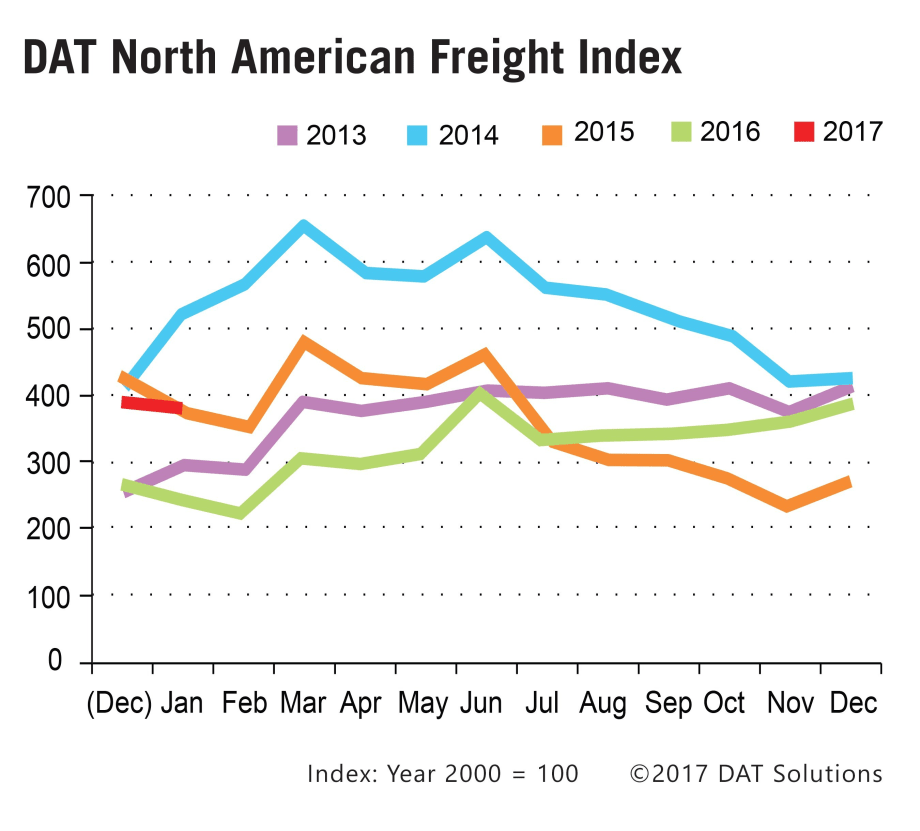
A measure of the spot truckload freight market edged downward in January as the level of freight settled into a typical post-holiday pattern, though at significantly elevated levels compared to this time last year.

Evan Lockridge・Former Business Contributing Editor
2 min to read
A measure of the spot truckload freight market edged downward in January as the level of freight settled into a typical post-holiday pattern, though at significantly elevated levels compared to this time last year.
The DAT North American Freight Index dropped 2.5% in January compared to an exceptionally strong December and was 56% higher year-over-year, according DAT Solutions and its network of load boards.
Spot van, refrigerated, and flatbed rates in January were higher year-over-year, but an influx of capacity from contract carriers onto the spot market, particularly on high-traffic lanes, depressed rates compared to December.
"Coming off a high in December, January was still very solid for spot freight," said Don Thornton, senior vice president at DAT. "As a result we saw more contract carriers make their trucks available on load boards, and the added capacity contributed to lower rates on many high-traffic lanes."
Compared to December, the volume of van freight on the spot market was down 9% last month but up 63% year-over-year. The national average rate for vans was $1.68 per mile including a fuel surcharge, down 5 cents compared to December but up 2 cents year-over-year. (All rates cited are for line-haul only, except where noted.)
Refrigerated freight followed a similar trend. The number of available loads fell 8% in January but was 57% higher year-over-year. Available capacity rose 1%.
The national average spot rate for refrigerated freight was $1.96 per mile including a fuel surcharge, 3 cents lower than December but 6 cents higher compared to January 2016.
Demand for flatbed trucks rose 18% compared to December and 64% year-over-year. Available capacity rose just 3%.
At $1.91 per mile, the national average flatbed rate was 5 cents lower compared to December but was 3 cents higher year-over-year.
More Fleet Management

Your Trucks Are Busy. That Doesn’t Mean They’re Winning.
High utilization doesn’t always mean strong margins. Looking beyond the current load can help fleets make better dispatch decisions and get more value from each truck’s time.
Read More →
Why This Trucking Recovery Is Different
Freight demand remains sluggish, but rising costs and tougher enforcement have taken enough capacity out of the market to change the outlook for motor carriers.
Read More →
Platform Science Adds Dispatch and Safety Tools
Four additions to PS Fleet help fleets monitor loads, manage driver coaching, share truck locations and adjust video system settings.
Read More →
PrePass Intelligence Mines Fleet Bypass, Toll and Safety Data
PrePass Intelligence helps fleets measure bypass savings, flag potential toll overcharges, and spot suspicious transactions by combining data from separate systems.
Read More →
Motive Adds AI Agents for Fleet Operations
New tools automate follow-up on fleet data, from maintenance work orders to driver alerts, with two-way voice conversations planned for later this year.
Read More →
Can You Beat Our Trucking Trivia Challenge?
Test your truck knowledge with 19 trivia questions from Heavy Duty Trucking Exchange. Can you keep up with the fleet pros?
Read More →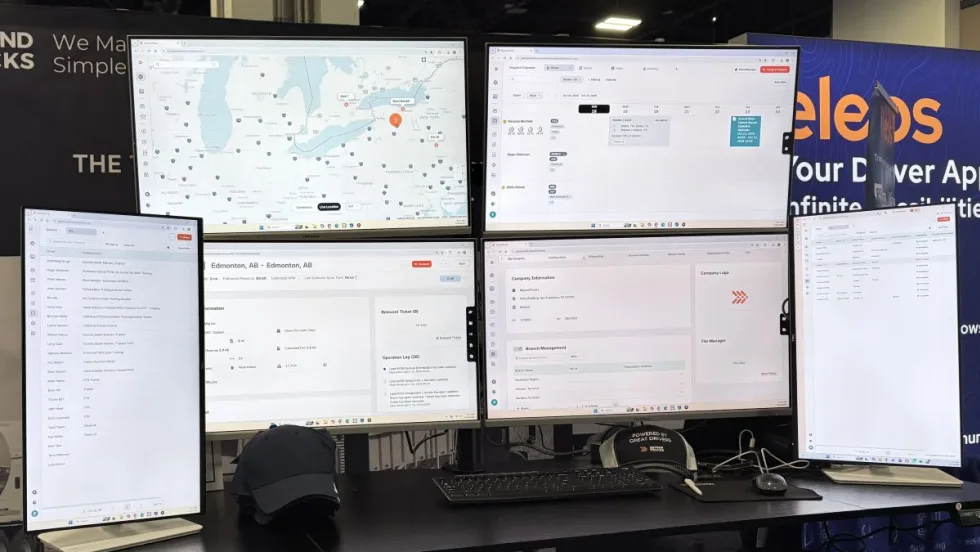
BeyondTrucks Adds Rules Checks to Dispatch
New Compatibility Engine checks driver qualifications, equipment requirements and fleet policies before loads are dispatched.
Read More →
Diesel Prices Hijack Trucking’s Worry List
ATRI’s annual survey finds cautious optimism about freight, but diesel costs, litigation, and insurance continue to squeeze fleets. Drivers have different priorities on several issues.
Read More →
Nomination Deadline Extended for HDT Emerging Leaders
Just a few more days to nominate accomplished trucking fleet professionals under 40 who are making an impact and helping lead the industry forward for the HDT Emerging Leaders award. Deadline extended to October 20!
Read More →
What Will ATA’s New Leader Bring to Trucking's Table?
Incoming President and CEO Mark Colson’s record in Alabama offers clues about his priorities and approach following Chris Spear’s abrupt departure as the head of the American Trucking Associations.
Read More →