Intermodal Shipments Post Fourth-Quarter Gain, Down Last Year
Intermodal freight volumes returned to growth in the fourth quarter of 2016, posting a 1% year-over-year increase that tempered volume declines earlier the year, according to the Intermodal Association of North America.
Evan Lockridge・Former Business Contributing Editor
February 6, 2017
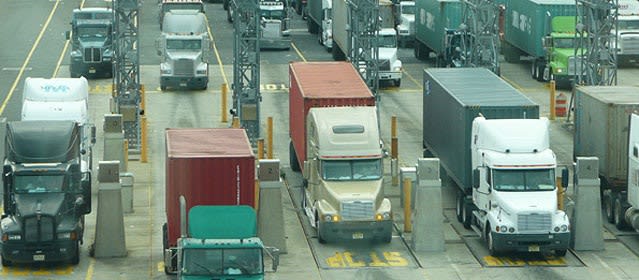
Photo: Port Authority of New York and New Jersey
2 min to read
Photo: Port Authority of New York and New Jersey
Intermodal freight volumes returned to growth in the fourth quarter of 2016, posting a 1% year-over-year increase that tempered volume declines earlier the year, according to the Intermodal Association of North America.
The fourth-quarter improvement, which totaled 4.35 million shipments for the three months, was achieved despite lower overall freight volume and resulted in lower intermodal volume during the second and third quarters.
Ad Loading...
Shipment declines during those quarters led to a drop of 2.1% in total intermodal volumes for the year compared with 2015. The total of 17.1 million shipments was the first full-year decline since 2008.
"While full-year totals didn't meet our original expectations, we turned the corner in November and December," said Joni Casey, president and CEO of IANA. "The 4% increase in domestic container volume during 2016 is a consistent and positive indicator of long term growth for the industry."
Domestic container gains were 3.4% in the fourth quarter and international shipments returned to growth for the period, increasing 0.6%. Declines continued in the trailer segment, which fell 9.2%.
Ad Loading...
The seven highest-density trade corridors, accounting for 63.3% of total intermodal volume, collectively were up 1.8% in the quarter, above the industry average of 1%.
The Midwest-Northwest and Northeast-Midwest lanes saw the largest fourth-quarter increases at 4.3% and 4.2%, respectively. Midwest-Southwest volumes, which were the highest, grew 1.4%. The South Central-Southwest lane, the only major lane to post a decline, fell 4.4% on container losses.
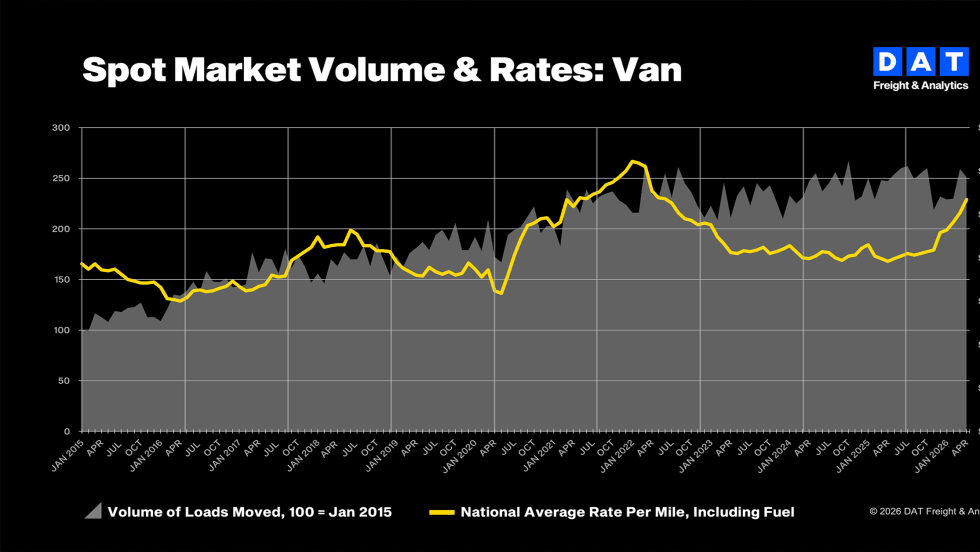
Intermodal service providers again demonstrated clear gains in the highway market sector. Thanks to excess trucking capacity and low fuel prices, highway volumes were up 37.3% from the same quarter the previous year. Intermodal loads fell 11.2%. The net result for reporting intermodal service was a total volume increase of 10%.
The trucking industry has no shortage of cybersecurity reports and cargo crime statistics. What it lacks is timely, operational intelligence that fleets can actually use.
ATRI’s latest research points to litigation, social inflation, and soaring claims costs as key drivers behind record-high liability premiums for trucking fleets. But there are things motor carriers can do.
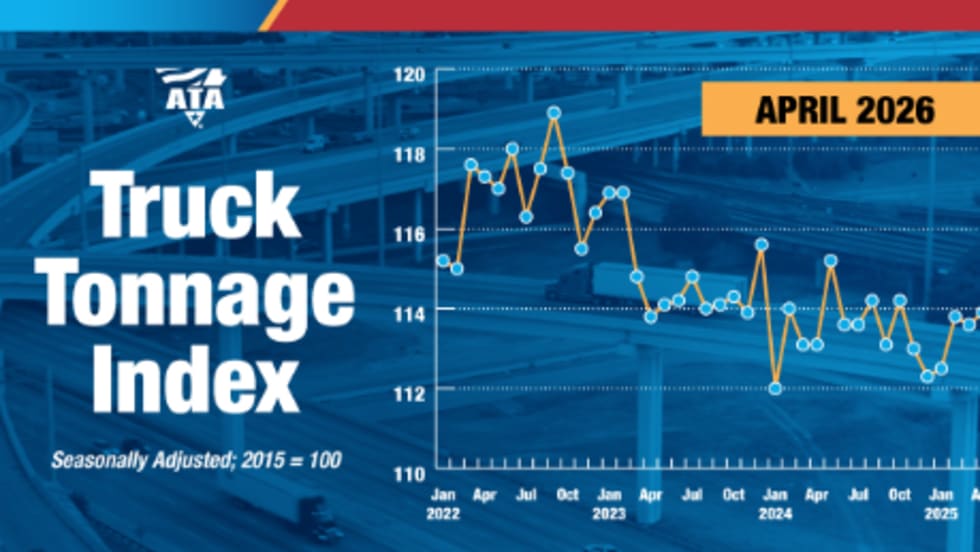
ATA’s For-Hire Truck Tonnage Index was unchanged in April after a strong March gain, with freight volumes remaining at their highest levels since late 2022.
Transportation attorney Greg Feary breaks down the recent Supreme Court decision that brokers can be held liable for damages in truck accidents and what it means for the trucking industry going forward.
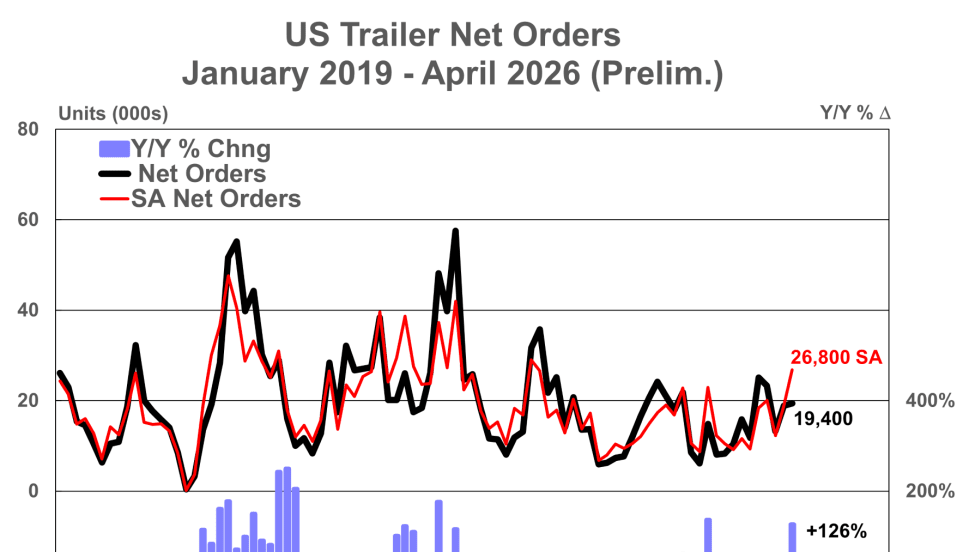
Preliminary net trailer orders rose 3% from March and jumped 126% year over year, signaling stronger-than-expected demand despite typical seasonal softness.
The unanimous SCOTUS ruling in the closely watched Montgomery v. Caribe case allows state negligence claims against freight brokers that hire unsafe motor carriers, raising new liability and vetting concerns among brokers.