




Court Finds Swift Contract Workers Were Employees
An Arizona court has ruled that independent-contractor drivers were effectively and legally employees in the latest update of a class-action lawsuit against Swift Transportation.

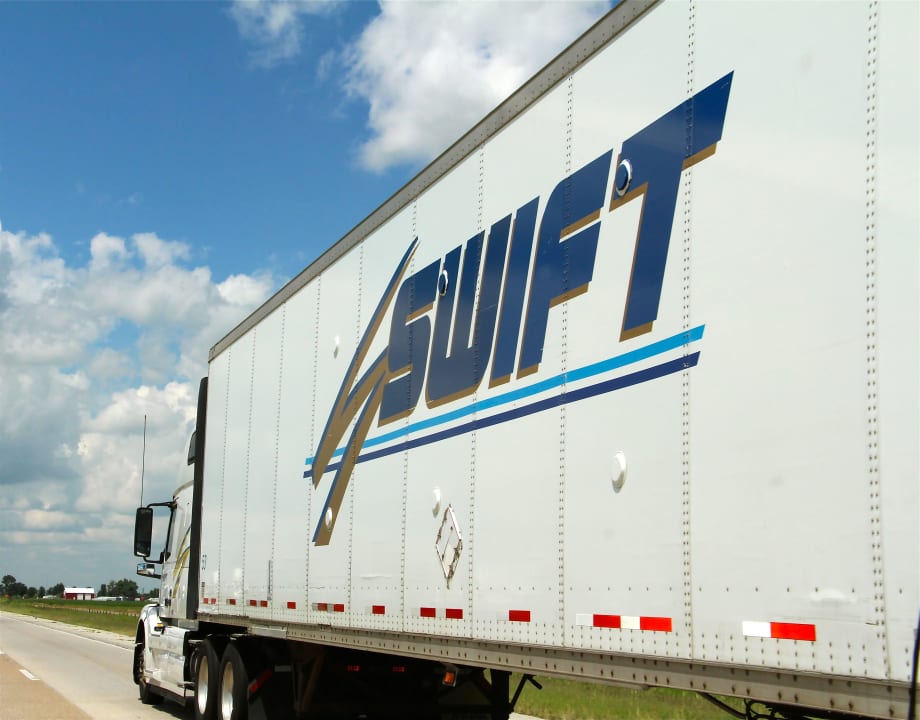
Photo by Evan Lockridge
Photo by Evan Lockridge
An Arizona court has ruled that independent-contractor drivers were effectively and legally employees in the latest update of a class-action lawsuit against Swift Transportation.
On Jan. 5, the District Court in Arizona granted a partial summary judgment to the five drivers involved in the lawsuit, declaring them employees despite Swift considering them contract workers. The drivers' suit contended that because they were not classified as employees, they missed out on wages required by law.
Although the drivers were regarded as independent contractors by Swift, the court found that because they worked exclusively for Swift and drove trucks that were leased from Swift, they were not functionally able to work for another fleet at the same time.
“Plaintiffs had much less control of their schedule than defendants contend,” the court stated in the judgment document. "Even though plaintiffs were not explicitly required to work a set number of hours, the combination of the contractor agreements and the IEL leases dictated a minimum amount of time plaintiffs needed to drive for Swift in order to pay the weekly rent for the leased truck."
Swift’s attorneys argued that, within the confines of the independent contractor agreement, the drivers were still able to choose to take multiple loads or refuse loads for better ones to increase profits. The court also disagreed with this line of argument.
While "defendants argue that there were ways plaintiffs and other contract drivers could use their 'business acumen, hard work, and enterprise' to make a profit and establish an autonomous business,'" the court said the evidence showed "it was impracticable for plaintiffs to establish their independence from Swift in order to maximize profits."
Swift has not yet responded to an HDT request for comment on the case.
This lawsuit is one of many similar driver misclassification claims across the industry. Often taking place at trucking companies that service ports, the suits all similarly allege that while the company does not consider these drivers are employees, they are not truly independent and should be classified as employees subject to the Fair Labor Standards Act.
California in particular has made an effort to crack down on the practice of hiring drivers as independent contractors in cases where it could violate labor standards, which has led to millions of dollars in settlements against trucking companies, in some cases leading to bankruptcy.
More Fleet Management

Nominations Open for HDT Emerging Leaders
Heavy Duty Trucking is looking for accomplished trucking fleet professionals under 40 who are making an impact and helping lead the industry forward.
Read More →
Why Private Fleets Are Taking More Freight
Private fleets are putting their own trucks on demanding customers and high-cost lanes as companies seek greater control over service, costs, and capacity.
Read More →
Color Match Smarter: Tools That Restore & Perform
For fleet managers and collision repair professionals keeping heavy-duty trucks on the road, getting the color right the first time isn't just about appearance — it's about efficiency, turnaround time, and bottom-line results. Discover how today's digital color tools are transforming the repair process from guesswork to precision.
Read More →


FMCSA Pauses Biennial-Update Enforcement Amid Motus Transition
Carriers whose updates were due on or after June 1 have more time, while FMCSA works to stabilize its new registration system and warns of phishing sites impersonating its new carrier registration system, Motus.
Read More →
2026 Blueprint for Countering Smarter Supply Chain Theft
Cargo theft is no longer just the cost of doing business. It's a multi-billion-dollar criminal enterprise exploiting vulnerabilities across your fleet, drivers, and supply chain.
Read More →
How Telematics Improves Visibility, Control, and Performance in Refrigerated Fleets
Explore how telematics help refrigerated fleets improve visibility, uptime, efficiency, compliance, and cargo protection across connected cold chain operations.
Read More →
What the U.S.-Canada Trade War Means for Trucking
Escalating U.S.-Canada tariffs could disrupt cross-border freight, reduce truck volumes, raise costs, and create new uncertainty for carriers on both sides of the border.
Read More →
What Are Trucking’s Top Concerns for 2026?
The American Transportation Research Institute wants to know what's worrying trucking fleet managers, drivers, and other stakeholders in its annual Industry Issues survey.
Read More →
American Trucking Associations Looks for a New Leader
ATA President and CEO Chris Spear abruptly left his job at the association on August 21, at a pivotal time for the trucking industry.
Read More →
Public Wi-Fi Cybersecurity Risks: How Truck Drivers and Fleets Can Protect Their Data
Public Wi-Fi can expose truck drivers and fleets to credential theft, malware, and other cyber threats. Here’s how to reduce the risk on the road.
Read More →