




Report: Fund Freight Infrastructure Beyond Highway Trust Fund
A new research report strongly advocates for greater funding of transportation infrastructure investments what is now covered by Highway Trust Fund allocations. It also stresses the value of projects designed to support multiple transportation modes.


Image: U.S. DOT

Image: U.S. DOT
A new research report strongly advocates for greater funding of transportation infrastructure investments what is now covered by Highway Trust Fund allocations. It also stresses the value of projects designed to support multiple transportation modes.
Release of the “The State of Freight II—Implementing the FAST Act and Beyond” report, co-authored by the American Association of State Highway and Transportation Officials and the American Association of Port Authorities, marks the one-year anniversary of the passage of the Fixing America’s Surface Transportation (FAST) Act highway bill.
The report aims to be a “blueprint for state DOTs, Congress and the new [Trump] administration to address the critical freight infrastructure needs of our nation,” said AASHTO President and MaineDOT Commissioner David Bernhardt.
“One of my top priorities as AASHTO president is to focus on intermodal freight capacity constraints and work collectively to improve the vital connections between rail, ports, intermodal facilities and the national surface transportation system necessary to meet the projected demand in population growth and freight movement over the coming decades.”
Kurt Nagle, AAPA president and CEO, said the report gives a “comprehensive national overview of where states are collectively in developing state freight plans, one year after the FAST Act was passed.”
The two associations contend that while states are making progress, improvements to critical freight infrastructure have not kept pace with current and future demands. The report includes several recommendations to leverage private-sector investment and “move lawmakers to provide additional and ongoing funding resources outside of the Highway Trust Fund.”
Based on compiling and analyzing results from a combined AASHTO- AAPA survey completed in November, the report delves into how states fund freight-specific investments through state-dedicated or discretionary funding, and how these funding sources can potentially work with federal freight investments.
For example, the survey found that 71% of states have state freight plans that they are actively working to make compliant with the FAST Act compliant. Additionally, 57% of states have targeted more than 6,200 freight projects for inclusion in their state freight plans, while 35% have identified a combined $259 billion in costs for their state’s freight plan projects.
The associations also noted that of the 50 state departments of transportation and the District of Columbia’s, 12 have direct relationships with one or more ports in their state. What’s more, 38 states are connected by navigable waterways and/or marine highway routes, “which creates opportunities and obvious synergies for close DOT/port relationships.”
To help states plan sustainable investments in a national freight network, AAPA and AASHTO recommend in the report that these steps be taken:
Have the U.S. Department of Transportation continue providing Highway Trust Fund allocations to states for highway freight projects through the National Highway Freight program
Have the USDOT coordinate its Build America Bureau and freight advisory committees with state freight plans to better leverage private-sector investment
Request that Congress provide additional and ongoing funding resources outside of the HTF for the overall multimodal freight network in such a way it can supplement highway formula dollars and fund discretionary grant programs
Move the Harbor Maintenance Tax (HMT) from discretionary to mandatory spending to enable all the revenues from HMT collections to be used for maintenance of deep-draft navigation channels and providing more equity
During a Dec. 6 conference call with reporters, AASHTO Executive Director Bud Wright pointed out that while the FAST Act authorizes $11 billion to be spent on freight infrastructure over a five-year span, “a lot more will be needed just for the over 6,200 freight projects targeted by states. “That’s why we’re urging lawmakers to provide additional and ongoing resources outside of the Highway Trust Fund to fund freight programs.”
AAPA’s Nagle told reporters that a combination of federal, state, local and private-sector investments will be needed to bridge the funding gap. “President-elect Trump has talked very vocally about his desire to rebuild infrastructure – discussing an up to $1 trillion package with Congress,” he said. “I think there is a new recognition by Trump and Congress that we need to invest not just in overall infrastructure, but in transportation, specifically in freight transportation, if we are to compete internationally.”
More Fleet Management

Could Your Truck's Connected Devices Be a Cybersecurity Risk?
ELDs, telematics systems and driver tablets help fleets operate more efficiently. But every connected device needs protection against cyberattacks.
Read More →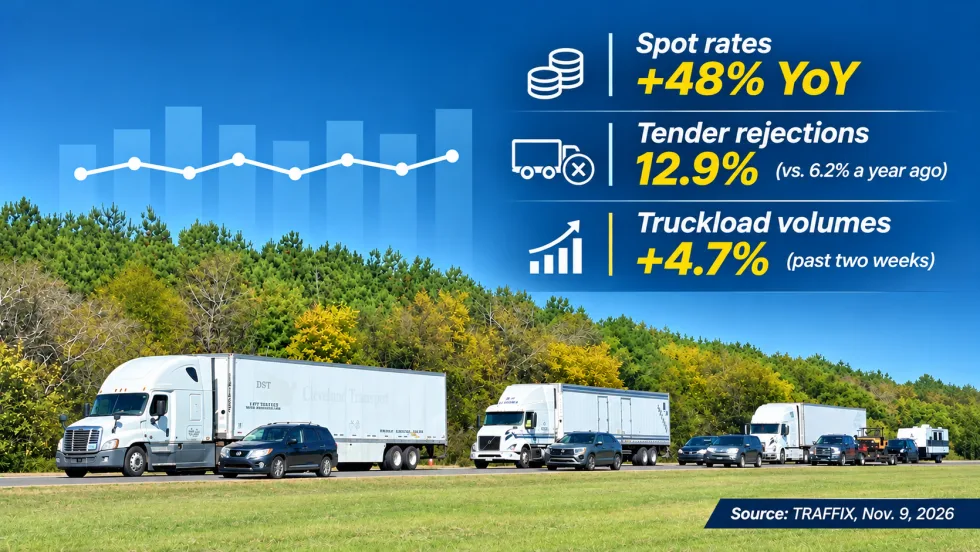
Holiday Freight Meets a Tight Trucking Market
There's no freight boom, but truckload carriers are finding themselves in a stronger position to negotiate rates. And holiday shipping demand could tighten the market further.
Read More →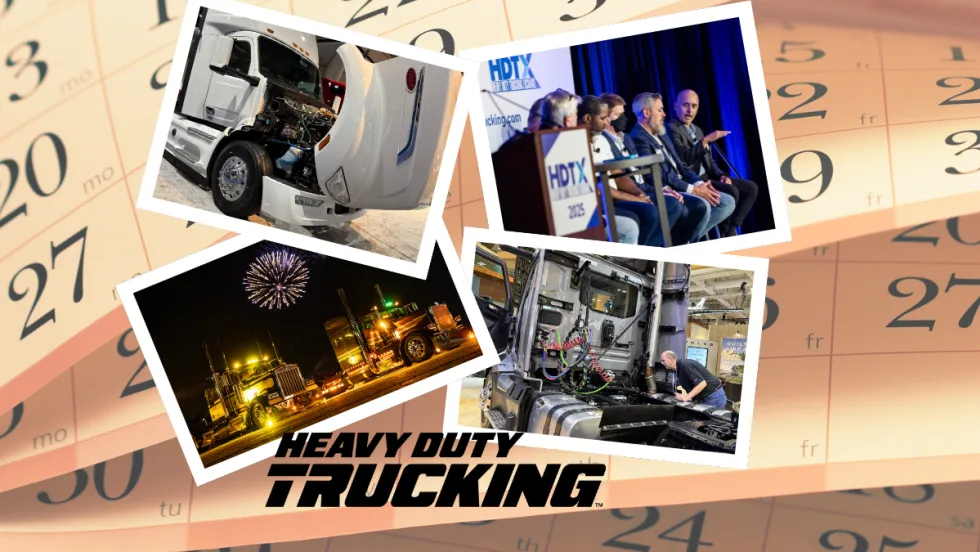
What Trucking Events are Happening in 2027?
Looking for trucking-related conventions, expos, and other events? Heavy Duty Trucking has developed this list of national and larger regional trucking shows and events.
Read More →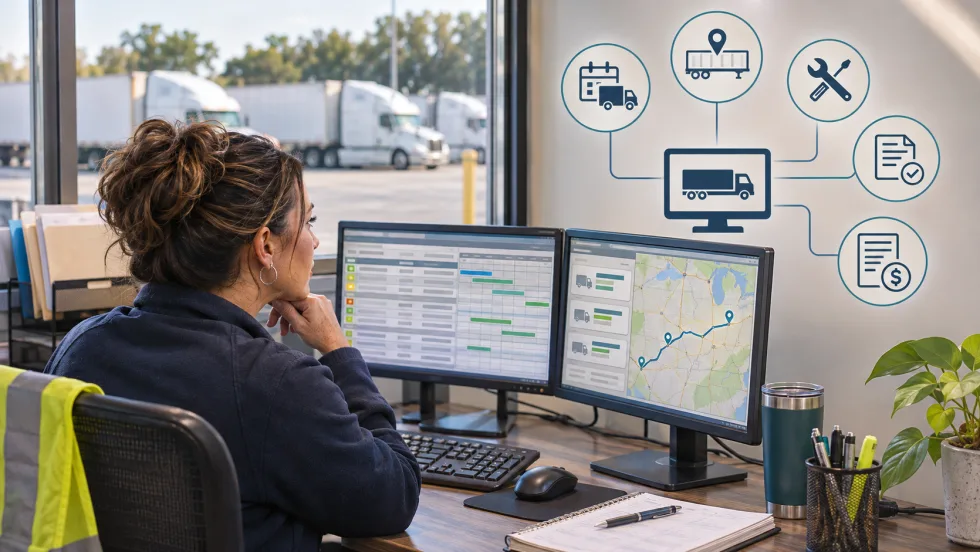
Does Your Trucking Fleet Need a New TMS?
Artificial intelligence and better integrations promise less busywork and more useful data. Can your TMS help your company solve problems? Do you need additional vendors or an upgrade? Or is it time to look for a new platform?
Read More →
Fleet Costs Shape ACT Expo 2027 Agenda
With diesel prices high and operating expenses under pressure, ACT Expo's 2027 agenda emphasizes fuel efficiency, AI, safety and the return on fleet technology investments.
Read More →
Does Your Trucking Fleet Need a New TMS? [Video]
Cloud technology, AI and new integrations are changing what transportation management systems can do. But does taking advantage of those advances mean replacing your existing TMS?
Read More →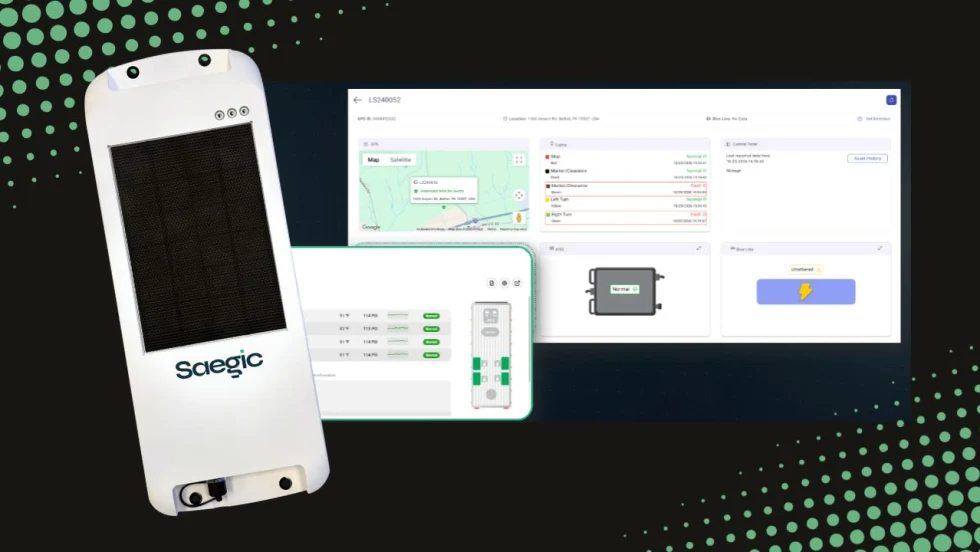
Road Ready Becomes Saegic, Launches New Trailer Telematics Gateway
Clarience Technologies is rolling out new hardware and expanding its plans for connecting trailer telematics, maintenance data, and video.
Read More →
Give Your Trucking Fleet a Cybersecurity Walkaround
Your fleet's cybersecurity policies may look good on paper. These seven checks can help you find out whether they’re working.
Read More →
Kodiak Lines Up Fleets for Driverless Trucking
An agreement for 75 trucks, a new Texas freight lane, and progress on safety validation move Kodiak closer to its planned driverless highway launch.
Read More →
ITS Logistics Settles Religious Harassment Case
The Nevada-based logistics firm agreed to pay more than $396,000 to settle a religious harassment charge involving an employee's Jewish identity.
Read More →