




Trucking with Trump: Beware Fog Ahead
Since President-elect Trump has never been in lockstep with Republican orthodoxy, let alone GOP leadership on Capitol Hill, there’s no way of telling now how their vision of governing jointly will ultimately turn out.

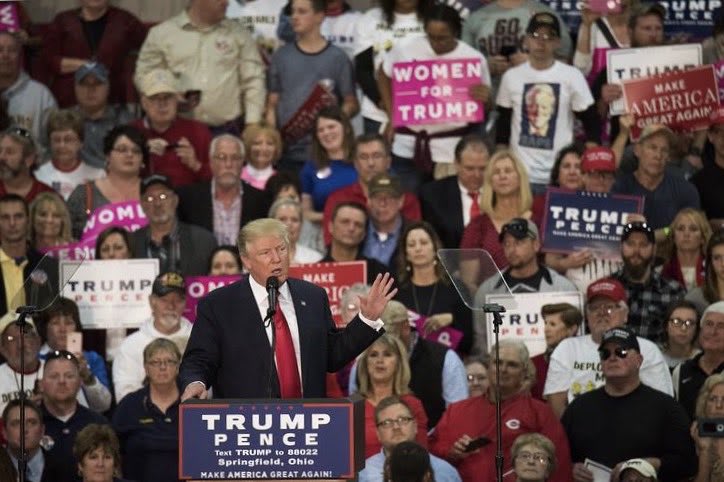
President-elect Donald Trump has grand plans for infrastructure, but how will he and Congress fund them? Image via Twiiter @realDonaldTrump
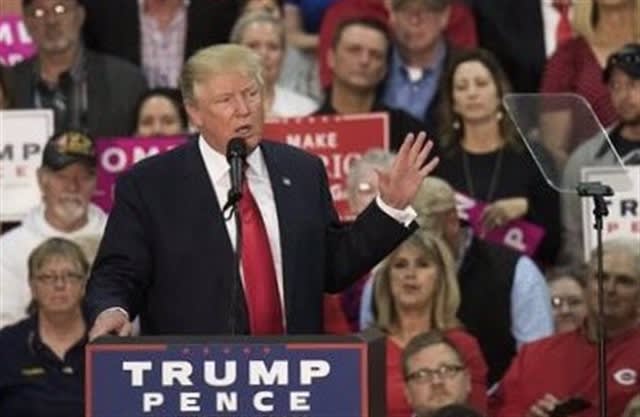
President-elect Donald Trump has grand plans for infrastructure, but how will he and Congress fund them?Image via Twiiter @realDonaldTrump
While roughly half the electorate is still reveling in a historic presidential victory and the rest is reviling it, the brass-tacks business of transitioning from the outgoing Obama to the incoming Trump Administration is already under way.
Once Donald Trump is sworn in on Jan. 21st as the 45th President of the United States, it will be the first time since 2011 that one party has occupied the White House and controlled both the House and Senate.
So, there will be lots of jockeying among key Republicans— both those previously for or against Trump-- and non-GOP Trump supporters for power in the roughly 10 weeks left until Inauguration Day.
But since President-elect Trump has never been in lockstep with Republican orthodoxy, let alone with Speaker of the House Paul Ryan (R-WI) who barely endorsed the President-elect, there’s no way of telling now how their visions of governing jointly will ultimately turn out.
The handing over of the presidency began when President Obama on Nov. 9 pledged that he and his staff will “work as hard as we can to make sure that this is a successful transition for the President-elect.” Much earlier that day in his acceptance speech, Trump called “for America to bind the wounds of division.”
Right after describing the electoral support he had received as “a movement comprised of Americans from all races, religions, backgrounds and beliefs,” Trump pivoted to a brief rundown on specific policies he will pursue in which he noted infrastructure right off the bat.
“We are going to fix our inner cities and rebuild our highways, bridges, tunnels, airports, schools, hospitals,” Trump stated. “We're going to rebuild our infrastructure, which will become, by the way, second to none, and we will put millions of our people to work as we rebuild it.”
The only published specifics on how the next President will accomplish that appear on his campaign website, where a policy plan declares that Trump will rebuild infrastructure via a “deficit-neutral plan” of infrastructure tax credits. A key albeit nebulous part of that plan aims to “refocus government spending on American infrastructure and away from the Obama-Clinton globalization agenda.”
Trump also promises to “provide maximum flexibility to the states” for infrastructure projects. In addition, his plan echoes a core element of Franklin Roosevelt’s New Deal in that Trump aims to “create thousands of new jobs in construction, steel manufacturing, and other sectors to build the transportation, water, telecommunications and energy infrastructure needed to enable new economic development in the U.S., all of which will generate new tax revenues.”
On the other hand, he sounds more like the business executive he has been for decades with his call for funding infrastructure by leveraging “new revenues” and working with financing authorities, public-private partnerships, and “other prudent funding opportunities.”
Trump also wants to employ incentive-based contracting to ensure projects run on time and on budget and to “link increased investments with positive reforms to infrastructure programs that reduce waste and cut costs.”
Trucking, if not every industry (and motorist) in the country, can’t argue with such a full-throated commitment to infrastructure. That the Trump plan’s heavy reliance on public funding, a.k.a. user fees and tolls, will be so warmly received by trucking advocates and other major industry lobbies is far less certain.
Certainly, it is highly likely that less regulation will be generated by Executive Branch agencies under Trump. Less certain is whether any rulemakings still in the pipeline, such as the GHG/MPG Phase 2 rules, will be delayed or simply abandoned outright. Given the reaction to Trump’s victory by Friends of the Earth, there is real concern among environmental advocates that little to no action on climate change will be taken by the Trump Administration.
“Technicalities aside about whether President-elect Trump can remove the U.S. from the Paris [climate change] agreement, it’s clear that for the next four years, the U.S. government is unlikely to be a partner in global climate action,” said Friends of the Earth's U.S. climate and energy director, Benjamin Schreiber.
“The U.S. will likely make international climate protection efforts more difficult and that is why the rest of the world can no longer wait for U.S. action," he said. "Friends of the Earth U.S. is calling on the world to use economic and diplomatic pressure to compel U.S. leaders to act.”
While some household GOP names— like former New York City Mayor Rudy Giuliani as Attorney General— among other candidates for cabinet posts have been publicly bandied about, there has yet to be any mention of a possible nominee for secretary of transportation. One interesting potential pick being talked up, by the way, is Forrest Lucas, co-founder of Lucas Oil, for Secretary of the Interior.
Regardless of who joins the Trump cabinet, major lobbies, such as the American Trucking Associations, will keep pushing their respective agendas on Capitol Hill. So, for example, any new safety-related rules sought by the trucking industry, such as speed limiters on trucks or hair-testing for driver drug use, legislated into law as Congressional mandates, will have to be enacted by the Trump Administration.
ATA and other trucking advocates could find common ground with President-elect Trump on some issues. ATA President and CEO Chris Spear said the lobby looks forward to working with Trump “on a host of issues, including long-term, sustainable infrastructure funding, tax reform, and fair and free trade.”
Working with Trump on the latter issue may take some doing as Trump did campaign heavily and harshly against free trade agreements, including the existing NAFTA accord with Canada and Mexico and the yet-to-be-ratified Trans Pacific Partnership.
Speaking about international trade just last month, ATA’s Spear said that “any attempt to reopen or threaten this longstanding [NAFTA] agreement could have dire repercussions on our industry. And not adopting TPP will undoubtedly will push those potential Asian Rim partners towards a future agreement with China. America relies on free trade and trucking is key.”
Trump, of course, also got good news about the other end of Pennsylvania Avenue. The House remains solidly in GOP hands while the Republicans held onto their Senate majority.
But Senate Majority Leader Mitch McConnell (R-KY) tamped down expectatons of massive change under single-party rule in remarks he made during a Nov. 9 press conference. "I think overreaching after an election, generally speaking, is a mistake," McConnell said. "Nothing is forever in this country... We’ve been given a temporary lease on power, if you will.”
The real question going forward is whether Trump and the GOP leaders on Capitol Hill will see eye to eye and for long enough to pass major legislation, including all the nuances of how various measures will actually be funded.
For one big example, will trucking sign off on a highway bill that is largely funded by private sources? And free trade is an arena in which many Democrats lately have been sounding and acting more like Republicans long have and Donald Trump has not— at least not when he was in campaign mode.
More Fleet Management

How Telematics Improves Visibility, Control, and Performance in Refrigerated Fleets
Explore how telematics help refrigerated fleets improve visibility, uptime, efficiency, compliance, and cargo protection across connected cold chain operations.
Read More →
What the U.S.-Canada Trade War Means for Trucking
Escalating U.S.-Canada tariffs could disrupt cross-border freight, reduce truck volumes, raise costs, and create new uncertainty for carriers on both sides of the border.
Read More →
What Are Trucking’s Top Concerns for 2026?
The American Transportation Research Institute wants to know what's worrying trucking fleet managers, drivers, and other stakeholders in its annual Industry Issues survey.
Read More →

American Trucking Associations Looks for a New Leader
ATA President and CEO Chris Spear abruptly left his job at the association on August 21, at a pivotal time for the trucking industry.
Read More →
Public Wi-Fi Cybersecurity Risks: How Truck Drivers and Fleets Can Protect Their Data
Public Wi-Fi can expose truck drivers and fleets to credential theft, malware, and other cyber threats. Here’s how to reduce the risk on the road.
Read More →
For Nicky Cupp, Fleet Innovation Starts With Frustration
HDT Truck Fleet Innovator Nicky Cupp turns everyday pain points at Fraley & Schilling into opportunities for better technology and smarter processes.
Read More →
Adam Buttgenbach’s Approach to Electric Trucks: Start With Where They Fit
HDT Truck Fleet Innovator Adam Buttgenbach helped PepsiCo build one of North America’s largest EV fleets by focusing on where electric trucks make operational sense.
Read More →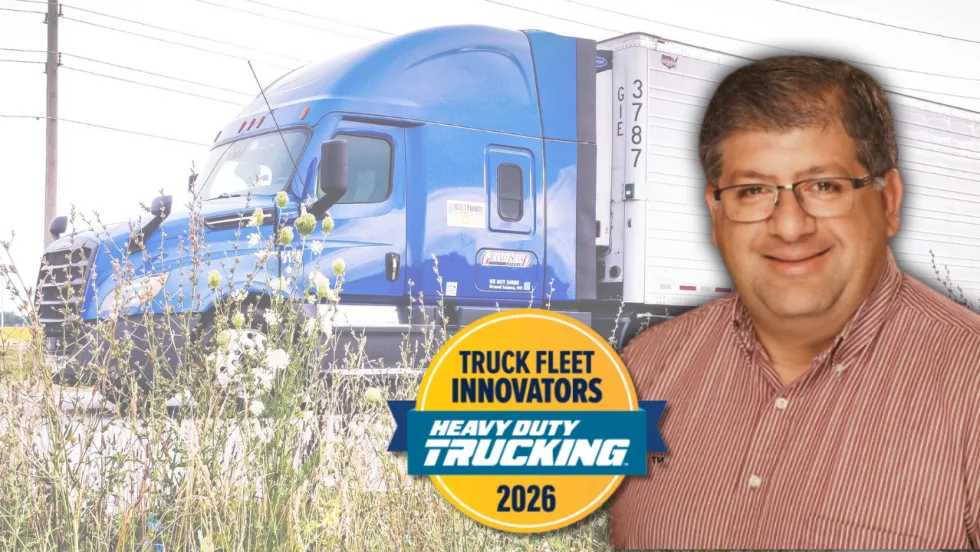
Deen Albert: Let Automation Do the Math, People Make the Decisions
HDT Truck Fleet Innovator Deen Albert makes sure people are still at the heart of operations at Grand Island Express, even while adopting artificial intelligence tools. AI-assisted dispatch helped boost revenue 25% with the same number of trucks.
Read More →
Trimble’s New AI Agent Takes Aim at Fleet Back-Office Busywork
Arc Agent works across Trimble TMS products to automate repetitive tasks such as freight orders, maintenance, invoices, fuel costs and more.
Read More →
How HDT’s 2026 Truck Fleet Innovators Are Rethinking Fleet Operations
Meet five trucking leaders who are challenging assumptions, solving operational problems, and putting innovative ideas to work.
Read More →