




Economic Watch: Trucking Helps Boost Overall Employment, Factory Activity Up
Employers continued adding jobs in the U.S. during October, according to a new Labor Department report, and trucking was one of many industries that helped push the number higher.


Employers continued adding jobs in the U.S. during October, according to a new Labor Department report, and trucking was one of many industries that helped push the number higher.
Total nonfarm employment rose 161,000, pushing the nation’s unemployment rate down a tenth of a percentage point to 4.9%.
While the number of job additions was just short of Wall Street expectations, the department also revised upward its estimates for August and September, adding a combined 44,000 jobs. Overall employment continued to trend up in health care, professional and business services, and in financial activities, according to the department.
In for-hire trucking, there was a net gain of 3,000 jobs from the month before while the wider transportation and warehouse sector added 7,500 jobs. Trucking numbers for September were revised higher from a first-reported 3,600 jobs loss to an 1,800 increase, marking the fourth month of trucking job gains.
The bottom line is that employment gains remain modest, according to Stifel Fixed Income Chief Economist Lindsey Piegza.
“For the Federal Reserve, a gain of 161,000 is hardly a green light for a December [interest] rate hike, nor does it, however, pull the plug on a plan to further remove accommodation just five weeks from now with a second-round hike of 25 basis points [.25%],” she said. “In other words, this morning’s report simply leaves Open Market Committee members, and market participants alike, questioning the true direction and health of the U.S. labor market.”
Piegza noted that with 79 consecutive months of positive job creation, the hawks will argue the labor market is at or near full employment, albeit with the pace of hiring slowing dramatically since the first interest rate hike in ten years last December.
“Coupled with minimal wage pressures, the doves will argue lingering weakness in fundamentals,” she said. “According to this week’s November FOMC statement, the Fed is looking for just ‘some’ further improvement. This morning’s employment report, however, arguably fails to meet even this new, lowered threshold of progress. After all, more of the same is hardly positive headway.”
Factory Orders, Shipments Increase Again
The employment report follows one a day earlier from the Commerce Department that showed factory orders in the U.S. during September rose 0.3%, the third straight monthly gain. It was helped by a 0.9% increase in orders for nondurable goods as orders for durable goods fell 0.3%.
The August level of factory orders revised upward showing a 0.4% improvement compared to the first reported 0.2% increase.
Shipments of factory orders, up six of the last seven months, increased 0.8%, following a 0.2% August hike, marking the biggest jump since June 2015.
Inventories of factory-made goods fell just slightly following two consecutive monthly increases with the inventories-to-shipments ratio at 1.34, down from 1.35 in August.
Overall, the report indicates that the manufacturing sector, which makes up about 12% of the U.S. economy, continues to improve slowly after being pounded by high inventories, the collapse in oil drilling brought on by lower crude prices, and the value of the U.S. dollar against foreign currencies, which makes U.S.-produced goods more expensive overseas. However, a separate Commerce Department report shows that the U.S. trade balance improved in September.
On a down note, orders for nondefense capital goods excluding aircraft, an indicator of business investment, fell 1.3% rather than 1.2% as the department said in a preliminary report. Shipments of such goods increased 0.4% in September, better than the first estimate of a 0.3% rise.
Despite this there is optimism manufacturing will continue improving with a report for October showing continuing gains.
More Fleet Management
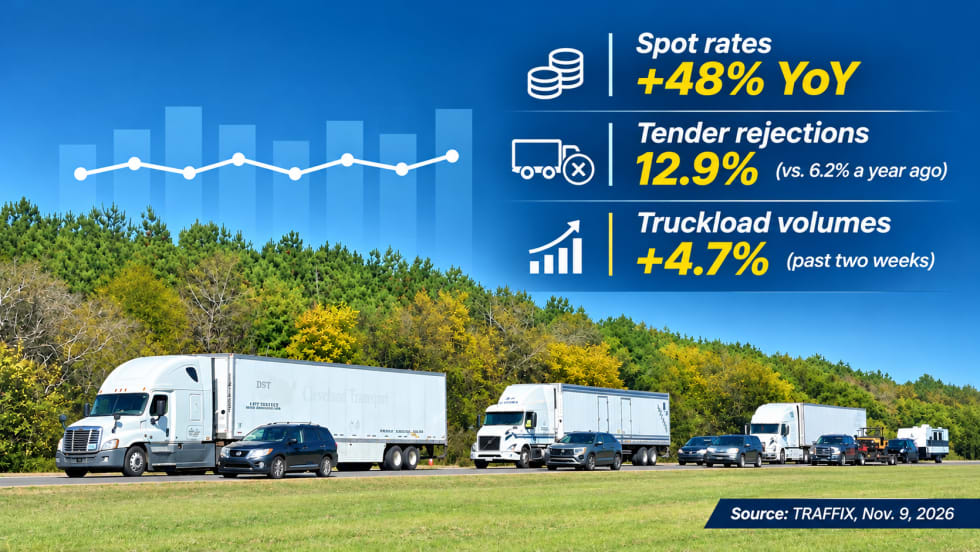
Holiday Freight Meets a Tight Trucking Market
There's no freight boom, but truckload carriers are finding themselves in a stronger position to negotiate rates. And holiday shipping demand could tighten the market further.
Read More →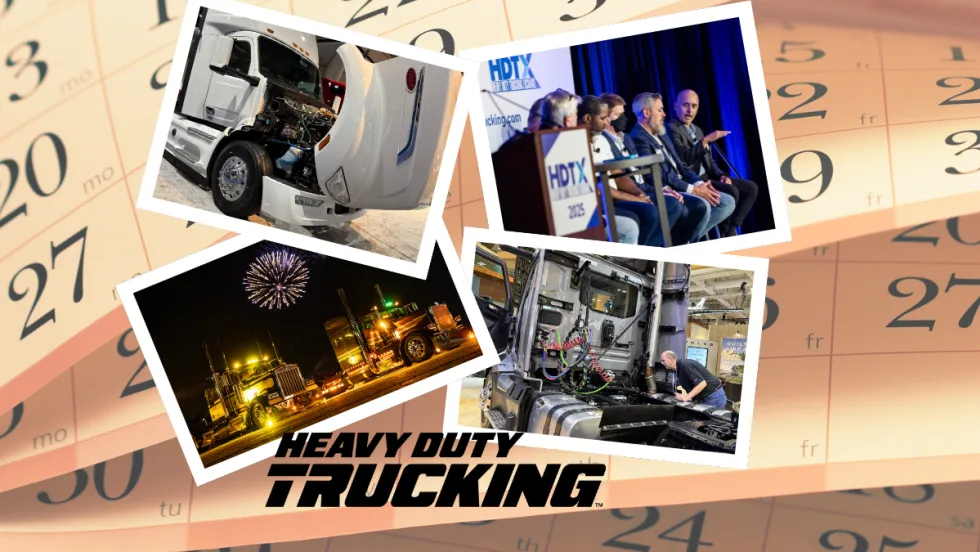
What Trucking Events are Happening in 2027?
Looking for trucking-related conventions, expos, and other events? Heavy Duty Trucking has developed this list of national and larger regional trucking shows and events.
Read More →
Does Your Trucking Fleet Need a New TMS?
Artificial intelligence and better integrations promise less busywork and more useful data. Can your TMS help your company solve problems? Do you need additional vendors or an upgrade? Or is it time to look for a new platform?
Read More →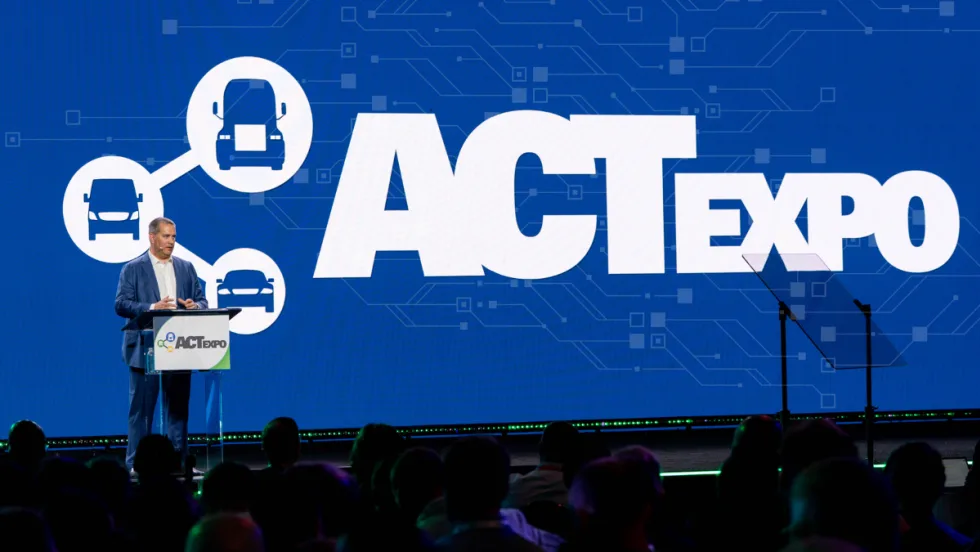
Fleet Costs Shape ACT Expo 2027 Agenda
With diesel prices high and operating expenses under pressure, ACT Expo's 2027 agenda emphasizes fuel efficiency, AI, safety and the return on fleet technology investments.
Read More →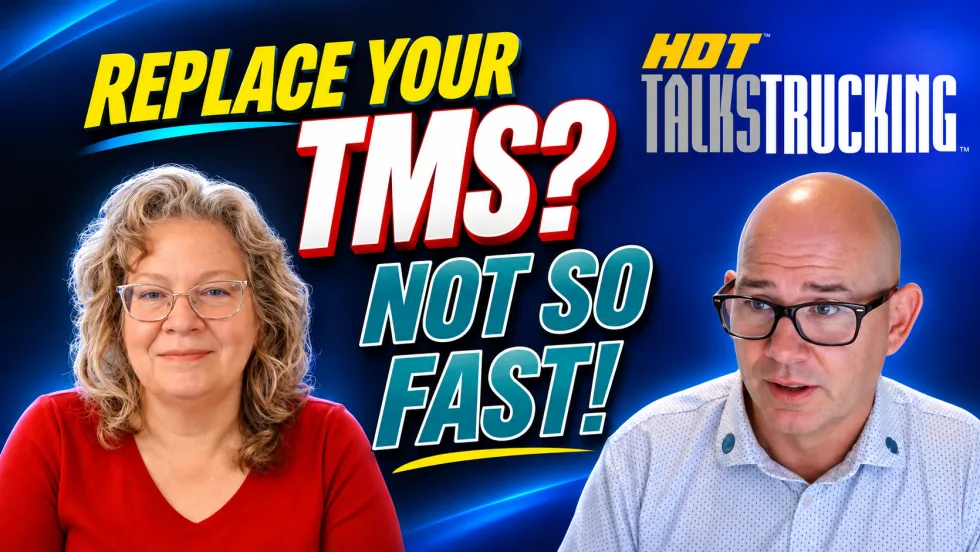
Does Your Trucking Fleet Need a New TMS? [Video]
Cloud technology, AI and new integrations are changing what transportation management systems can do. But does taking advantage of those advances mean replacing your existing TMS?
Read More →
Road Ready Becomes Saegic, Launches New Trailer Telematics Gateway
Clarience Technologies is rolling out new hardware and expanding its plans for connecting trailer telematics, maintenance data, and video.
Read More →
Give Your Trucking Fleet a Cybersecurity Walkaround
Your fleet's cybersecurity policies may look good on paper. These seven checks can help you find out whether they’re working.
Read More →
Kodiak Lines Up Fleets for Driverless Trucking
An agreement for 75 trucks, a new Texas freight lane, and progress on safety validation move Kodiak closer to its planned driverless highway launch.
Read More →
ITS Logistics Settles Religious Harassment Case
The Nevada-based logistics firm agreed to pay more than $396,000 to settle a religious harassment charge involving an employee's Jewish identity.
Read More →
Your Trucks Are Busy. That Doesn’t Mean They’re Winning.
High utilization doesn’t always mean strong margins. Looking beyond the current load can help fleets make better dispatch decisions and get more value from each truck’s time.
Read More →