




ATA’s Spear: Trucking Must “Take Seat at the Table” for Making Autonomous-Driving Policy
Because autonomous driving technologies offer “a lot of potential but also a lot of unknowns,” Chris Spear, ATA president, said trucking must “take our seat at the table with other industries to develop a [policy] framework without stymying innovation.

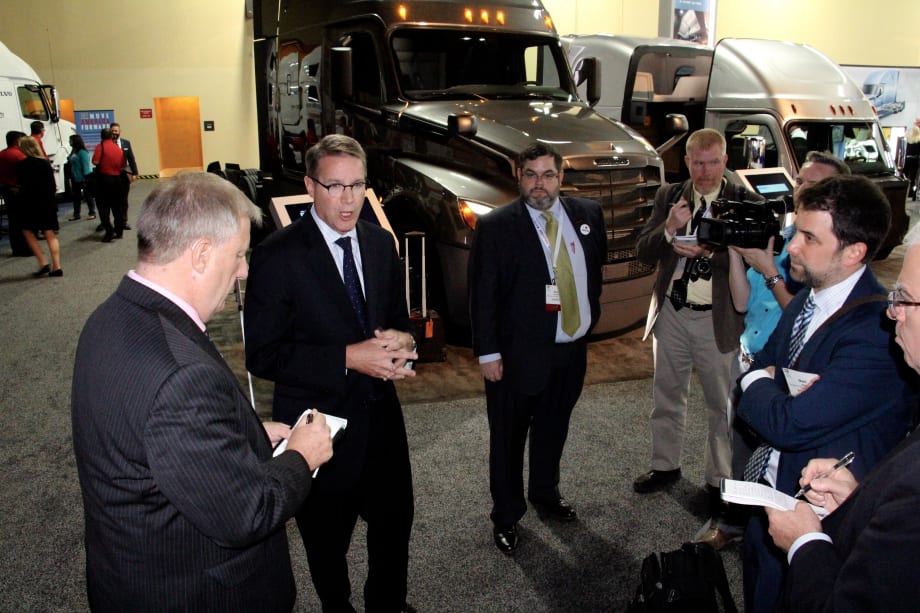
ATA president Chris Spear fielding reporters' queries on autonomous policymaking. Photo: Evan Lockridge
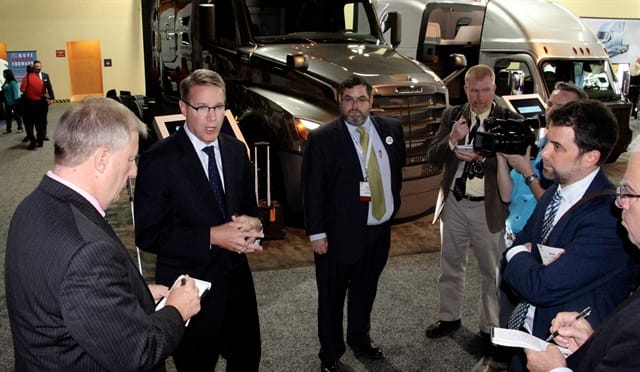
ATA president Chris Spear fielding reporters' queries on autonomous policymaking.Photo: Evan Lockridge
LAS VEGAS. Because autonomous driving technologies offer “a lot of potential but also a lot of unknowns,” Chris Spear, president of the American Trucking Associations, said trucking must “take our seat at the table with other industries [primarily the automotive sector] to develop a [policy] framework without stymying innovation.
“The technology is here and will grow rapidly,” Spear told members of the industry press during a brief Q&A on Oct. 2 here on the show floor of ATA’s Management Conference & Exposition. “Suppliers are already creating connected and automated technology.”
He said trucking is “a different animal than the car side” so the association is aiming to ensure the industry’s voice is heard as federal policymaking develops.
Suggesting there is urgency to this issue, Spear lamented that the first federal guidelines for the testing and deployment of autonomous vehicles recently released by the Department of Transportation were put together with almost no input from the trucking industry.
On the other hand, he said that “[technological developments] are not going to wait for the federal government. He also pointed out that autonomous policymaking will move on two tracks.
“States are not waiting for the federal government, either.” He pointed to Nevada, which has enacted legislation and regulations to enable the testing and operation of autonomous vehicles, as an example. “Nevada is innovating; creating a breeding ground for this technology.
“As far as [putting in place] seamless regulation, that has to be done by the federal government,” Spear continued. “But we will also get engaged at the state level to avoid a patchwork of laws [for autonomous trucks.]”
Spear said connected and autonomous vehicles hold the promise of increasing highway safety, reducing fuel consumption and emissions, and by alleviating congestion, boosting trucking productivity, which in turn “would be better for driver pay.”
As for that seat at the table, Spear said he sees ATA working closely with DOT but also with other transportation modes as well as the auto industry as “our trucks will have to communicate with those cars” to gain the full measure of safety and traffic-flow benefits of autonomous driving.
He also said it’s imperative to “ensure that the technology will be reliable and understood by all industries and government agencies before it is deployed” on a large scale.
Turning to Capitol Hill, Spear said that he expects Congress will “largely focus on oversight” of autonomous regulations with an eye to not inhibiting technological innovations.
He also said that it is well to keep in mind that “one regulation can take four years” to implement and to consider how much innovation can take place in that time.
Spear added that what must be asked is “How fast can our government get into this game and be collaborative— so the result is good for safety and the economy.”
More Fleet Management
Can You Beat Our Trucking Trivia Challenge?
Test your truck knowledge with 19 trivia questions from Heavy Duty Trucking Exchange. Can you keep up with the fleet pros?
Read More →
BeyondTrucks Adds Rules Checks to Dispatch
New Compatibility Engine checks driver qualifications, equipment requirements and fleet policies before loads are dispatched.
Read More →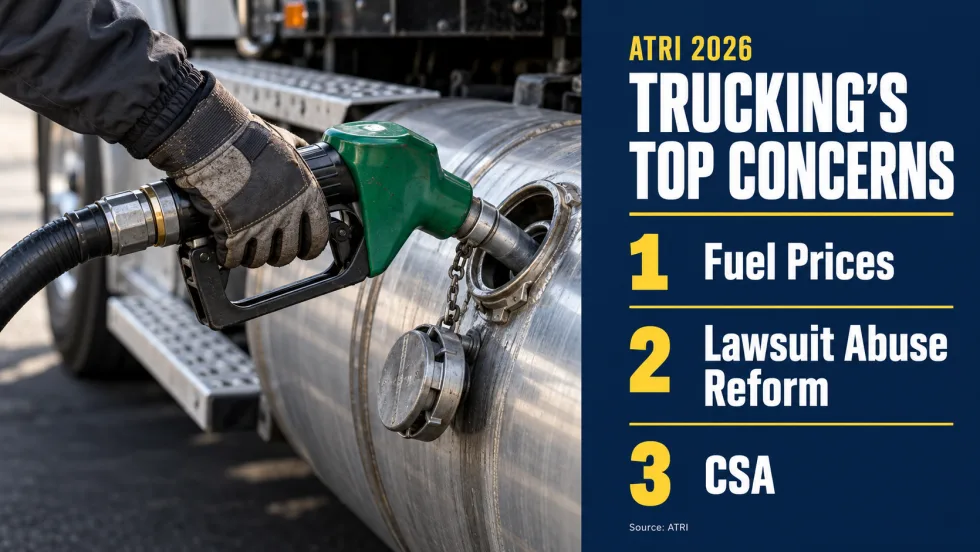
Diesel Prices Hijack Trucking’s Worry List
ATRI’s annual survey finds cautious optimism about freight, but diesel costs, litigation, and insurance continue to squeeze fleets. Drivers have different priorities on several issues.
Read More →
Nomination Deadline Extended for HDT Emerging Leaders
Just a few more days to nominate accomplished trucking fleet professionals under 40 who are making an impact and helping lead the industry forward for the HDT Emerging Leaders award. Deadline extended to October 20!
Read More →
What Will ATA’s New Leader Bring to Trucking's Table?
Incoming President and CEO Mark Colson’s record in Alabama offers clues about his priorities and approach following Chris Spear’s abrupt departure as the head of the American Trucking Associations.
Read More →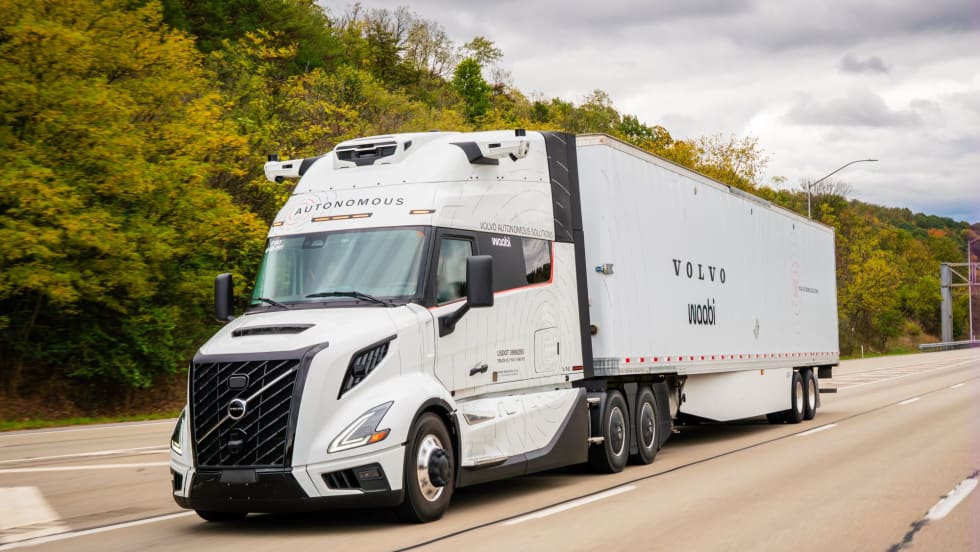
Volvo, Waabi Start Commercial Autonomous Operations in Texas
Volvo VNL Autonomous trucks, powered by the Waabi Driver, are hauling freight directly to third-party facilities for a customer in Texas.
Read More →
Samsara Launches Custom AI Agent Builder
Agent Studio lets fleets create AI tools for hours-of-service monitoring, reporting and driver support, including agents that communicate by phone.
Read More →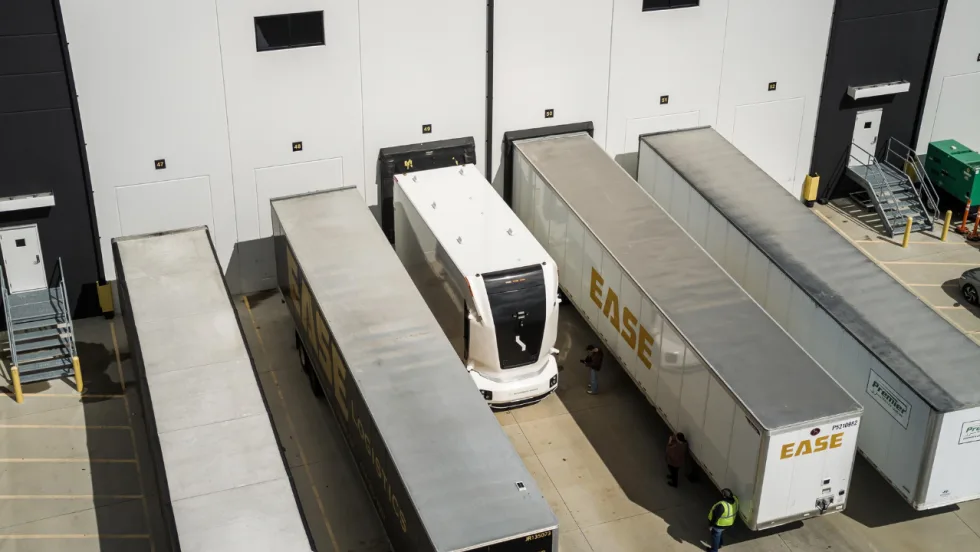
Einride Driverless Electric Trucks Begin Daily Freight Operations in Ohio
Two cabless electric trucks are hauling freight between EASE Logistics facilities in Marysville, Ohio, as part of a multi-state truck automation project.
Read More →
Geotab Links Fleet Card to Vehicle Data
The new card combines fuel discounts with telematics-based purchase controls. Geotab’s analysis also points to potential savings from choosing lower-priced fuel stops.
Read More →
How MFA Helps Protect Trucking Fleets
Multi-factor authentication adds protection when passwords are stolen. Here’s how it works and where fleets should start.
Read More →