




FTR Conference: Digital Disruptions and the Future of Trucking
INDIANAPOLIS -- Expect big changes over the years in the way trucking and supply chains are managed, including turning it upside down. That was one of the messages those attending the FTR Transportation Conference heard Thursday morning.

Steve Sashihara, CEO of Princeton Consultants, talks about digital disruption at FTR's annual conference. Photo: Evan Lockridge

Steve Sashihara, CEO of Princeton Consultants, talks about digital disruption at FTR's annual conference.Photo: Evan Lockridge
INDIANAPOLIS -- Expect big changes over the years in the way trucking and supply chains are managed, including turning it upside down. That was one of the messages those attending the FTR Transportation Conference heard Thursday morning.
A survey of both trucking/logistics and supply chain firms shows that drones, self-driving trucks, so-called “Uber” for freight transportation as well as the “internet of things” and “big data” all have the power to disrupt today’s ways of moving freight over the next seven to eight years, according to Steve Sashihara, CEO of the information technology and management firm Princeton Consultants.
In fact, changes in many of these five areas already are moving rapidly. For example, he pointed out, over the last year drones have moved beyond a high-tech hobby, with the federal government issuing its first commercial drone rules and actual commercial deliveries being made – which included 7-11 Slurpee drinks, a chicken sandwich, donuts, hot coffee and candy.
The concept of self-driving vehicles in the past couple of years has moved from a “wacky” idea from companies such as Google, Apple and Tesla, with Freightliner unveiling its prototype autonomous trucks for licensed road tests. The last year has been filled with news of self-driving technologies from every major car manufacturer, and many start-ups.
But when will self-driving/autonomous vehicles become an common reality? When people stop being so defensive about such new technology and there is what what Sashihara called an “inversion” of conversation.
“Until we stop saying, 'When will self-driving trucks be safe enough to put on the road and be good as a normal driver,' and we start flipping it and saying, 'Self-driving trucks are not 100% bullet proof but they are safer than commercial drivers,'” Sashihara said. “We start saying that, it’s just going to flip.”
He said pushing the development of this new generation of trucks are the massive investments being made by automakers and technology firms, while government officials see this is as economic opportunity.
His company, Princeton Consulting, is forecasting implementation in the U.S. taking place in three phases:
1. Truck Autopilot, assisting traditional driver still in seat
2. Linehaul Driverless – linehaul on highways, with first/last mile conventional drayage
3. Door to Door Driverless – only when public believes the technology is safer than human drivers.
Another big area ripe for big technology changes in what's often called "Uber for trucking.” Based on the ride-sharing service Uber, in which people use apps to get rides, the idea is similar, but transporting freight rather than people. He said this is already being done by a handful of companies.
Sashihara said the success of the ride-share app Uber for private transport is a useful incentive for spurring innovation in freight.
“We don’t think people in general are going to order a 53-foot dry van trailer by an iPhone, hit a button and an owner-operator they have never met is going to respond and pick up the load, and all their intermediaries are gone,” he said. “But we do think it’s a useful incentive for looking at innovation, and it’s hard not to look at the taxi industry and say man, they were asleep at the switch.”
His consulting company believes there are several tailwinds pushing what he calls this “radical disintermediation,” including that transportation (drivers, equipment and storage) is a commodity, and that new ways of matching spare capacity with surge/seasonal demand are compelling to both buyers and sellers.
The result, Princeton sees, are several primary use cases:
Enable more cost-effective same-day / short-haul moves to take advantage of excess capacity, especially in less-than-truckload
Provide broader reach and ways to share situational awareness for all parties, such as the shipper, consignee, 3PL/broker, carrier, driver
Encouraging more standardized communications, including those in real-time that are both easy to implement and use. This also includes self-serve apps and even hookups without custom IT.
According to Sashihara, the ultimate result of all of this new technology will impact many areas of freight transportation, including workforce planning and scheduling, last mile deliveries, streamlining or eliminating paperwork, better estimates of when movements will be late, and in many other ways.
“This is the world that we are coming into and it’s a pretty exciting world,” he said, and cited the Asian blessing-curse, ‘May you live in interesting times.’“
"Well, we live in interesting times, don’t we, so I am looking forward to it with what’s coming out.”
More Fleet Management
How to Modernize Your TMS Without Replacing It [Podcast]
Before investing in a new transportation management system, take a closer look at what you've already got. AI, cloud technology and better integrations may offer ways to improve your trucking operations without starting over.
Read More →
Could Your Truck's Connected Devices Be a Cybersecurity Risk?
ELDs, telematics systems and driver tablets help fleets operate more efficiently. But every connected device needs protection against cyberattacks.
Read More →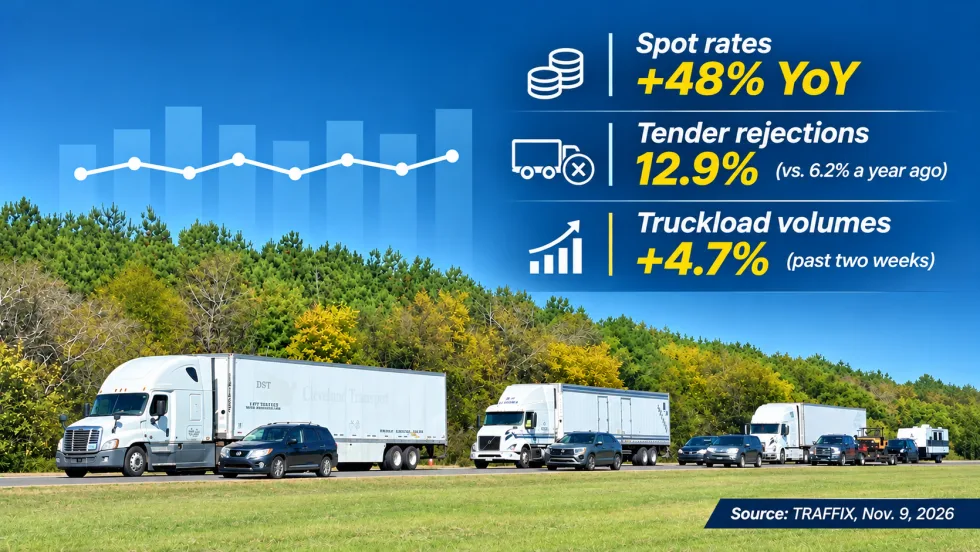
Holiday Freight Meets a Tight Trucking Market
There's no freight boom, but truckload carriers are finding themselves in a stronger position to negotiate rates. And holiday shipping demand could tighten the market further.
Read More →
What Trucking Events are Happening in 2027?
Looking for trucking-related conventions, expos, and other events? Heavy Duty Trucking has developed this list of national and larger regional trucking shows and events.
Read More →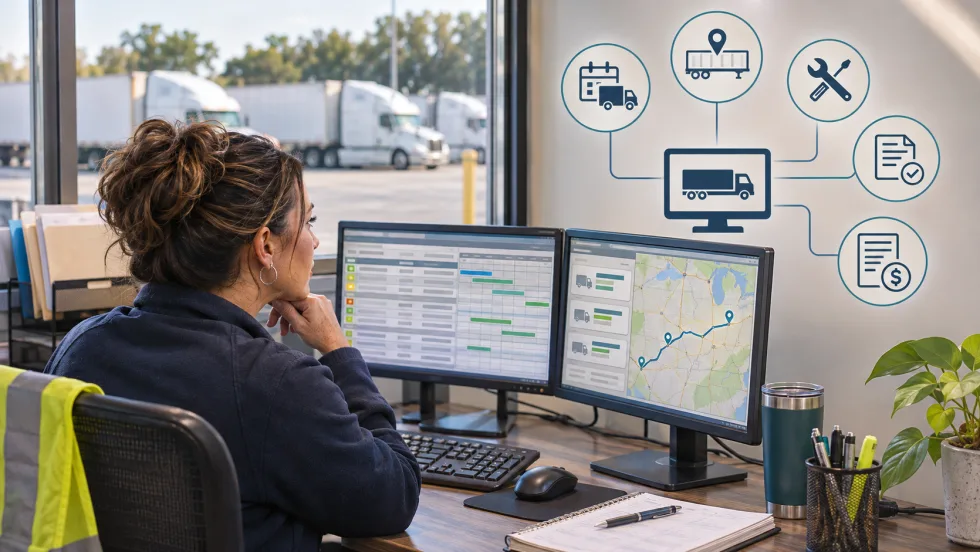
Does Your Trucking Fleet Need a New TMS?
Artificial intelligence and better integrations promise less busywork and more useful data. Can your TMS help your company solve problems? Do you need additional vendors or an upgrade? Or is it time to look for a new platform?
Read More →
Fleet Costs Shape ACT Expo 2027 Agenda
With diesel prices high and operating expenses under pressure, ACT Expo's 2027 agenda emphasizes fuel efficiency, AI, safety and the return on fleet technology investments.
Read More →
Does Your Trucking Fleet Need a New TMS? [Video]
Cloud technology, AI and new integrations are changing what transportation management systems can do. But does taking advantage of those advances mean replacing your existing TMS?
Read More →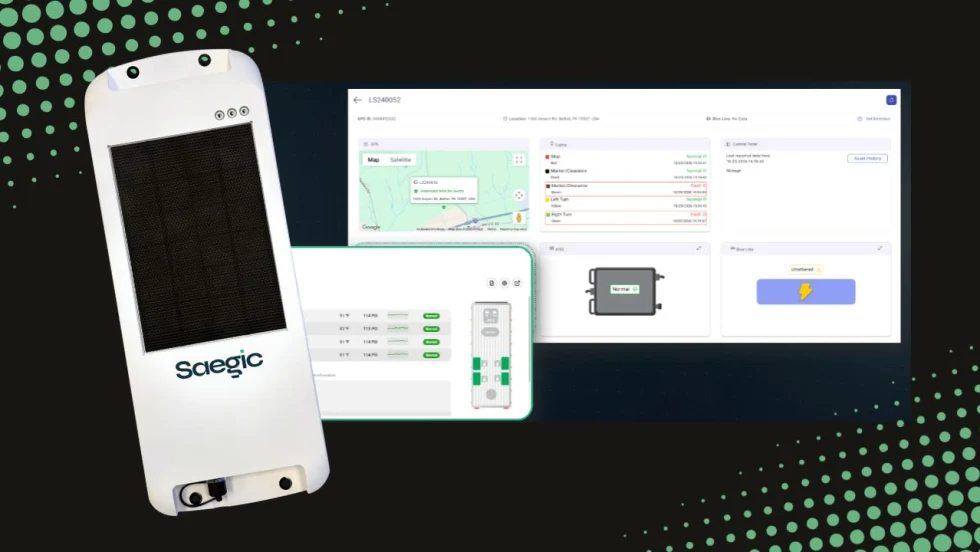
Road Ready Becomes Saegic, Launches New Trailer Telematics Gateway
Clarience Technologies is rolling out new hardware and expanding its plans for connecting trailer telematics, maintenance data, and video.
Read More →
Give Your Trucking Fleet a Cybersecurity Walkaround
Your fleet's cybersecurity policies may look good on paper. These seven checks can help you find out whether they’re working.
Read More →
Kodiak Lines Up Fleets for Driverless Trucking
An agreement for 75 trucks, a new Texas freight lane, and progress on safety validation move Kodiak closer to its planned driverless highway launch.
Read More →